
ZESTLET · OEM / ODM · Private Label
How a Kilt Skirt Is Made: From Women’s Pattern Block to Final Press
Build Now, Pay Later · New brands welcome
Launch your brand from 20 pieces. Pay the balance after your stock arrives.
ZESTLET makes your tactical, hunting, uniform and Highland products under your own label. Your first sample and branding setup are free, and orders from $5,000 can pay 60% after delivery.
Budget under $5,000
Startup Launch
- Start from 20 pieces per product
- Your first sample is free
- Labels, screens and digitising are free
- Bulk starts only after you approve the sample
Orders from $5,000
Build Now, Pay Later
- Pay 40% to start production
- Pay the other 60% monthly after delivery
- No interest and no application fee
- Your limit grows with every on-time payment
Your full journey with ZESTLET, step by step
From your first idea to stock in your warehouse. Every step is visible in your free brand dashboard.
- 1Create your free brand accountSign up in about one minute. We email you a 6-digit code to confirm your account.
- 2Check your credit in 30 secondsAnswer 3 short questions in your dashboard and see your pre-qualified credit limit straight away.
- 3Start your projectUpload your design or tech pack, choose the product and quantity. You can start from 20 pieces per product.
- 4Get your quotation within 24 hoursPrice per piece, lead time and payment terms in writing, from real people in Sialkot.
- 5Free sample with your brandingWe make your sample with your logo in 7–10 working days. You only pay the sample shipping.
- 6Approve and pay 40%Bulk production starts only after you approve the sample and pay the 40% deposit.
- 7Production and quality checksCutting, stitching, inspection and packing, with progress updates in your dashboard.
- 8Delivery, then pay 60% monthlyDoor-to-door shipping. Credit orders pay the balance after delivery over 90 to 365 days, with no interest.
What you need to apply
- Your brand name and contact details
- Your product idea, design or tech pack
- An order value from $5,000 for Build Now, Pay Later
- For higher limits: sales history or business registration
Your credit limit grows with you
First credit order
After 2 orders paid on time
After 4 cycles and a review
- Deposit
- 40%
- Balance after delivery
- 60%, monthly
- Repayment
- 90 to 365 days
- Interest and fees
- None
Can I start a clothing brand with a small budget?
Yes. You can start from 20 pieces per product, and your first sample and branding setup are free, so your budget goes into product.
Who can use Build Now, Pay Later?
Brands with orders from $5,000, including new brands with no sales history, after a short review. You pay 40% upfront and 60% in monthly instalments after delivery.
Is the sample free?
Yes, the first sample is made free with your branding. Sample shipping is paid by the buyer.
Credit is subject to approval. Amounts shown in your local currency are approximate.
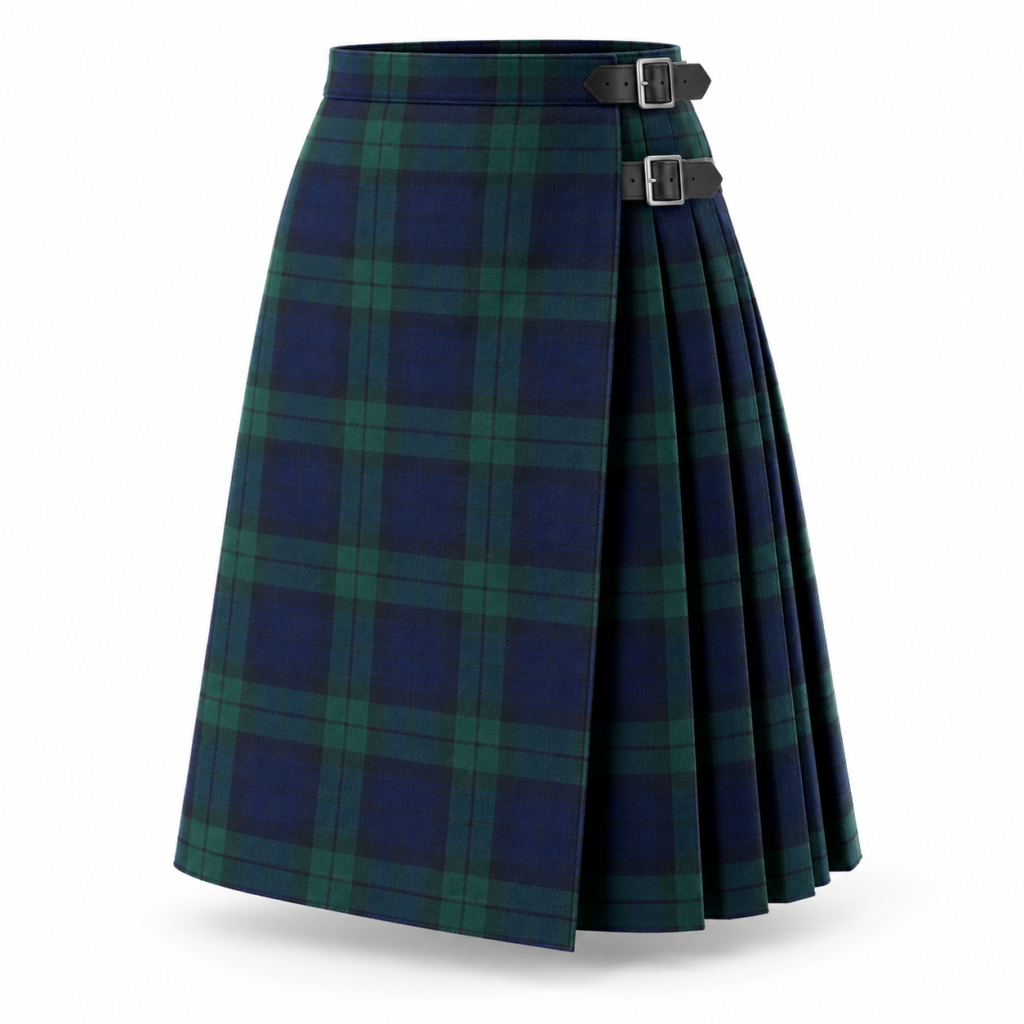
A good kilt skirt is decided long before the first pleat is sewn. Most of the quality comes from the brief, the pattern and the way the tartan is planned on the cloth. If you understand the steps, you know what to ask your manufacturer and what to check on the sample.
Here is how ZESTLET approaches a kilt skirt project, from the first brief to the approved production reference.
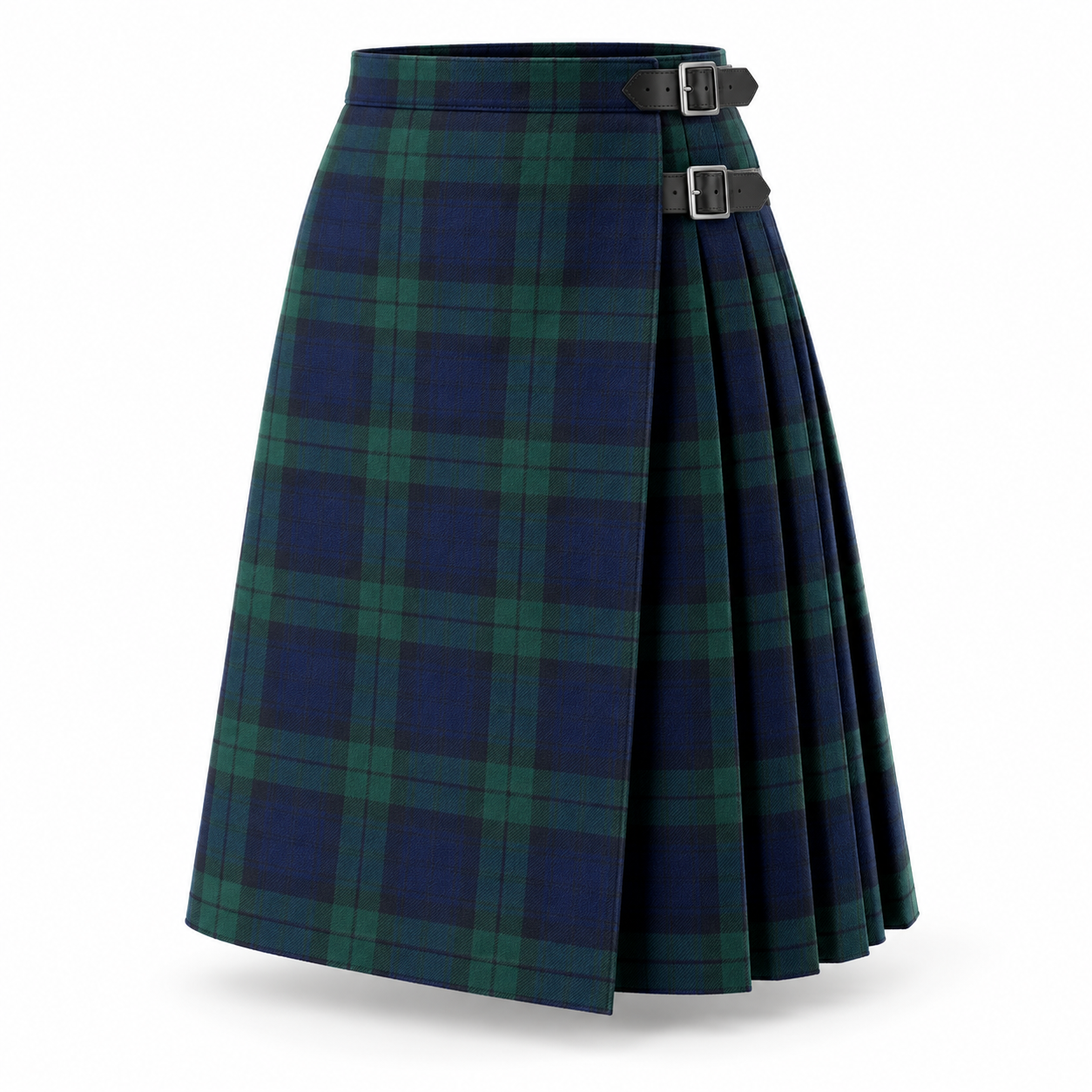
Step 1: The brief
Everything starts with what the skirt is for: a pipe band, a Highland shop, a wedding range or a fashion label. The brief lists the intended outfit and use, the destination market, the quantity by size and colourway and the approved style reference. A clear brief prevents most later changes.
Step 2: Cloth and components
Next the cloth is chosen: wool, wool-blend or an alternative tartan, selected by swatch. The accepted cloth is recorded as the reference, together with the components: straps, buckles or a concealed fastening, lining (if any), interfacing and labels. The care method is planned for the actual cloth, not copied from another product.
Step 3: Pattern from a women’s block
The pattern is developed from a women’s skirt block using the wearing level of the waist, the fullest hip, the ease and the finished length. This is the step that separates a real kilt skirt from a shortened men’s kilt. Where the hip-to-waist difference is high, the shaping is built into the pleats and apron. The pattern is then turned into a drawing and a measurement and feature schedule covering waist, hip, length, apron, pleats, closure, lining and tartan placement.
Step 4: Planning the tartan
Before cutting, the sett is planned on the pattern pieces. The team decides which part of the sett sits in the centre of the apron, how the hem falls in the repeat and whether the pleats are made to the stripe or to the sett. For a size range, this planning is repeated so every size shows the same look.
Step 5: Cutting
The cloth is laid so the sett runs true and the planned positions land where they should. Tartan needs careful laying; a small shift at cutting shows clearly on the finished apron.
Step 6: Pleating and stitch-down
The pleats are marked, folded to the agreed depth and stitched down over the hip to the agreed length. This is where the shaping becomes real: the pleats take in the difference between hip and waist so the skirt sits close at the waist and falls cleanly below the hip.
Step 7: Apron, under-apron and edges
The apron and under-apron are finished with the agreed edge: plain, selvedge or fringed. The overlap is checked against the drawing so the front stays closed when the wearer moves.
Step 8: Waistband, closures and lining
The waist finish is added, then the straps and buckles or the concealed fastening, positioned so they hold the skirt without pulling the apron sideways. If a lining is specified, it is attached so it supports comfort and opacity without stopping the pleats from swinging.
Step 9: Pressing
Pressing sets the pleats and the apron. The press method is chosen for the cloth: what works for a wool tartan may not suit an alternative cloth.
Step 10: Sample review and change list
The finished sample is reviewed in its intended outfit, standing, walking and sitting. The buyer sends a numbered change list against the current specification. Changes are made to the specification first, then to the next sample, so nothing is fixed only on the garment.
Step 11: Approval and production
When the sample is right, the final sample, cloth list, dimensions, labels and packing become the production reference. Bulk pieces are checked against that reference during and after production.
What to check at each stage
| Stage | What the buyer should check |
|---|---|
| Brief | Use, style reference, quantities and destination are written down |
| Cloth | Swatch approved and kept as reference; care method planned |
| Pattern | Built from a women’s block; waist, hip and length agreed |
| Tartan plan | Apron centre, hem position and pleating rule fixed for every size |
| Pleats | Depth and stitch-down length as specified |
| Apron and closure | Overlap holds; closure does not pull the apron |
| Lining | Coverage and material as approved |
| Final sample | Reviewed in the outfit; change list closed |
For the problems this process is designed to prevent, read common kilt skirt problems. For cloth, length and size choices, see the kilt skirt buyer’s guide. The men’s garment follows a different pattern logic, explained in how a kilt is made.
Work with a kilt skirt manufacturer that samples first
ZESTLET in Sialkot, Pakistan develops Highland wear for outfitters, retailers, band suppliers and private-label brands.
- Women’s block pattern and planned tartan placement
- Wool, wool-blend or alternative tartan by swatch
- Small batches, sample first
- Private label production
See the kilt skirt or request a quote and send your style reference.
Frequently asked questions
Is a kilt skirt made the same way as a kilt?
The ideas are similar (apron, pleats, fastening), but the pattern should be developed from a women’s block for the intended waist and hip.
Why is tartan planning done before cutting?
Because the position of the sett on the apron, hem and pleats cannot be corrected after cutting. Planning keeps every size looking the same.
Can I approve a kilt skirt from a digital rendering?
Use the rendering to agree the idea, but approve fit, apron, pleats and tartan only on a finished sample.
How are sample changes handled?
You send a numbered change list against the current specification. The specification is updated first, then the next sample is made.
What becomes the production reference?
The approved final sample together with the cloth list, dimensions, labels and packing details.