
ZESTLET · OEM / ODM · Private Label
Kilt Skirt Buyer’s Guide: Cloth, Length, Lining, Closures and Sizes
Build Now, Pay Later · New brands welcome
Launch your brand from 20 pieces. Pay the balance after your stock arrives.
ZESTLET makes your tactical, hunting, uniform and Highland products under your own label. Your first sample and branding setup are free, and orders from $5,000 can pay 60% after delivery.
Budget under $5,000
Startup Launch
- Start from 20 pieces per product
- Your first sample is free
- Labels, screens and digitising are free
- Bulk starts only after you approve the sample
Orders from $5,000
Build Now, Pay Later
- Pay 40% to start production
- Pay the other 60% monthly after delivery
- No interest and no application fee
- Your limit grows with every on-time payment
Your full journey with ZESTLET, step by step
From your first idea to stock in your warehouse. Every step is visible in your free brand dashboard.
- 1Create your free brand accountSign up in about one minute. We email you a 6-digit code to confirm your account.
- 2Check your credit in 30 secondsAnswer 3 short questions in your dashboard and see your pre-qualified credit limit straight away.
- 3Start your projectUpload your design or tech pack, choose the product and quantity. You can start from 20 pieces per product.
- 4Get your quotation within 24 hoursPrice per piece, lead time and payment terms in writing, from real people in Sialkot.
- 5Free sample with your brandingWe make your sample with your logo in 7–10 working days. You only pay the sample shipping.
- 6Approve and pay 40%Bulk production starts only after you approve the sample and pay the 40% deposit.
- 7Production and quality checksCutting, stitching, inspection and packing, with progress updates in your dashboard.
- 8Delivery, then pay 60% monthlyDoor-to-door shipping. Credit orders pay the balance after delivery over 90 to 365 days, with no interest.
What you need to apply
- Your brand name and contact details
- Your product idea, design or tech pack
- An order value from $5,000 for Build Now, Pay Later
- For higher limits: sales history or business registration
Your credit limit grows with you
First credit order
After 2 orders paid on time
After 4 cycles and a review
- Deposit
- 40%
- Balance after delivery
- 60%, monthly
- Repayment
- 90 to 365 days
- Interest and fees
- None
Can I start a clothing brand with a small budget?
Yes. You can start from 20 pieces per product, and your first sample and branding setup are free, so your budget goes into product.
Who can use Build Now, Pay Later?
Brands with orders from $5,000, including new brands with no sales history, after a short review. You pay 40% upfront and 60% in monthly instalments after delivery.
Is the sample free?
Yes, the first sample is made free with your branding. Sample shipping is paid by the buyer.
Credit is subject to approval. Amounts shown in your local currency are approximate.
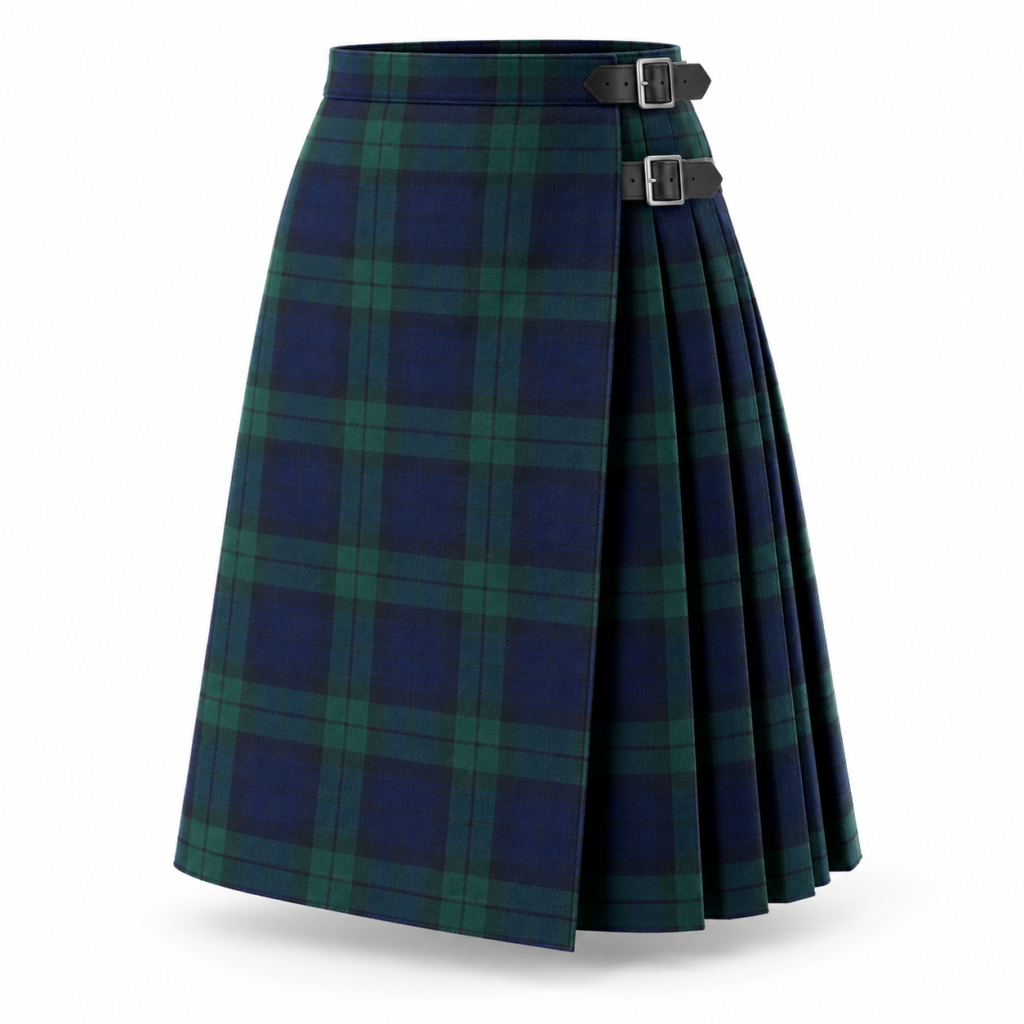
Buying kilt skirts for a shop, a band or your own label means making a series of small decisions: which cloth, which length, lined or unlined, which fastening and how the sizes should run. Each choice changes how the skirt looks, how it wears and how easy it is to reorder.
This buyer’s guide explains the options in plain terms so you can write a clear brief and compare samples properly.
What a kilt skirt is (and is not)
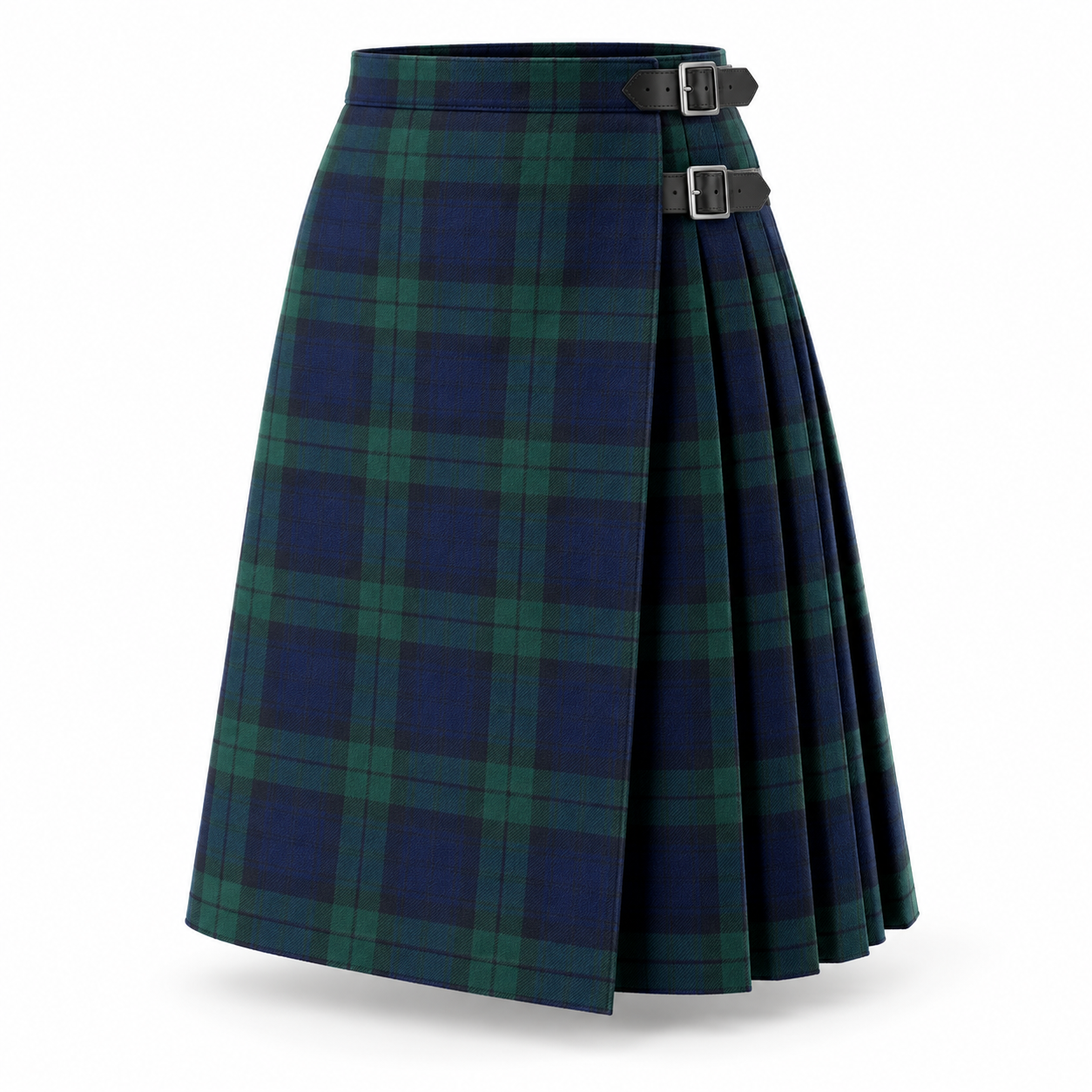
A kilt skirt is a shaped wrap or kilted skirt with a defined apron, pleating and fastening arrangement. It borrows the construction ideas of the kilt, a flat apron and pleated back, but it should be cut for a women’s waist and hip. It is not simply a short men’s kilt. If you also sell men’s kilts, the measuring logic is different; our guide to measuring for a kilt covers the men’s garment.
Cloth: wool, wool-blend or alternative tartan
The cloth decides the look, the handle and how well the pleats behave. The usual options are:
- Wool tartan: the traditional choice, valued for its handle and the way it takes a press.
- Wool-blend tartan: often chosen to balance handle, care and cost.
- Alternative tartan: non-wool cloths chosen for a specific price point, care routine or customer.
Whatever you choose, select it by physical swatch and record the accepted cloth as the reference. Ask to see how the swatch presses and how the sett scale looks on a skirt of your length. A large sett on a short skirt can leave very few repeats across the apron.
Length
Common choices are knee length, just below the knee and longer lengths for evening or formal outfits. Always give the finished length from an agreed waist reference, so the factory and your customers measure the same way. Ask how the tartan balances at the hem at that length.
Apron, pleats and edge finish
The apron gives the kilt skirt its front look. Decide the overlap, how the front aligns with the sett and whether the edge is plain or fringed. At the back, choose the pleat style: pleated to the stripe gives a strong line, pleated to the sett shows the full pattern. Pleat depth and stitch-down length decide how the skirt moves.
Closures
Kilt skirts usually close with straps and buckles, or with an approved concealed fastening for a cleaner look. Think about who wears it: band members dressing quickly may prefer visible straps; a fashion customer may prefer a concealed closure. The closure must not pull the apron out of line.
Lining
A lining can improve comfort and opacity, but it adds weight and can change how the pleats swing. Decide coverage (full, partial or none) on the sample, based on the cloth and the intended use.
Sizes and how to measure
A kilt skirt is sized mainly on waist, hip and length. Use the table below for your own size chart and for custom orders.
| Measurement | How to take it | Why it matters |
|---|---|---|
| Waist | Around the body at the level where the skirt will be worn | Sets the waistband and closure position |
| Hip | Around the fullest part of the hip, standing naturally | Decides the pleat shaping and ease |
| Length | From the agreed waist reference down to the wanted hem position | Fixes the finished length and tartan balance |
| Overlap | Agreed as a design point, not measured on the body | Keeps the apron closed when moving |
For a standard size range, agree a grading rule that keeps the waist/hip relation sensible across all sizes. Check the smallest and largest sizes, not only the sample size.
Matching pieces
Many buyers sell the kilt skirt with a sash or other coordinated pieces. If an exact match matters, agree the cloth, sett and shade reference for all pieces at the same time and approve them together.
Care
Care depends on the cloth. Ask for the care method to be validated on the sample, and put that instruction on your label. Do not copy care instructions from a different cloth.
What to send for a quote
- Style reference or sketch, including apron and pleat style
- Waist, hip and length, or your size chart
- Cloth preference and tartan or swatch reference
- Closure and lining preference
- Quantity by size and colourway
- Destination and labeling needs
Before approving a sample, read common kilt skirt problems and how to avoid them. To understand each production step, see how a kilt skirt is made.
Need kilt skirts for your shop or label?
ZESTLET in Sialkot, Pakistan develops kilt skirts for Highland outfitters, retailers, band suppliers and private-label brands.
- Cloth chosen by swatch: wool, wool-blend or alternative tartan
- Your length, apron, pleat and closure choices
- Small batches with a sample first
- Private label available
View the kilt skirt or ask for a quote with your sizes and cloth reference.
Frequently asked questions
How is a kilt skirt different from a kilt?
The kilt skirt is developed around the wearer’s waist/hip shape, length and styling brief. Apron, pleating and fastening follow the kilt idea, but the cut is for a women’s figure.
Can the length be customized?
Yes. Specify the finished length from the agreed waist level and check the tartan balance and pleat behaviour at that length.
Which cloth should I choose?
Wool, wool-blend or alternative tartan, selected by swatch. Compare handle, pressing, care and price for your customer.
Can it coordinate with a sash?
Yes. Agree matching or complementary cloth, sett and shade references, and approve the pieces together if the match is important.
What should a kilt skirt quote request include?
Style reference, waist, hip, length, apron, cloth preference, quantity by variant, destination and labeling needs.