ZESTLET · OEM / ODM · Private Label
How Is a Kilt Made? The Kilt Manufacturing Process Step by Step
Build Now, Pay Later · New brands welcome
Launch your brand from 20 pieces. Pay the balance after your stock arrives.
ZESTLET makes your tactical, hunting, uniform and Highland products under your own label. Your first sample and branding setup are free, and orders from $5,000 can pay 60% after delivery.
Budget under $5,000
Startup Launch
- Start from 20 pieces per product
- Your first sample is free
- Labels, screens and digitising are free
- Bulk starts only after you approve the sample
Orders from $5,000
Build Now, Pay Later
- Pay 40% to start production
- Pay the other 60% monthly after delivery
- No interest and no application fee
- Your limit grows with every on-time payment
Your full journey with ZESTLET, step by step
From your first idea to stock in your warehouse. Every step is visible in your free brand dashboard.
- 1Create your free brand accountSign up in about one minute. We email you a 6-digit code to confirm your account.
- 2Check your credit in 30 secondsAnswer 3 short questions in your dashboard and see your pre-qualified credit limit straight away.
- 3Start your projectUpload your design or tech pack, choose the product and quantity. You can start from 20 pieces per product.
- 4Get your quotation within 24 hoursPrice per piece, lead time and payment terms in writing, from real people in Sialkot.
- 5Free sample with your brandingWe make your sample with your logo in 7–10 working days. You only pay the sample shipping.
- 6Approve and pay 40%Bulk production starts only after you approve the sample and pay the 40% deposit.
- 7Production and quality checksCutting, stitching, inspection and packing, with progress updates in your dashboard.
- 8Delivery, then pay 60% monthlyDoor-to-door shipping. Credit orders pay the balance after delivery over 90 to 365 days, with no interest.
What you need to apply
- Your brand name and contact details
- Your product idea, design or tech pack
- An order value from $5,000 for Build Now, Pay Later
- For higher limits: sales history or business registration
Your credit limit grows with you
First credit order
After 2 orders paid on time
After 4 cycles and a review
- Deposit
- 40%
- Balance after delivery
- 60%, monthly
- Repayment
- 90 to 365 days
- Interest and fees
- None
Can I start a clothing brand with a small budget?
Yes. You can start from 20 pieces per product, and your first sample and branding setup are free, so your budget goes into product.
Who can use Build Now, Pay Later?
Brands with orders from $5,000, including new brands with no sales history, after a short review. You pay 40% upfront and 60% in monthly instalments after delivery.
Is the sample free?
Yes, the first sample is made free with your branding. Sample shipping is paid by the buyer.
Credit is subject to approval. Amounts shown in your local currency are approximate.
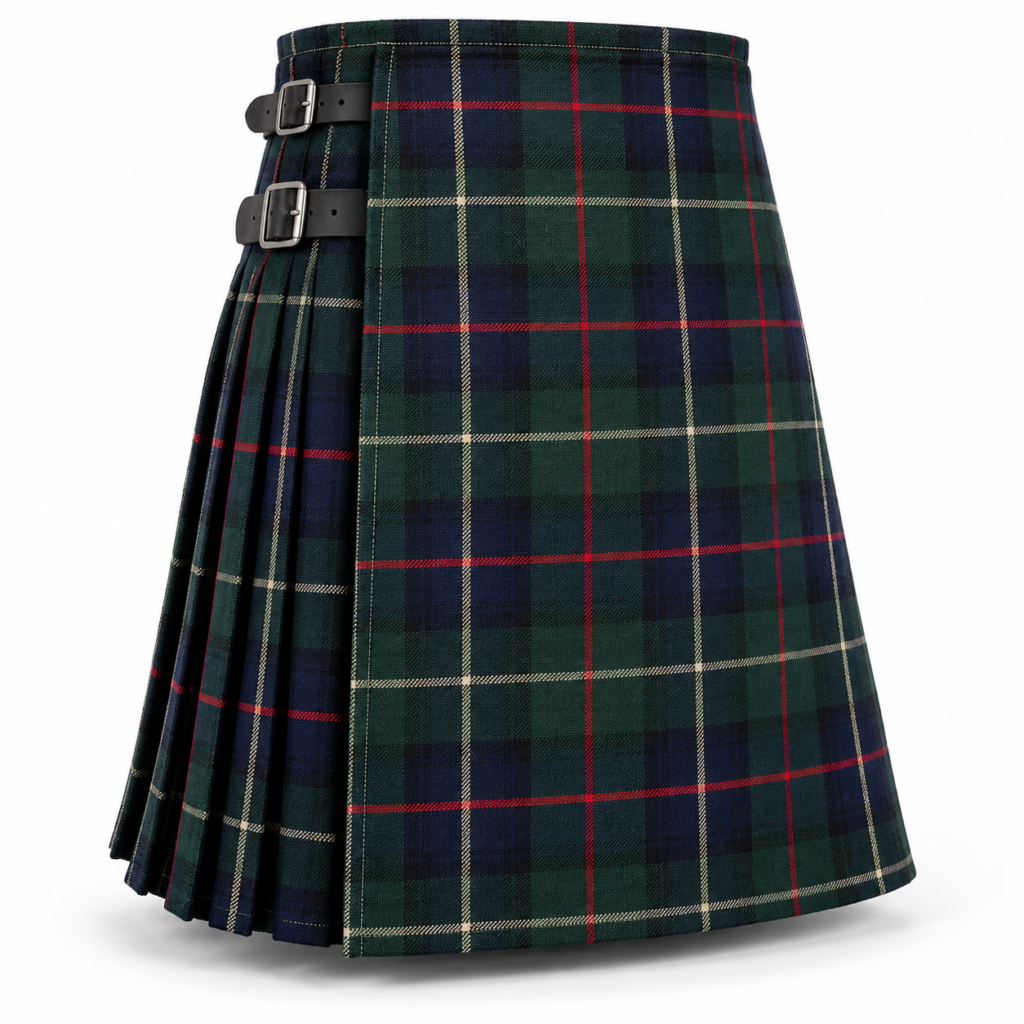
A kilt looks simple: tartan cloth, pleats at the back, a flat apron at the front. Behind that look is a careful process where every step affects how the kilt hangs and how long it lasts. Whether you run a kilt shop, a hire business or a pipe band, knowing how a kilt is made helps you order better kilts and judge a manufacturer’s work.
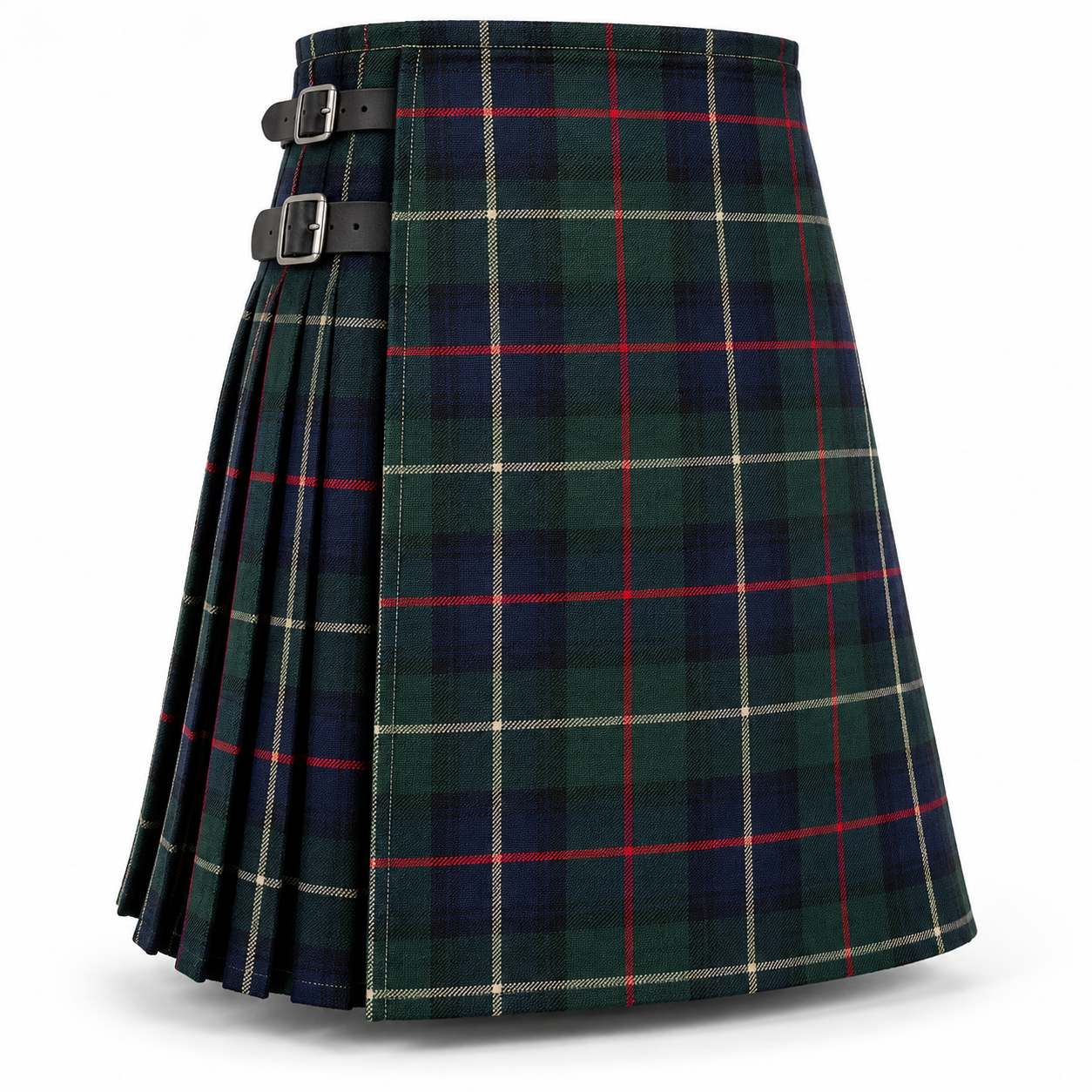
Step 1: The brief and the measurements
Every kilt starts with the waist, seat and length, the tartan, the cloth weight and the pleating style. For stock kilts this is a size chart; for made-to-measure kilts it is one customer. See our guide on how to measure for a kilt.
Step 2: Choosing the cloth
Traditional kilts use woven wool tartan. Wool-blend and polyester-viscose tartans are popular for lower-priced and easy-care kilts. The cloth is checked for shade, weight, width and the size of the sett (the pattern repeat), because the sett decides how many pleats the kilt will have.
Step 3: Planning the yardage
A traditional full kilt uses around eight yards of single-width cloth; lighter “five-yard” kilts use less cloth and fewer, wider pleats. The maker plans how the sett will fall across the aprons and the pleats before cutting. More detail is in our guide to tartan yardage.
Step 4: Marking and pleating
The pleats are marked to the sett or to a chosen stripe, then folded to an even depth. This is the most skilled part of the work: every pleat must match its neighbour so the pattern and the hem stay straight.
Step 5: Sewing the fell
The pleats are stitched down from the waist to the seat. This section, the fell, is shaped from the waist measurement to the seat measurement so the kilt hugs the body and flares below the hip.
Step 6: Interfacing, waistband and lining
A canvas or interfacing is placed inside the fell to give structure, and the waistband is reinforced and lined. These hidden parts are what keep a kilt in shape for years.
Step 7: Aprons, fringe and straps
The over-apron is finished with a fringe on its edge, and leather straps and buckles are attached: usually two on the right side and one on the left, which passes through a slit in the waistband. Strap positions are reinforced from inside.
Step 8: Pressing and final inspection
The pleats are pressed with heat and steam, loose threads are removed, and the kilt is checked for level hem, sett placement on the apron, pleat depth, strap strength and measurements against the order. Then it is labelled, folded or hung and packed.
| Stage | What to check as a buyer |
|---|---|
| Cloth | Shade, weight and sett size match the approved swatch |
| Pleating | Correct style (sett or stripe), even depth |
| Fell | Neat stitching, shaped from waist to seat |
| Front | Sett centred on the over-apron, fringe even |
| Straps | Strong leather, reinforced positions |
| Finish | Level hem, sharp pleats, correct labels |
Hand-sewn vs machine-made kilts
Traditional made-to-measure kilts are often hand-sewn, which takes many hours per kilt. Machine-made kilts use the same structure but sew the pleats and fell by machine, which makes them more affordable for retail stock, hire fleets and pipe bands. Both can be well made; what matters is accurate pleating, a shaped fell and good finishing.
Most kilt complaints come from skipped steps. Read 7 common kilt problems and how to fix them to see what to look out for.
Make your own kilts with ZESTLET
ZESTLET is a Highland wear manufacturer in Sialkot, Pakistan. We make kilts, kilt jackets, sporrans and accessories for kilt shops, hire companies and pipe bands, under your own label if you prefer. Orders start from small batches, and we make a sample first so you can check the cloth, pleats and fit before bulk.
- Your tartan, weight and pleating style
- Your size chart, labels and packaging
- Sample first, then bulk production with quality checks
Frequently asked questions
How much fabric is in a kilt?
A traditional full kilt uses around eight yards of single-width tartan; five-yard kilts use less cloth and wider pleats.
What is the fell of a kilt?
The fell is the part of the pleats stitched down from the waist to the seat, shaped so the kilt fits the body.
What are kilts made of?
Traditionally woven wool tartan; wool blends and polyester-viscose tartans are used for lighter, easier-care and lower-priced kilts.
How long does it take to make a kilt?
A hand-sewn kilt can take many hours. Machine-made kilts are faster, which suits shop stock and hire fleets.
Can ZESTLET make kilts under my own label?
Yes. We make kilts to your tartan, size chart and label, starting with a sample before bulk production.