ZESTLET · OEM / ODM · Private Label
7 Common Kilt Problems (Fit, Pleats, Length) and How to Fix Them
Build Now, Pay Later · New brands welcome
Launch your brand from 20 pieces. Pay the balance after your stock arrives.
ZESTLET makes your tactical, hunting, uniform and Highland products under your own label. Your first sample and branding setup are free, and orders from $5,000 can pay 60% after delivery.
Budget under $5,000
Startup Launch
- Start from 20 pieces per product
- Your first sample is free
- Labels, screens and digitising are free
- Bulk starts only after you approve the sample
Orders from $5,000
Build Now, Pay Later
- Pay 40% to start production
- Pay the other 60% monthly after delivery
- No interest and no application fee
- Your limit grows with every on-time payment
Your full journey with ZESTLET, step by step
From your first idea to stock in your warehouse. Every step is visible in your free brand dashboard.
- 1Create your free brand accountSign up in about one minute. We email you a 6-digit code to confirm your account.
- 2Check your credit in 30 secondsAnswer 3 short questions in your dashboard and see your pre-qualified credit limit straight away.
- 3Start your projectUpload your design or tech pack, choose the product and quantity. You can start from 20 pieces per product.
- 4Get your quotation within 24 hoursPrice per piece, lead time and payment terms in writing, from real people in Sialkot.
- 5Free sample with your brandingWe make your sample with your logo in 7–10 working days. You only pay the sample shipping.
- 6Approve and pay 40%Bulk production starts only after you approve the sample and pay the 40% deposit.
- 7Production and quality checksCutting, stitching, inspection and packing, with progress updates in your dashboard.
- 8Delivery, then pay 60% monthlyDoor-to-door shipping. Credit orders pay the balance after delivery over 90 to 365 days, with no interest.
What you need to apply
- Your brand name and contact details
- Your product idea, design or tech pack
- An order value from $5,000 for Build Now, Pay Later
- For higher limits: sales history or business registration
Your credit limit grows with you
First credit order
After 2 orders paid on time
After 4 cycles and a review
- Deposit
- 40%
- Balance after delivery
- 60%, monthly
- Repayment
- 90 to 365 days
- Interest and fees
- None
Can I start a clothing brand with a small budget?
Yes. You can start from 20 pieces per product, and your first sample and branding setup are free, so your budget goes into product.
Who can use Build Now, Pay Later?
Brands with orders from $5,000, including new brands with no sales history, after a short review. You pay 40% upfront and 60% in monthly instalments after delivery.
Is the sample free?
Yes, the first sample is made free with your branding. Sample shipping is paid by the buyer.
Credit is subject to approval. Amounts shown in your local currency are approximate.
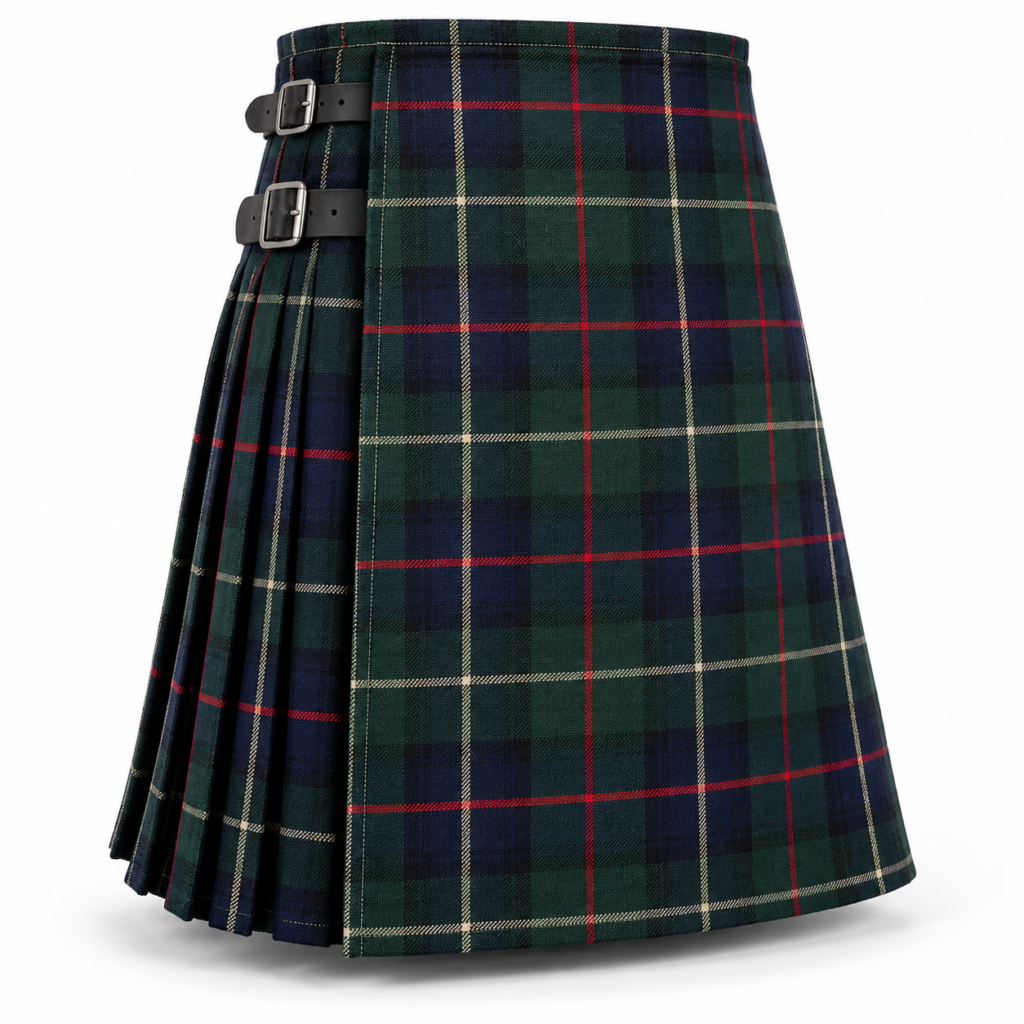
A good kilt hangs straight, swings when you walk and sits on the waist without slipping. When it does not, customers notice quickly, and for a kilt shop or hire company that means returns, alterations and lost repeat orders. Almost every kilt complaint comes from one of seven problems. Most of them start long before the kilt is sewn: in the measurements, the cloth or the pleating instructions.
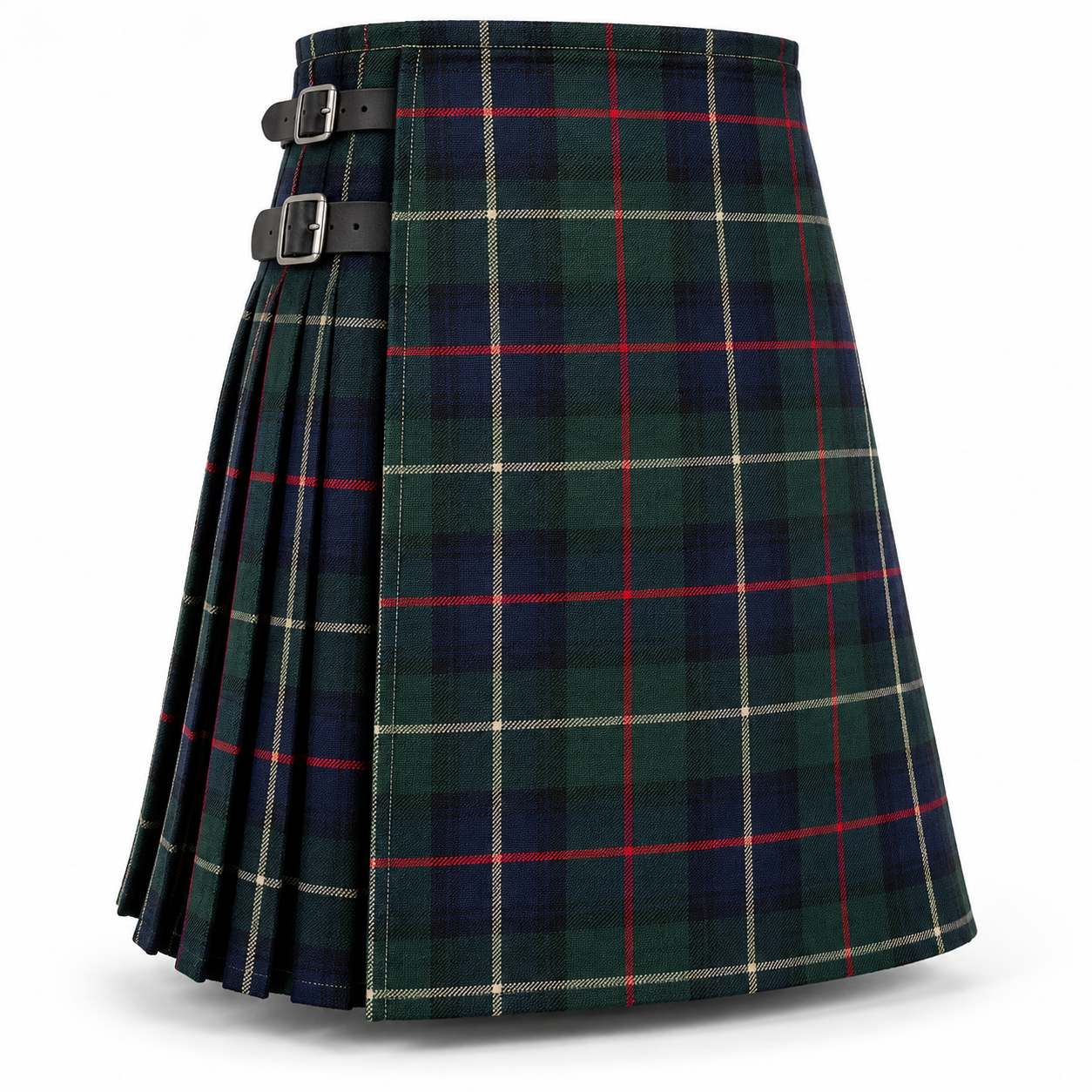
1. The kilt is too long or too short
Why it happens: the waist was measured where trousers sit, not where a kilt sits. A kilt is worn higher, around the navel or a little above it. If the waist is taken at trouser height, every other measurement shifts and the hem drops below the knee.
The fix: measure the waist at the natural kilt line and measure the length (the “drop”) from that point to the middle or top of the kneecap while the customer stands straight. Our kilt measurement guide explains each measurement step by step.
2. The kilt sags at the back
Why it happens: the seat (hip) measurement is missing or the fell, the stitched part of the pleats between waist and hip, is cut too straight. The pleats then have nothing to sit on and the back drops lower than the front.
The fix: always take the seat measurement at the fullest part, and taper the fell from waist to seat so the pleats hug the body. On a fit sample the hem should be level all the way round.
3. Pleats flare open or look uneven
Why it happens: pleat depth changes from pleat to pleat, the pleats were not pressed with enough heat and steam, or the cloth is too light to hold a crease.
The fix: use a fixed pleat depth from the pattern, stitch the fell evenly and press the pleats properly before finishing. For hire stock, a medium or heavy weight cloth keeps its pleats much longer than a light one.
4. The tartan does not line up
Why it happens: the tartan sett (the repeating pattern) was not centred on the front apron, or the cloth was cut without following the repeat.
The fix: agree the apron placement before cutting, normally with a strong line or the centre of the sett in the middle of the front apron, and check it on every size.
5. The wrong pleating style
Why it happens: the order said “pleated” without saying how. There are two main styles:
| Pleating style | What you see at the back | Typical use |
|---|---|---|
| Pleated to the sett | The tartan pattern repeats across the pleats and looks like the flat cloth | Civilian and dress kilts |
| Pleated to the stripe | One chosen stripe shows in the middle of every pleat, giving a striped look | Military and many pipe band kilts |
The fix: write the pleating style, and for stripe pleating the colour of the stripe, on the order and the tech pack.
6. Straps and buckles fail
Why it happens: thin leather, weak stitching through the cloth, or buckles placed where the kilt is under the most tension.
The fix: specify strap material and width, reinforce the cloth behind each strap and test the straps on the sample by fastening and unfastening them many times. Hire kilts need the strongest straps of all.
7. The kilt loses its shape after a few wears
Why it happens: no inner canvas or interfacing in the fell, a weak waistband, or the wrong care.
The fix: build the waistband with support and a lining, and give customers simple care advice: hang the kilt by its loops, store it rolled or hung, and dry clean wool instead of washing it.
A quick kilt quality checklist
- Waist, seat and length measured at the kilt line
- Pleating style and stripe colour written on the order
- Sett centred on the front apron
- Even pleat depth and level hem
- Strong straps and reinforced strap positions
- Supported, lined waistband
- Care instructions on the label
Want to know what happens inside the workshop? Read how a kilt is made, step by step, or our kilt manufacturer guide to tartan yardage and wholesale.
Make your own kilts with ZESTLET
ZESTLET is a Highland wear manufacturer in Sialkot, Pakistan. We make kilts, kilt jackets, sporrans and accessories for kilt shops, hire companies and pipe bands, under your own label if you prefer. Orders start from small batches, and we make a sample first so you can check the cloth, pleats and fit before bulk.
- Your tartan, weight and pleating style
- Your size chart, labels and packaging
- Sample first, then bulk production with quality checks
Frequently asked questions
Why is my kilt too long?
Usually because the waist was measured at trouser height. A kilt sits higher, around the navel, so the length must be measured from there to the knee.
Why does a kilt hang lower at the back?
The seat measurement was missing or the fell was not tapered, so the pleats have nothing to rest on. A correct fell keeps the hem level.
What is the difference between pleated to the sett and pleated to the stripe?
Pleated to the sett repeats the tartan across the pleats; pleated to the stripe shows one stripe in each pleat, a style often used for military and pipe band kilts.
How do I stop kilt pleats opening?
Choose a cloth heavy enough to hold a crease, keep pleat depth even and press the pleats properly with steam.
Can kilts be made in small quantities for a shop?
Yes. ZESTLET makes kilts in small batches with a sample first, so shops can test a style before ordering more.