
ZESTLET · OEM / ODM · Private Label
How Jeans Are Manufactured: A Jeans Manufacturer Guide for Brands
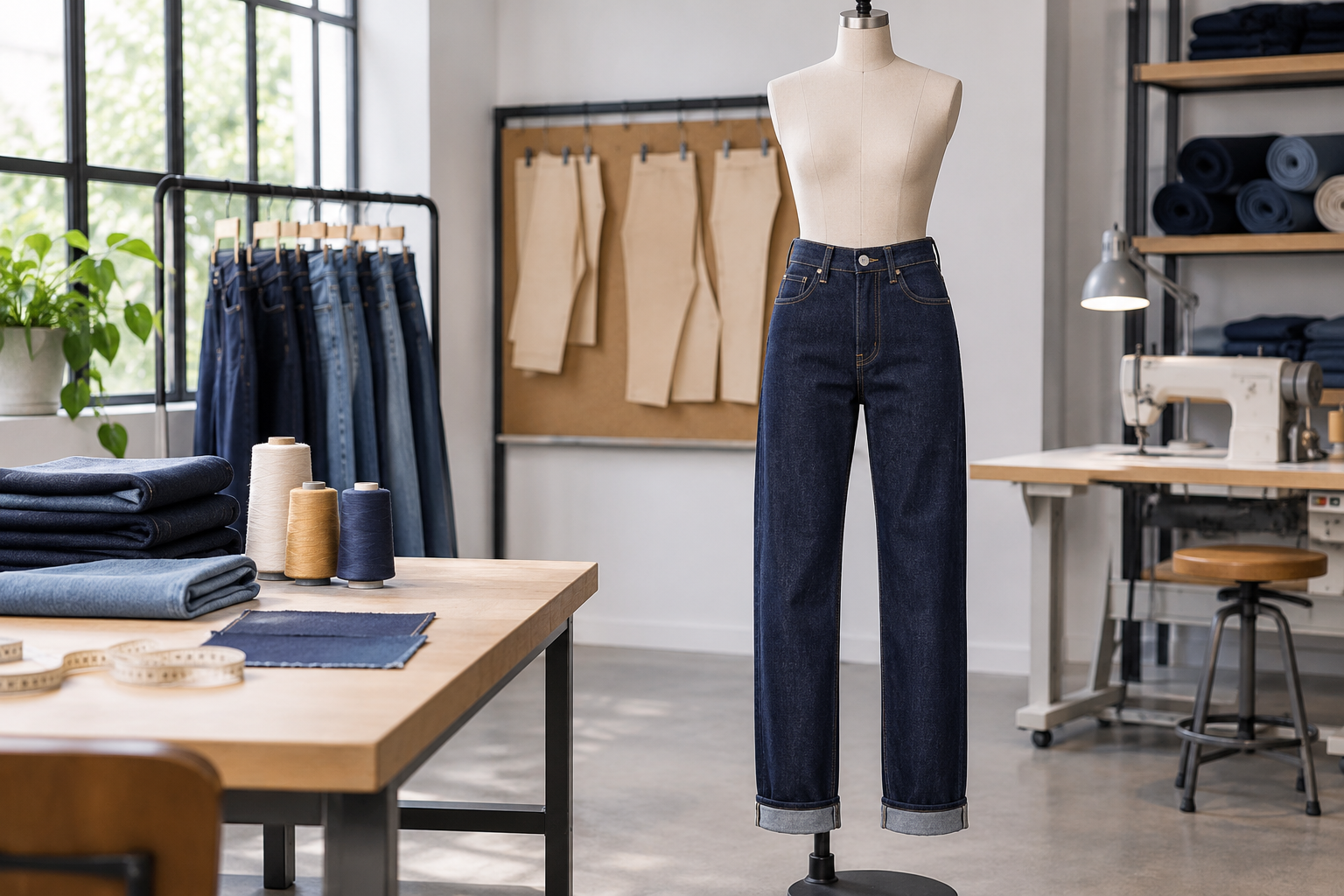
Jeans are made in two stages that both shape the final product: sewing and washing. The cut and construction decide the fit, while the wash decides the colour, softness and final measurements. That is why working with a jeans manufacturer means specifying the denim, the fit, the hardware and the wash together, and approving a washed sample rather than a raw one.
This guide explains how jeans are manufactured step by step, how to choose denim, which construction details to define, and what to send a jeans manufacturer for a reliable quotation.
Choose the denim
Denim is a cotton or cotton-blend twill, traditionally woven with indigo-dyed warp yarns and undyed weft yarns, which is why the inside of jeans is lighter than the face. Key choices are:
| Choice | Options | Effect |
|---|---|---|
| Weight | Light (under about 12 oz/yd²), mid (about 12–14 oz), heavy (above about 14 oz) | Drape, warmth, durability and how the denim fades |
| Stretch | Rigid 100% cotton, comfort stretch, high stretch with elastane | Fit, recovery and how the knees bag over time |
| Weave | Right-hand twill, left-hand twill, broken twill | Texture, softness and leg twisting tendency |
| Colour | Indigo shades, black, sulphur colours, ecru | Wash possibilities and colour transfer |
| Finish | Sanforized (pre-shrunk) or unsanforized; selvedge or wide-width | Shrinkage and cost |
Ask for shrinkage and stretch results on the actual roll, and confirm whether the fabric is a continuous quality available for reorders. See our fabric sourcing guide for the approval steps.
Define the fit
Common fits include skinny, slim, straight, relaxed, bootcut and wide-leg. Each is defined by measurements at the waist, hip, front and back rise, thigh, knee, leg opening and inseam. Because washing shrinks denim, patterns are made larger than the finished size so that the jeans reach the right measurements after washing. Give your manufacturer the finished, after-wash measurements you want and let them calculate the pattern allowance from wash tests.
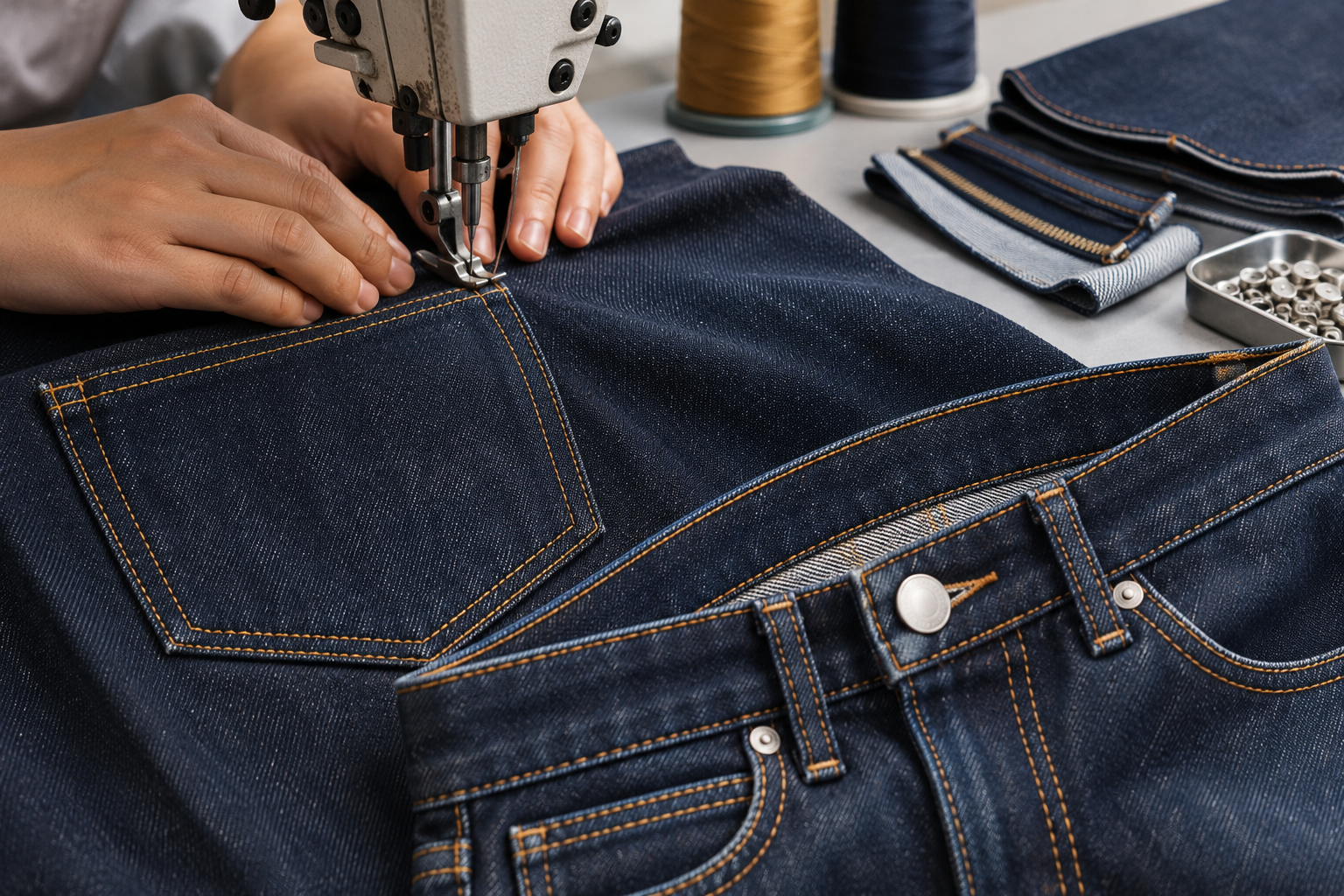
Construction details to specify
| Component | What to decide |
|---|---|
| Waistband | Straight or contoured, height, interlining, number and position of belt loops |
| Fly | Zip or button fly; zip type and length |
| Front pockets | Scoop or slant pockets, coin pocket, pocket bag fabric |
| Back | Yoke shape, back pocket size, position and stitching design |
| Seams | Felled or safety-stitched seams, chain-stitched hems |
| Reinforcement | Bar tacks or rivets at pocket corners and stress points |
| Hardware | Shank button and rivet finish, size and branding |
| Thread | Contrast or tonal topstitching, thread thickness and colour |
| Labels | Waistband patch (leather-look, jacron or woven), care and content labels |
Hardware must survive washing. Ask for button and rivet finishes that resist corrosion and approve them on a washed sample. Our clothing label requirements guide covers the legal content of care and fibre labels.
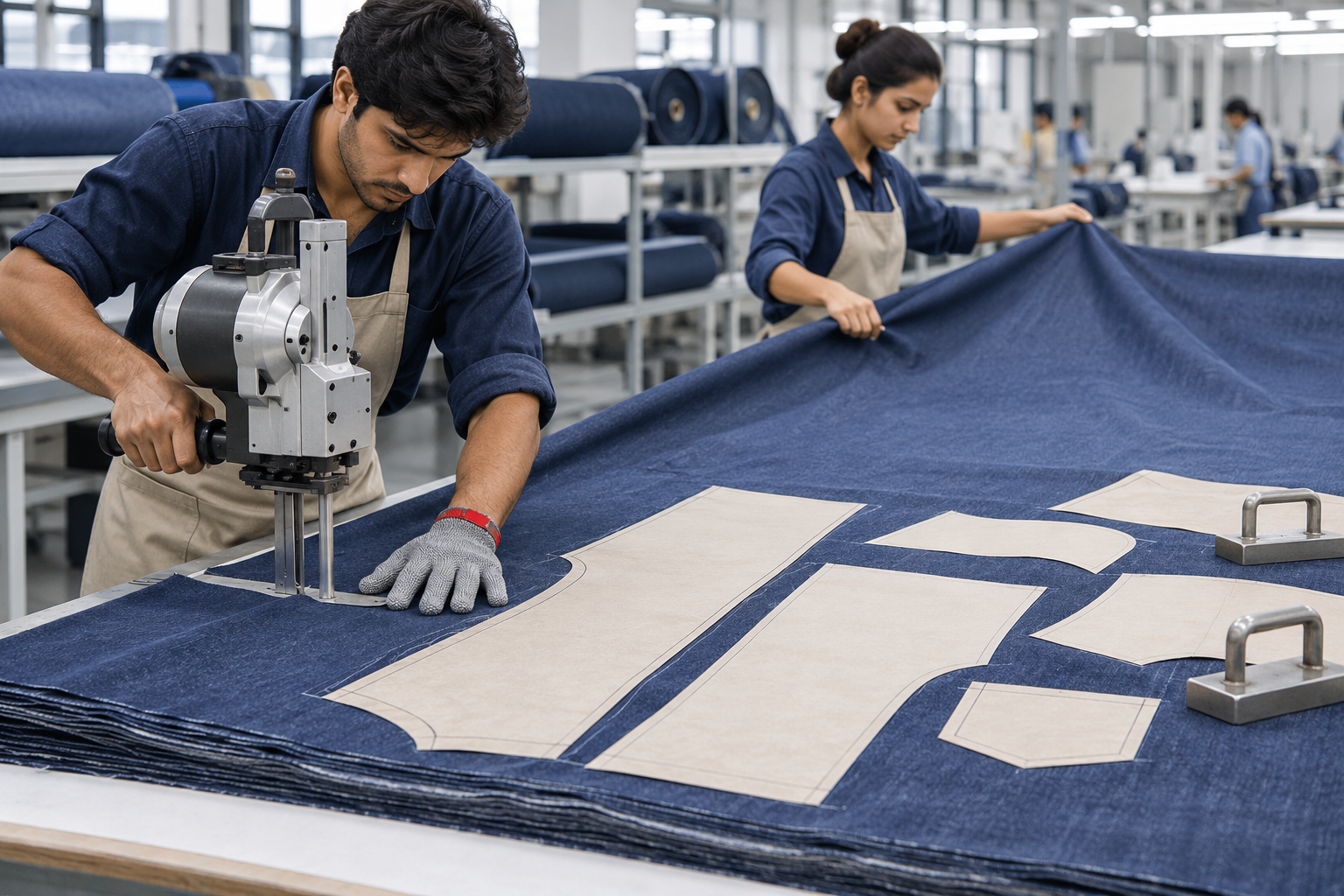
How jeans are manufactured: step by step
- Fabric inspection and shrinkage testing: rolls are checked for defects and shade, and wash tests set the pattern allowance.
- Pattern and marker: the graded pattern is laid out to use fabric efficiently, keeping shade groups together.
- Cutting: layers of denim are cut, and parts are bundled by size and shade.
- Preparing small parts: pockets, pocket bags, fly, belt loops and waistband are sewn.
- Assembly: back pockets go on, then yoke, seat seam, inseam and side seams are joined.
- Waistband, loops and hems: waistband and belt loops are attached and hems finished.
- Buttonhole, button and rivets: hardware is attached by press.
- Washing and finishing: the sewn jeans are washed to the approved look, then dried.
- Pressing, inspection and packing: measurements are checked after wash against the approved sample, then labels and tags are added. See quality control and inspection.
Washing and finishing
Washing turns stiff raw denim into the finished product. Options range from a simple rinse that softens and pre-shrinks, to enzyme and stone washes for a worn look, to bleach for lighter shades and hand-sanding or laser effects for whiskers and fades. Each wash changes colour and size, so approve a wash standard and keep it for reorders.
Traditional denim washing can use large amounts of water, energy and chemicals. Many brands now ask for lower-impact methods such as laser finishing and ozone treatment where available. Ask your manufacturer which wash processes they run in-house or through partner laundries, and how chemicals and wastewater are managed.
Testing before bulk
- Dimensional stability: measurements after home washing must stay within tolerance.
- Colourfastness to rubbing: indigo can transfer onto light seats and skin; agree an acceptable level.
- Seam strength and slippage: especially at the seat seam and pocket corners.
- Stretch and recovery: for stretch denim, check that knees and seat recover after wear.
- Hardware: button pull strength and resistance to corrosion.
What to send for a quotation
- Style and fit with finished measurements
- Denim reference or swatch, weight and stretch
- Wash reference: a physical sample or clear photos with colour standard
- Hardware, thread, labels and patch details
- Size range and quantities per size and wash
Frequently asked questions
How are jeans manufactured?
Denim is inspected and tested, cut to a graded pattern, sewn in stages from small parts to full assembly, fitted with buttons and rivets, washed to the approved finish, then pressed, inspected and packed.
Why do jeans shrink after washing?
Cotton fibres relax and contract when wet. Sanforized denim and factory washing reduce later shrinkage, and patterns are made with an allowance so the finished jeans measure correctly.
What denim weight should I choose?
Mid-weight denim suits most everyday jeans. Lighter weights suit warm climates and relaxed styles; heavier weights give structure and durability.
Can I order jeans in small quantities?
Small runs are possible, but each fabric and wash has minimums. Keep the number of washes small for a first order. See clothing MOQ explained.
Does ZESTLET make jeans?
ZESTLET manufactures woven trousers and workwear such as tactical cargo pants. For denim and washed finishes, send your specification and wash reference so we can confirm the right production route before quoting.
Related guidance
This guide is original ZESTLET editorial content based on apparel development practice. Continue with the best fabric for tactical cargo pants, choosing a clothing manufacturer and private label clothing.