
Fabric selection · OEM / ODM · Private label
Best Fabric for Tactical Cargo Pants: Ripstop, Poly-Cotton and NYCO Compared
Choosing the best fabric for tactical cargo pants starts with the job: shortlist poly-cotton ripstop for general-duty development, cotton ripstop for a cotton-focused brief, NYCO where abrasion is a priority, stretch woven for movement, and reinforcement panels for local wear. Confirm the choice with actual swatches, specifications and tests.
By ZESTLET Editorial Team · Sialkot, Pakistan · Updated 27 October 2026
This buying guide supports brands, importers and uniform suppliers developing custom tactical pants. It compares material options, not laboratory-tested ZESTLET fabric grades. No mill specification, test result or price is implied by a fabric name.
Which fabric is best for tactical cargo pants?
There is no single best tactical pants fabric for every buyer. Compare the exact fibre blend, weave, weight, finish and test evidence against the intended use. A fabric that feels comfortable in an office fitting may behave differently after repeated washing, kneeling, abrasion or exposure to a hot working environment.
Start with the product brief for custom tactical cargo pants with knee pad pockets. Pocket layout, fit, pad access and reinforcement placement affect the finished garment as much as the base cloth.
| Option / composition to discuss | GSM | Strength checks | Comfort checks | Price basis | Potential use |
|---|---|---|---|---|---|
| Poly-cotton ripstop: 65% polyester / 35% cotton option | Mill grade to confirm | Tear, tensile, seam strength | Handle, moisture comfort, air permeability | Quote selected grade | General-duty uniforms |
| Cotton ripstop: 100% cotton option | Mill grade to confirm | Tear, abrasion, washing durability | Handle, drying and shrinkage | Quote selected grade | Cotton-focused or hot-climate brief |
| NYCO: 50% nylon / 50% cotton option | Mill grade to confirm | Abrasion, tear and seam performance | Handle, drying, wearer trial | Quote selected grade | Wear-intensive field use |
| 4-way stretch woven: polyester / elastane option | Mill grade to confirm | Seam performance, recovery, growth | Movement and fit after washing | Quote selected grade | Active work and mobility |
| Reinforced panel: high-denier nylon option | Mill grade to confirm | Abrasion, snagging, seam compatibility | Stiffness and bulk at panel joins | Quote panel area and grade | Local knees, seat or pocket wear |
Why no guessed GSM or price ranking? The product development record does not yet contain approved mill sheets or current fabric quotations. A composition can be offered in several weights and constructions. Denier describes yarn linear density; it does not directly specify fabric GSM or guarantee strength.
Is ripstop a different material from poly-cotton or NYCO?
Ripstop describes a reinforced weave construction; poly-cotton and NYCO describe fibre blends. They are different parts of a specification, so the choice is not simply ripstop versus NYCO. A nylon-cotton or polyester-cotton cloth can itself use a ripstop weave. Ask for composition and construction as separate fields.
The visible grid alone cannot establish performance. Yarn size, density, finishing and the base weave all matter. Two olive fabrics with similar grids may differ in weight, tear behaviour and washing stability. Use the supplier article number to identify the exact grade rather than approving a colour photograph.
When should you choose poly-cotton ripstop?
Poly-cotton ripstop is a practical starting option for a general-duty tactical pants brief when you want to compare a polyester-cotton blend with a reinforced grid construction. The ZESTLET product page lists a 65/35 development option. Approve its actual weight, handle, colourfastness and washing performance before ordering bulk production.
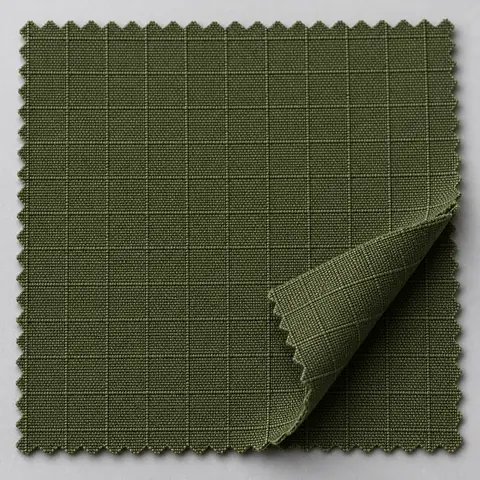
A blend ratio does not set a universal strength or drying time. Ask whether the candidate cloth suits the intended washing process, then test a sewn sample with its trims and decoration. Compare appearance after laundering as well as the original swatch.
When is cotton ripstop worth considering?
Consider cotton ripstop when the brief prioritises a cotton fabric and its feel against the skin. ZESTLET lists a 100% cotton option for development. Evaluate comfort in the intended climate alongside drying, shrinkage, colour change and durability; cotton content alone does not prove that a finished garment will feel cooler.
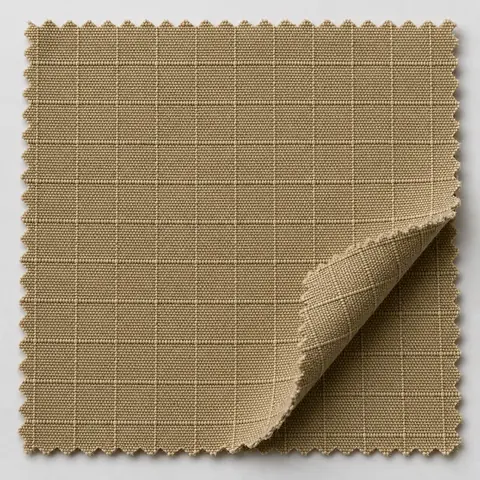
Check the sample after the specified wash and dry cycle. Measure the waist, inseam and pocket dimensions again. A comfortable unwashed prototype is not enough if bulk garments will be laundered differently. Finishing and weave density can change the feel of otherwise similar cotton constructions.
When should you compare NYCO tactical pants fabric?
NYCO means a nylon-cotton blend, and a 50/50 option is included in the ZESTLET development range. It is worth comparing for wear-intensive field applications, but the name does not establish an abrasion rating, protection level or military approval. Request the specific mill sheet and test results for the proposed grade.
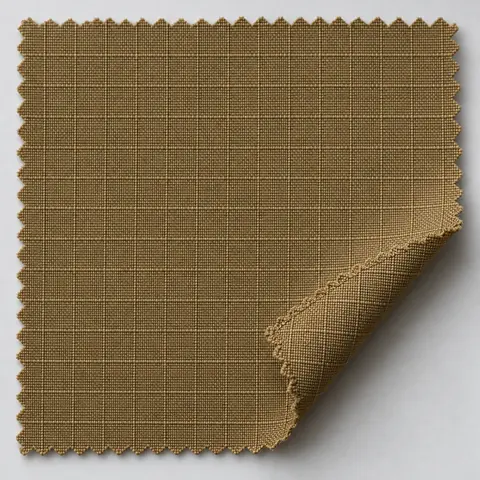
Compare like with like: fabric weight, construction, finish and test method should be visible in the comparison. A strong claim from a branded fabric supplier applies to that supplier’s tested material, not automatically to every nylon-cotton cloth or to ZESTLET’s proposed garment.
When is four-way stretch woven useful for tactical pants?
Four-way stretch woven is an option when movement and fit are central to the brief. For custom tactical pants, confirm the stretch directions, elongation, recovery and permanent growth of the selected cloth. Check knee-pad stability and loaded pockets during movement; a stretchy fabric does not replace a well-developed pattern.
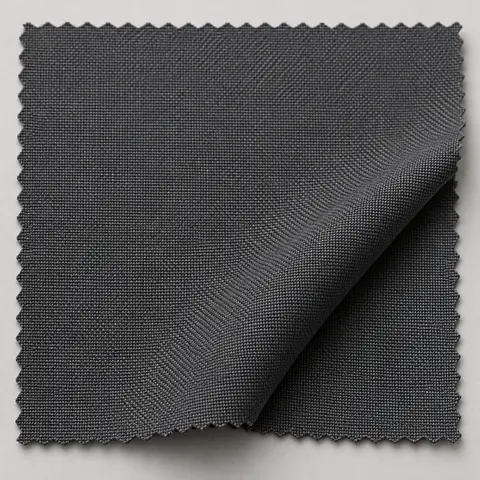
Ask the mill to state the exact polyester/elastane composition and care limits. Wear-test squatting, stepping, sitting and kneeling, then examine recovery. Check reinforcement joins because a less extensible panel can restrict the surrounding stretch cloth. Test embroidery or transfers on the actual fabric before approving decoration.
Where should reinforced nylon panels be used?
Reinforcement is usually a local construction decision rather than a reason to use the same heavy cloth throughout the trouser. Knees, seat and selected pocket edges may need different wear resistance from the main body. Specify the panel grade, coverage, seam layout and comfort requirements, then evaluate the assembled garment.
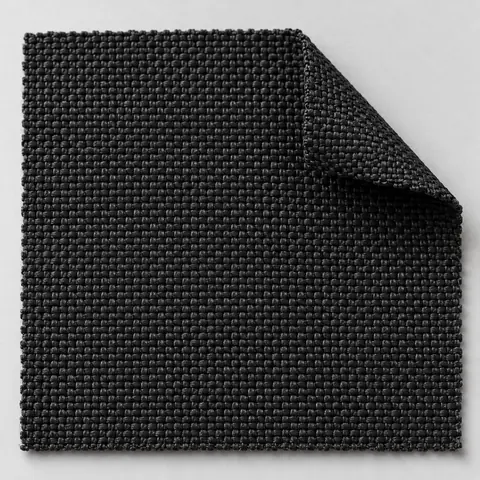
A high-denier yarn description is not a measured abrasion result. Check stiffness, snagging and bulk around knee-pad openings and pocket flaps. Confirm that the reinforcement and base cloth can tolerate the same care cycle without excessive differential shrinkage or puckering.
How do climate, use and budget change the fabric choice?
Choose the fabric by a written use case, then shortlist candidates that meet it. Describe the climate, activity, washing routine, loaded pockets, expected wear zones and target cost. Compare physical swatches and sewn prototypes rather than selecting the lowest GSM, highest synthetic content or most expensive fabric name by itself.
- Climate: describe heat, humidity, wind and whether the wearer works indoors or outdoors. Assess air permeability and wearer comfort for the actual construction.
- Activity: list kneeling, climbing, sitting and repetitive movement. Define knee-pad fit, pocket access and range of motion.
- Durability: identify wear zones, laundering frequency and acceptable appearance changes.
- Budget: request a quotation using the same quantity, colour, finish and test scope for each candidate. Compare garment cost, not cloth price alone.
See tactical pants fit and construction options before freezing the material brief. The best choice may combine a main fabric with stretch inserts or local reinforcement.
Which fabric tests should a tactical pants buyer request?
Request tests that answer the risks in your buying brief: tensile and tear strength, abrasion, seam performance, colourfastness and dimensional change after washing. Add stretch recovery or water repellency when those features are specified. Agree the method, sample identity, conditioning, wash cycle, acceptance criteria and report scope with the laboratory before testing.
| Check | What to request |
|---|---|
| Tensile and tear | Warp and weft results, units, specimen preparation and selected method; ISO 13934-1 is one tensile strip-method reference. |
| Seams and abrasion | Test the agreed construction and report the endpoint, failure mode and sample identity. |
| Colourfastness | Choose washing, rubbing, perspiration or light exposure according to intended use; include staining as well as colour change where relevant. |
| Washing stability | Specify washing and drying conditions and number of cycles; record length and width changes. |
| Stretch and finishes | Agree recovery, residual growth or repellency requirements and whether performance is checked after washing. |
Test-method numbers describe how a property is assessed; they are not certificates or pass grades. ZESTLET’s market requirements and testing documentation section explains how to request applicable reports for the selected fabric/product. Confirm the issuer, report reference, date and tested scope.
What should buyers check about water-repellent and stain-release finishes?
Treat a finish as an additional specification with its own chemistry, care instructions and performance evidence. Water repellency, waterproofness and stain release are different properties. Ask whether the proposed finish is available for the selected fabric, what it does after washing, and what documentation supports any chemical or environmental claim.
For a PFAS-related requirement, define the destination market and the exact declaration or testing scope needed. Do not assume that “DWR”, “eco” or a fabric photograph proves PFAS absence. Ask the supplier and accredited laboratory to confirm the relevant chemistry, test coverage and claim wording. Finish availability for ZESTLET’s proposed grades is confirmed during development.
How should you approve fabric before bulk production?
Approve an identified physical swatch together with a specification sheet, then approve a garment sample made from the agreed material and trims. Record the fabric article, composition, measured GSM, usable width, colour reference, finish and care method. Attach agreed tests and tolerances so the approved sample can guide bulk inspection.
- Send the brief: quantity, destination market, climate, fit, colour, decoration and target use.
- Review the swatch: label each candidate and assess feel, appearance and construction.
- Agree the sheet: composition, weight tolerance, width, shrinkage, finish, colour reference and required documentation.
- Test the sample: check movement, loaded pockets, knee-pad access, washing and decoration.
- Freeze the standard: keep approved samples and written changes together before the production order.
ZESTLET is an OEM / ODM and private label apparel manufacturer in Sialkot, Pakistan. Our tactical cargo pants manufacturing page covers pockets, labels, packaging and the production process. Sampling is free; the buyer pays shipping. Fabric sourcing, tests and delivery terms are agreed for the order.
What else do buyers ask about tactical pants fabrics?
Is ripstop better than poly-cotton for tactical pants?
They describe different things. Ripstop is a weave construction, while poly-cotton is a fibre blend. A poly-cotton fabric can use a ripstop weave. Compare the exact composition, construction, weight and test evidence, then approve a swatch and garment sample for the intended use.
What GSM is best for tactical cargo pants?
There is no universal best GSM. Weight must suit the climate, activity, pocket construction and durability brief. ZESTLET’s actual mill-grade GSM values are confirmed during sourcing; request a specification sheet rather than treating an illustrative range as an approved production specification.
Does NYCO mean a fabric is military certified?
No. NYCO describes a nylon-cotton blend. It does not by itself establish military approval, flame resistance, infrared performance or a protective classification. Any such requirement needs an exact material or model specification and supporting evidence with the relevant scope.
Can I use stretch fabric with knee pad pockets?
It can be considered during development, but pad position and stability must be checked in a sewn sample. Agree the pad dimensions, pocket opening, adjusters and stretch-panel layout. Assess movement, washing stability and recovery before approving the production construction.
How can I request swatches for private label tactical pants?
Send ZESTLET your target market, approximate quantity, intended use, colour, fit and tech pack or reference sample. The team can discuss fabric candidates and the documentation needed for approval. Sampling is free with shipping paid by the buyer; sourcing and testing details are agreed for the order.
Which sources support this buying guide?
The following sources explain construction or test scope. Their product specifications and certificates are not claimed as ZESTLET specifications, supplier relationships or approvals.