
ZESTLET · OEM / ODM · Private Label
Compression Shirt Manufacturer Guide: Fabric, Fit, Seams and Private Label Production
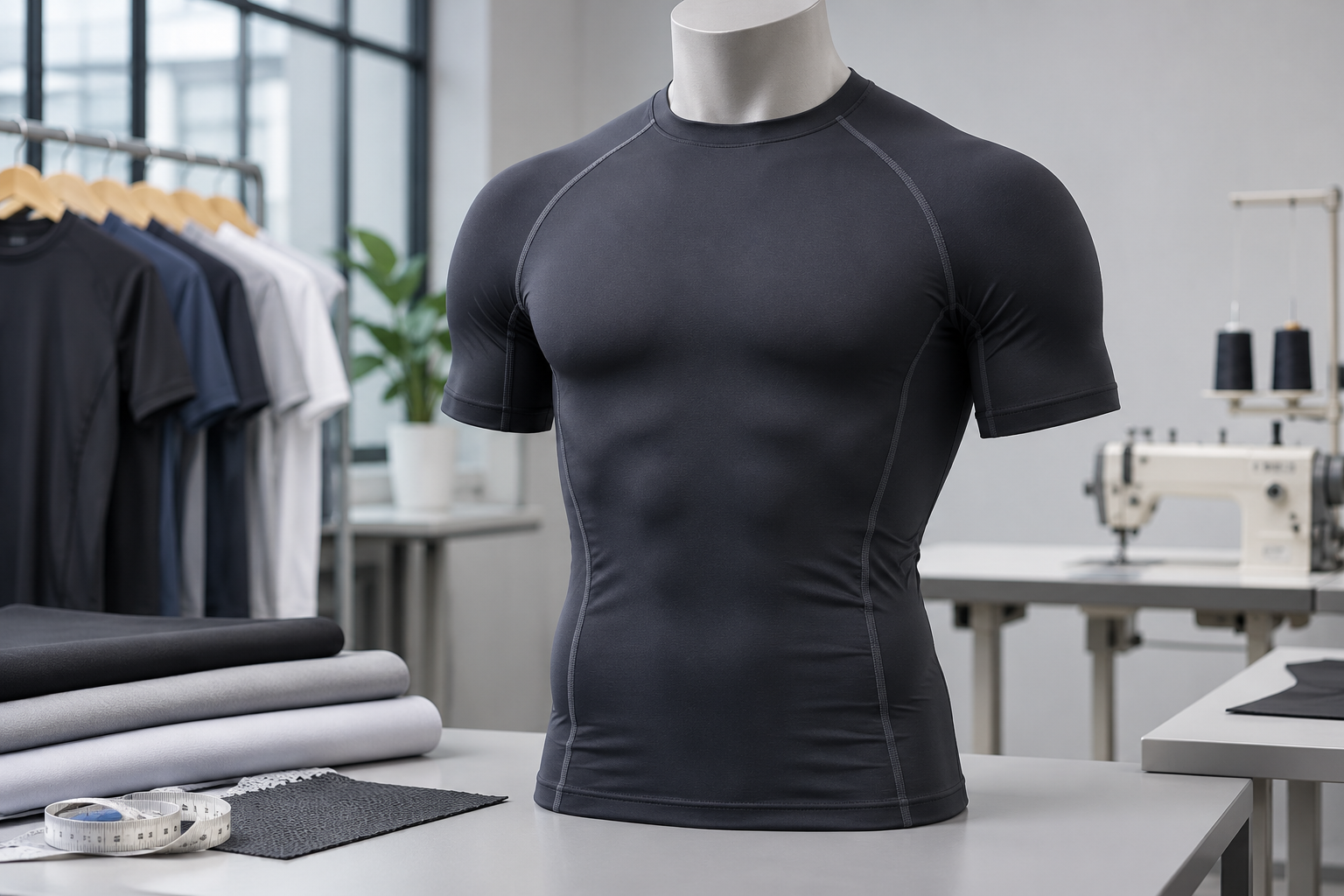
A compression shirt is a close-fitting, high-stretch top designed to sit firmly against the body during training, sport or work. Because it is worn so tight, small differences in fabric, pattern and seams decide whether it feels supportive or simply uncomfortable. A good compression shirt manufacturer controls three things together: a fabric with strong stretch and recovery, a pattern cut smaller than the body, and seams that lie flat under pressure.
This guide explains how compression shirts are specified, made and tested, what to send a manufacturer for a quotation, and which product claims need evidence before you use them in marketing.
Athletic compression versus medical compression
This guide covers athletic and everyday compression apparel: training tops, base layers, rash guards and undershirts. It does not cover medical compression garments, which apply a specified, graduated pressure measured in mmHg and are regulated as medical products in many markets. If your product is intended to treat or prevent a medical condition, it needs a separate regulatory route and qualified advice.
For athletic compression shirts, avoid health or performance claims such as faster recovery or improved blood flow unless you hold evidence that supports them for your exact product. Describe what the garment physically does instead: close fit, four-way stretch, flat seams and quick drying.
Styles you can develop
| Style | Typical use | Details to decide |
|---|---|---|
| Short-sleeve compression tee | Gym, team training, under-shirt | Crew or mock neck, sleeve length, hem gripper |
| Long-sleeve compression top | Cold-weather training, base layer | Thumbholes, raglan or set-in sleeves, brushed inner face |
| Sleeveless compression top | Gym and bodybuilding | Armhole depth, binding finish |
| Mock neck or half-zip | Outdoor and team sports | Collar height, zip type and garage |
| Rash guard | Water sports, combat sports | Chlorine and saltwater resistance, flat seams, sublimation graphics |
| Work and tactical base layer | Under uniforms and carriers | Low-profile seams, odour-control finish if evidenced, neutral colours |
Fabric: stretch and recovery come first
Compression fabrics are knitted blends of nylon or polyester with a higher share of elastane than ordinary activewear, giving firm four-way stretch and strong recovery.
- Nylon / elastane: smooth, soft and durable with a premium feel; widely used for higher-end compression and base layers.
- Polyester / elastane: lighter on cost, quick drying and suitable for sublimation printing.
- Brushed-back knits: a soft inner face for cold-weather layers.
- Mesh panels: ventilation at underarms or back.
Specify composition, weight, stretch percentage in both directions and recovery after stretching. The feeling of compression comes from how strongly the fabric resists stretching combined with how much smaller the pattern is than the body, so the same pattern in a different fabric will fit differently. Approve the fabric before fit sampling, as described in our fabric sourcing guide.
Pattern and fit
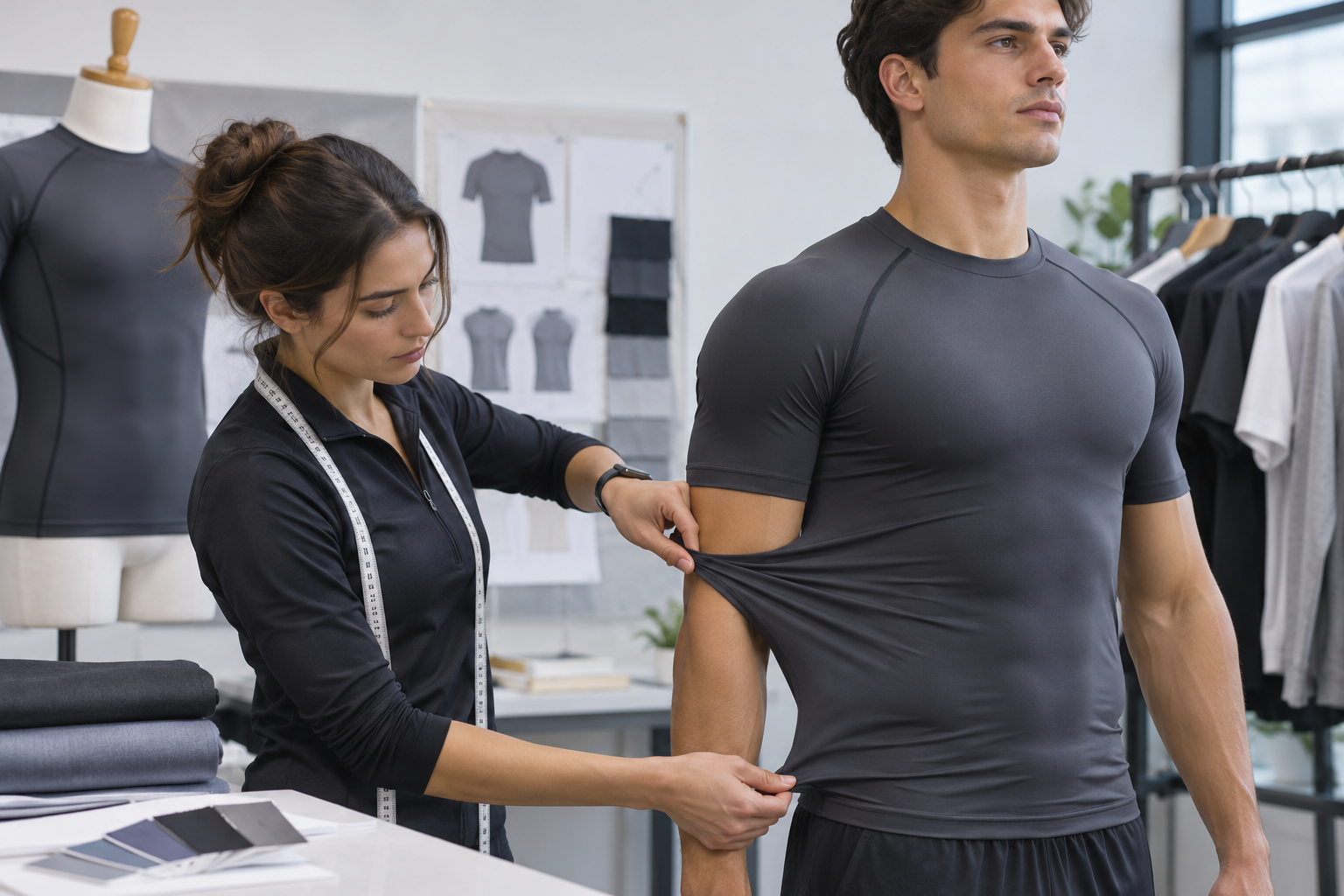
Compression patterns use negative ease: garment measurements are smaller than body measurements so the fabric stretches when worn. Too little reduction and the shirt is simply fitted; too much and it restricts breathing and movement, or becomes see-through when stretched.
- Provide a body measurement chart for your target customer and the intended fit level.
- Use ergonomic panels and raglan or articulated sleeves so the shirt moves with the shoulders.
- Test the base size on a person through lifting, reaching and running before grading.
- Check opacity when stretched, especially on light colours.
- Confirm the neck and sleeve openings can be put on and taken off easily.
Our pattern making and grading guide explains how the base size is approved and graded.
Construction details
| Detail | Recommended approach |
|---|---|
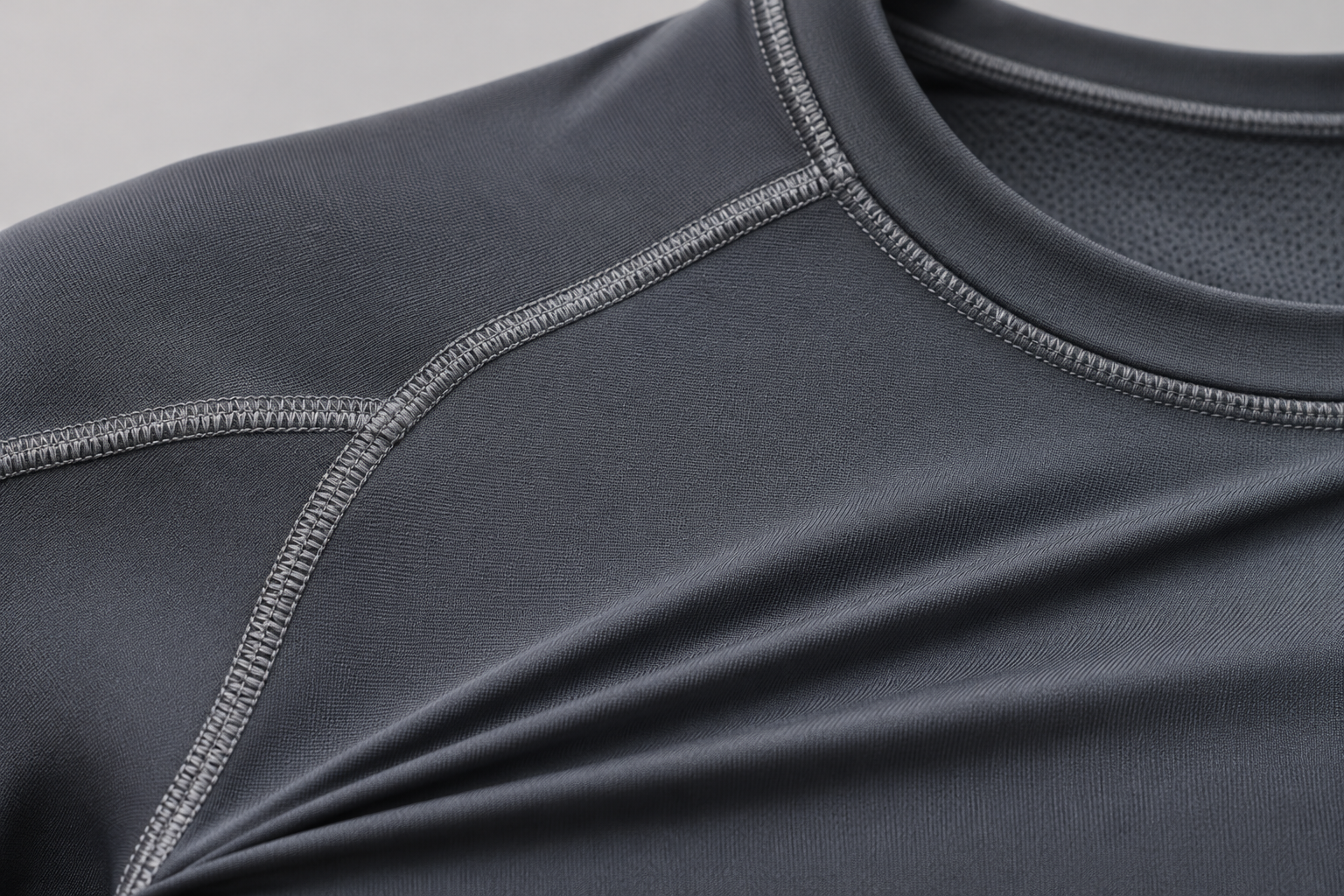
| Seams | Flatlock stitching so seams stay flat and stretch with the fabric |
| Neck | Self-fabric binding or coverstitched band that recovers after stretching |
| Hem | Coverstitch or bonded hem, optional silicone gripper to stop riding up |
| Labels | Printed heat-transfer labels instead of stitched tags to avoid irritation |
| Thread | Stretch-compatible thread; test that stitches do not crack when pulled |
| Extras | Thumbholes, reflective trims, zip garages for half-zips |
Testing before bulk
- Stretch and recovery: the garment should return to its measurements after stretching and washing.
- Seam extension: pull seams to make sure stitches do not break before the fabric reaches full stretch.
- Colourfastness: to washing and perspiration, plus chlorine for rash guards.
- Pilling and abrasion: important where straps, packs or carriers rub.
- Claim evidence: UV protection, antimicrobial and moisture-management claims need test reports on the exact fabric.
Labelling rules still apply to compression apparel: fibre composition and care instructions depend on the market. See clothing label requirements.
What to send for a quotation
- Style, sleeve length, neck type and intended use
- Target fabric or reference garment
- Size range and quantities per size and colour
- Decoration: sublimation, heat transfer, silicone print or embroidery, with artwork
- Labels and packing
- Any performance claims you plan to make, so the right tests can be planned
Frequently asked questions
What is the best fabric for compression shirts?
Nylon with elastane gives a smooth, durable, premium feel; polyester with elastane is lighter on cost and suits sublimation. Choose by use, price point and decoration.
How tight should a compression shirt be?
Firm but comfortable: it should hold close to the body without restricting breathing, movement or circulation. The fit is set by the fabric and the pattern together, so approve it on a person.
Can a compression shirt be a medical garment?
Not unless it is designed, tested and registered as one. Medical compression is a separate regulated category. Athletic compression shirts should not make medical claims.
Can I order private label compression shirts in small quantities?
Yes, though fabric and colour minimums affect price. Start with one or two colours and a core size range. See clothing MOQ explained.
Does ZESTLET manufacture compression shirts?
Yes. ZESTLET produces custom and private label compression and base-layer tops, including tactical base layers such as our thermal base layer top and bottoms. Samples are approved before bulk production.
Related guidance
This guide is original ZESTLET editorial content based on apparel development practice. Continue with the custom sportswear manufacturer guide, the shirt manufacturer guide and quality control and inspection.