
ZESTLET · OEM / ODM · Private Label
TPR Reinforced Mechanics Gloves: 6 Problems Buyers Run Into (and How to Avoid Them)
Build Now, Pay Later · New brands welcome
Launch your brand from 20 pieces. Pay the balance after your stock arrives.
ZESTLET makes your tactical, hunting, uniform and Highland products under your own label. Your first sample and branding setup are free, and orders from $5,000 can pay 60% after delivery.
Budget under $5,000
Startup Launch
- Start from 20 pieces per product
- Your first sample is free
- Labels, screens and digitising are free
- Bulk starts only after you approve the sample
Orders from $5,000
Build Now, Pay Later
- Pay 40% to start production
- Pay the other 60% monthly after delivery
- No interest and no application fee
- Your limit grows with every on-time payment
Your full journey with ZESTLET, step by step
From your first idea to stock in your warehouse. Every step is visible in your free brand dashboard.
- 1Create your free brand accountSign up in about one minute. We email you a 6-digit code to confirm your account.
- 2Check your credit in 30 secondsAnswer 3 short questions in your dashboard and see your pre-qualified credit limit straight away.
- 3Start your projectUpload your design or tech pack, choose the product and quantity. You can start from 20 pieces per product.
- 4Get your quotation within 24 hoursPrice per piece, lead time and payment terms in writing, from real people in Sialkot.
- 5Free sample with your brandingWe make your sample with your logo in 7–10 working days. You only pay the sample shipping.
- 6Approve and pay 40%Bulk production starts only after you approve the sample and pay the 40% deposit.
- 7Production and quality checksCutting, stitching, inspection and packing, with progress updates in your dashboard.
- 8Delivery, then pay 60% monthlyDoor-to-door shipping. Credit orders pay the balance after delivery over 90 to 365 days, with no interest.
What you need to apply
- Your brand name and contact details
- Your product idea, design or tech pack
- An order value from $5,000 for Build Now, Pay Later
- For higher limits: sales history or business registration
Your credit limit grows with you
First credit order
After 2 orders paid on time
After 4 cycles and a review
- Deposit
- 40%
- Balance after delivery
- 60%, monthly
- Repayment
- 90 to 365 days
- Interest and fees
- None
Can I start a clothing brand with a small budget?
Yes. You can start from 20 pieces per product, and your first sample and branding setup are free, so your budget goes into product.
Who can use Build Now, Pay Later?
Brands with orders from $5,000, including new brands with no sales history, after a short review. You pay 40% upfront and 60% in monthly instalments after delivery.
Is the sample free?
Yes, the first sample is made free with your branding. Sample shipping is paid by the buyer.
Credit is subject to approval. Amounts shown in your local currency are approximate.
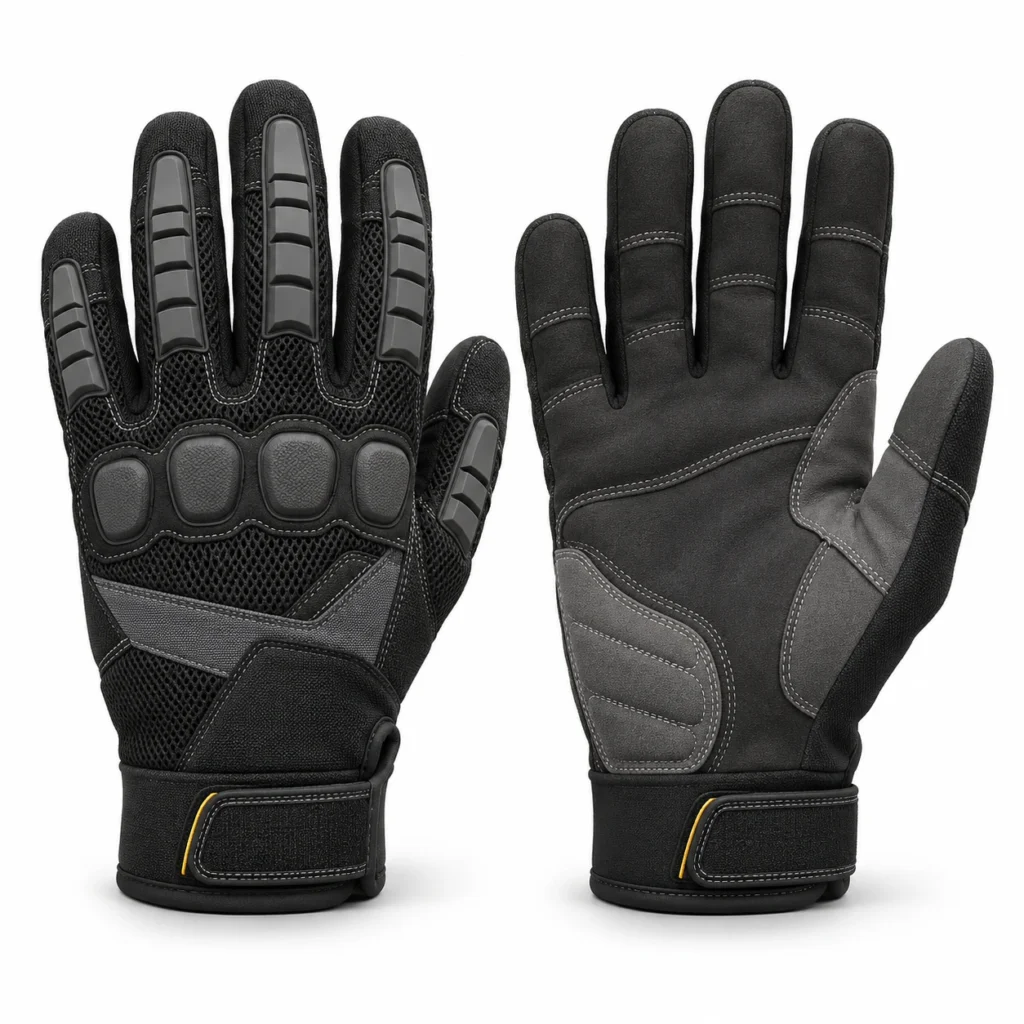
TPR reinforced mechanics gloves are easy to sell from a photo. Segmented rubber-like ribs on the fingers and separate knuckle pieces look tough and technical. But TPR (thermoplastic rubber) adds a layer that changes how the whole glove moves, and that is where most complaints come from. This article covers the problems that are specific to TPR reinforcement, so brand owners, shops and distributors can catch them on the sample instead of in customer reviews. For general mechanics glove issues such as mesh wear and sweaty hands, see our article on breathable mechanics glove problems.
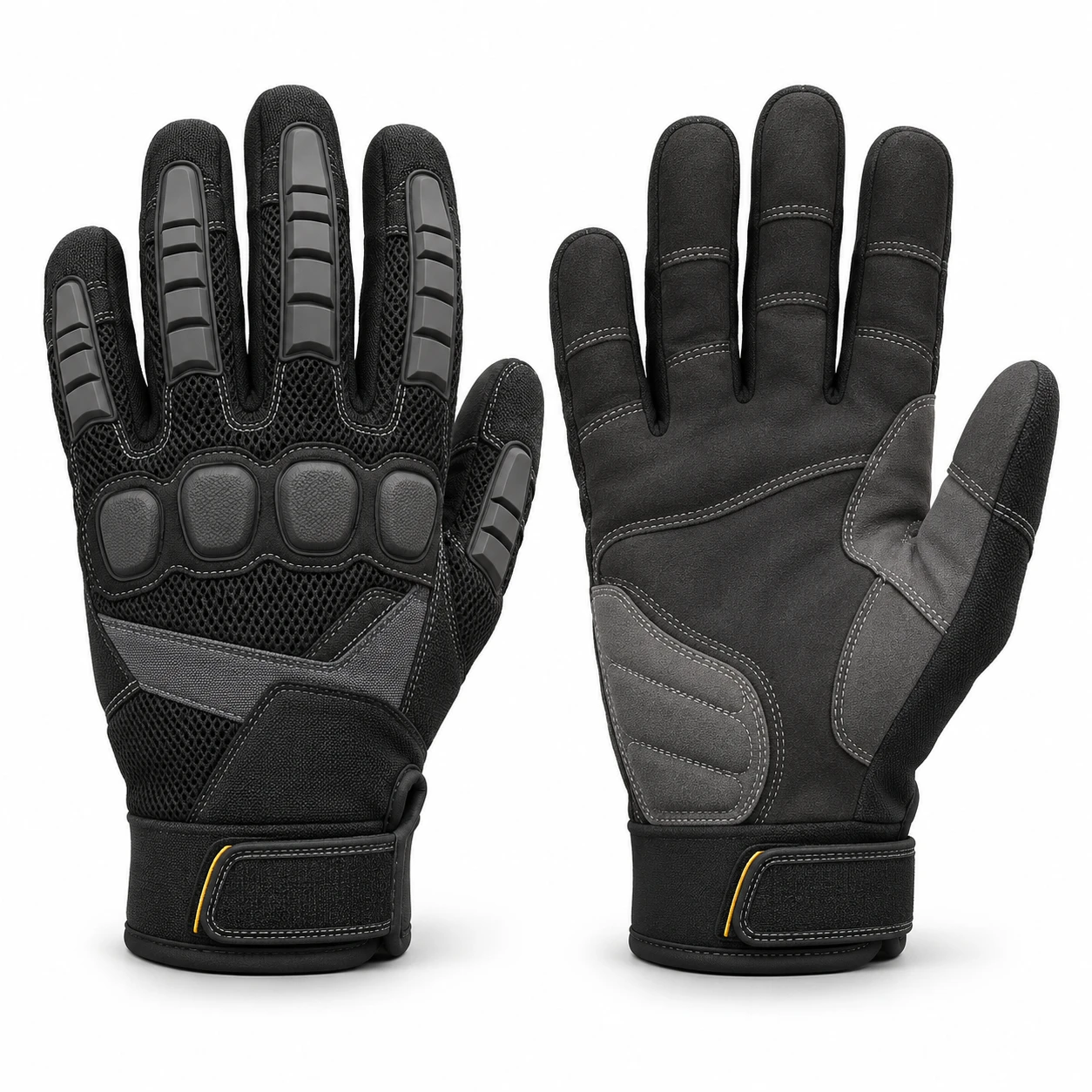
1. Fingers feel stiff when the hand closes
A TPR rib that is too long, too hard or not segmented at the joints fights the finger every time it bends. Users notice it within minutes when gripping a wrench or making a fist.
How to avoid it: specify segmented finger ribs with gaps at the finger joints, and agree TPR hardness and geometry on the sample. Close the hand fully and open it again twenty times while wearing the sample; any resistance will show.
2. Knuckle pieces sit in the wrong place
The knuckle component only makes sense if it sits over the knuckles. If the pattern is graded but the TPR pieces are not, the knuckle pad may land between the knuckles in small sizes or on the fingers in large sizes.
How to avoid it: check knuckle alignment in every size you plan to sell, not only the sample size. Ask how the TPR component sizes or positions change across the grading.
3. TPR edges rub or press on the back of the hand
A TPR piece is firmer than mesh. Hard edges, or the way the piece is attached, can press on the back of the hand or the finger joints during long wear.
How to avoid it: look inside the glove behind each TPR component. Check that nothing hard or rough touches the skin and that the backing under the piece is comfortable. Wear the sample for a full work session.
4. TPR pieces come loose or lift at the edges
How the TPR is attached matters as much as its shape. A piece that is not securely fixed can start lifting at its edges or corners with flexing and washing.
How to avoid it: make the attachment method part of the sample approval. Flex the glove repeatedly, look at the edges of every component, and keep the approved sample as the reference for production.
5. Small sizes become bulky
TPR components take up space. On a small hand, ribs and knuckle pieces designed for a medium glove can cover almost the entire back of the hand, reducing airflow and adding weight.
How to avoid it: review the smallest size separately. Check mesh area left open, fingertip allowance and overall bulk.
6. Customers expect impact protection
TPR looks protective, and buyers often assume it is. But TPR components alone do not establish an impact rating, and no protective rating is claimed for this model.
How to avoid it: describe TPR as reinforcement and styling, not as certified protection. If your market requires impact-rated PPE, define the hazards and obtain test evidence for the final complete glove before making any claim.
TPR sample checklist
| Check | Pass when |
|---|---|
| Finger flexion | Hand closes and opens fully without the ribs resisting |
| Knuckle alignment | Knuckle pieces sit over the knuckles in every size |
| Inside comfort | No hard edges or rough backing touching the skin |
| Attachment | No lifting edges after repeated flexing |
| Small size | Enough open mesh and fingertip allowance |
| Product copy | No impact or protection claims without test evidence |
| Grip | Palm overlays clear of tool handles |
To choose the right TPR layout, read TPR Reinforced vs Standard Mechanics Gloves: Which Should You Stock?. To see how the components are developed and checked, see How TPR Reinforced Mechanics Gloves Are Made: Developing the TPR Components.
Get TPR gloves right before production
ZESTLET is a manufacturer in Sialkot, Pakistan, developing private-label work and mechanics gloves for brands, shops and distributors.
- Small batches welcome
- Sample first, production after your approval
- Private label: your logo, labels and packaging
FAQ
Why do TPR mechanics gloves feel stiff?
Usually because the finger ribs are too long, too hard or not segmented at the joints. Hardness and geometry should be agreed on the sample.
Do TPR knuckles make a glove impact-rated?
No. TPR components alone do not establish an impact rating, and no protective rating is claimed for this model.
How do I know the TPR will stay attached?
Make the attachment method part of sample approval, flex the sample repeatedly and check every edge, then use that sample as the production reference.
Should I test every size?
At least the smallest and largest sizes, because knuckle alignment and bulk change most at the ends of the range.
Can I still get a breathable glove with TPR?
Yes, the back can be breathable mesh or stretch textile, but TPR pieces cover part of it, so check the open area on the sample.