ZESTLET · OEM / ODM · Private Label
How TPR Reinforced Mechanics Gloves Are Made: Developing the TPR Components
Build Now, Pay Later · New brands welcome
Launch your brand from 20 pieces. Pay the balance after your stock arrives.
ZESTLET makes your tactical, hunting, uniform and Highland products under your own label. Your first sample and branding setup are free, and orders from $5,000 can pay 60% after delivery.
Budget under $5,000
Startup Launch
- Start from 20 pieces per product
- Your first sample is free
- Labels, screens and digitising are free
- Bulk starts only after you approve the sample
Orders from $5,000
Build Now, Pay Later
- Pay 40% to start production
- Pay the other 60% monthly after delivery
- No interest and no application fee
- Your limit grows with every on-time payment
Your full journey with ZESTLET, step by step
From your first idea to stock in your warehouse. Every step is visible in your free brand dashboard.
- 1Create your free brand accountSign up in about one minute. We email you a 6-digit code to confirm your account.
- 2Check your credit in 30 secondsAnswer 3 short questions in your dashboard and see your pre-qualified credit limit straight away.
- 3Start your projectUpload your design or tech pack, choose the product and quantity. You can start from 20 pieces per product.
- 4Get your quotation within 24 hoursPrice per piece, lead time and payment terms in writing, from real people in Sialkot.
- 5Free sample with your brandingWe make your sample with your logo in 7–10 working days. You only pay the sample shipping.
- 6Approve and pay 40%Bulk production starts only after you approve the sample and pay the 40% deposit.
- 7Production and quality checksCutting, stitching, inspection and packing, with progress updates in your dashboard.
- 8Delivery, then pay 60% monthlyDoor-to-door shipping. Credit orders pay the balance after delivery over 90 to 365 days, with no interest.
What you need to apply
- Your brand name and contact details
- Your product idea, design or tech pack
- An order value from $5,000 for Build Now, Pay Later
- For higher limits: sales history or business registration
Your credit limit grows with you
First credit order
After 2 orders paid on time
After 4 cycles and a review
- Deposit
- 40%
- Balance after delivery
- 60%, monthly
- Repayment
- 90 to 365 days
- Interest and fees
- None
Can I start a clothing brand with a small budget?
Yes. You can start from 20 pieces per product, and your first sample and branding setup are free, so your budget goes into product.
Who can use Build Now, Pay Later?
Brands with orders from $5,000, including new brands with no sales history, after a short review. You pay 40% upfront and 60% in monthly instalments after delivery.
Is the sample free?
Yes, the first sample is made free with your branding. Sample shipping is paid by the buyer.
Credit is subject to approval. Amounts shown in your local currency are approximate.
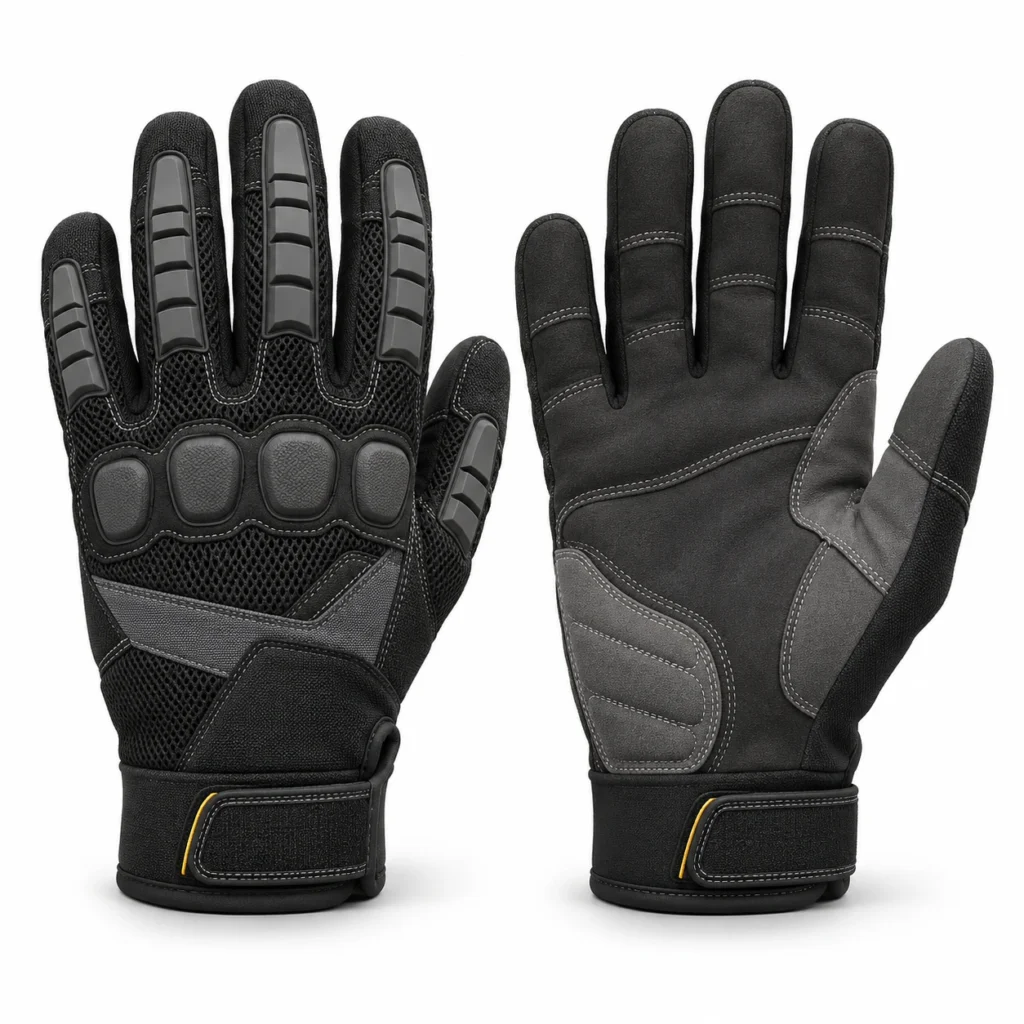
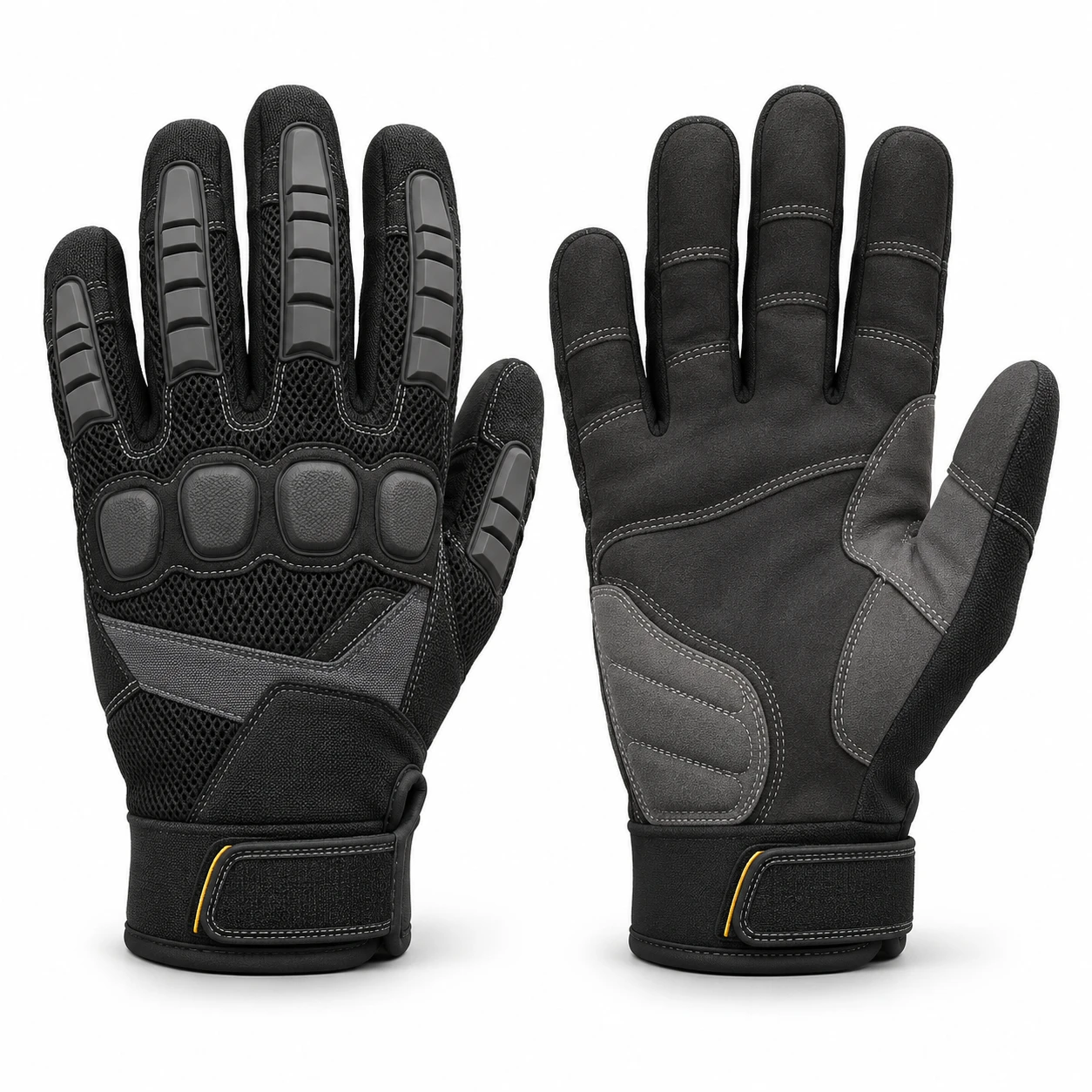
A TPR reinforced mechanics glove is a full mechanics glove with one extra system on top: segmented TPR finger ribs and knuckle pieces. The base glove follows the same development path as any mechanics glove, which we describe in our article on how breathable mechanics gloves are developed and checked, and the cut-and-sew sequence in how tactical gloves are made. This article focuses on what TPR adds to the process and what a TPR mechanics gloves manufacturer should check with you at each step.
Step 1: OEM brief or ODM development
You can start with your own OEM brief (drawing, tech pack or reference glove), or ZESTLET can develop an ODM specification with you. Either way, the brief should state the handling tasks, the movement the hand needs, the destination market, sizes, quantity and branding. For TPR, also note whether you want finger ribs, knuckle pieces or both.
Step 2: Defining the TPR components
Three properties are specified for every TPR component:
- Shape and geometry: the outline, the segmentation at finger joints and the size of each piece.
- Hardness: how soft or firm the TPR feels, which affects flexibility and look.
- Attachment: how the piece is fixed to the back of the glove.
All three are finalised at sample approval, not on paper, because the way they work together can only be judged on a real glove.
Step 3: Base glove and pattern
The pattern sets finger lengths, thumb position, palm overlays and cuff adjustment, exactly as for a standard mechanics glove. Palm and mesh options are compared with the handling tasks. The difference is that the back panel now has to carry the TPR pieces, so their position is laid out on the pattern for each size.
Step 4: Grading the TPR across sizes
This is the step most often overlooked. Fingers and knuckles move further apart as hands get larger. If the TPR layout is not adjusted across the size range, knuckle pieces drift off the knuckles in the smallest and largest sizes. Knuckle alignment is reviewed on samples across the proposed size range.
Step 5: Sample assembly and review
The sample is cut and sewn, and the TPR components are attached by the agreed method. Then review it against this checklist:
| Area | What to check |
|---|---|
| Finger ribs | Full finger flexion, no resistance at the joints |
| Knuckle pieces | Alignment over the knuckles in each size |
| TPR edges | Secure, no lifting after repeated flexing |
| Inside the glove | No hard or rough contact behind components |
| Thumb saddle and palm | Reinforcement coverage, seams clear of handles |
| Cuff | Wrist opening, strap length and overlap |
| Seams | No loose threads or skipped stitches |
Step 6: Approve production details
Once the sample is right, sign off materials, TPR specification, workmanship criteria, packaging, order terms and any required tests. If your market needs impact-rated gloves, this is the point to arrange appropriate testing of the final complete glove, because TPR components alone do not establish an impact rating. MOQ, sample terms and lead time are confirmed in the quotation.
Step 7: Production, pair matching and inspection
Production follows the approved sample. Before packing, pairs are matched for size, shade, component placement and workmanship. For TPR gloves, component placement includes the position of every rib and knuckle piece. Pairs are checked against the agreed acceptance criteria, then packed for export with your pair bags, hang cards, size stickers and carton marks.
Questions to ask any TPR glove supplier
- How will the TPR layout change across sizes?
- Can I feel two TPR hardness options on samples?
- How are the components attached, and how is that checked?
- What is checked at pair matching besides size and shade?
- What test evidence exists if I need a protective claim?
Before your sample review, read TPR Reinforced Mechanics Gloves: 6 Problems Buyers Run Into (and How to Avoid Them), and use TPR Reinforced vs Standard Mechanics Gloves: Which Should You Stock? to decide on the TPR layout.
Start your TPR glove with a sample
ZESTLET is a glove and apparel manufacturer in Sialkot, Pakistan, working with brands, shops and distributors.
- Small batches welcome
- Sample first, production after your approval
- Private label: your logo, labels and packaging
See the TPR Reinforced Mechanics Gloves or send your brief for a quote.
FAQ
What do I need to send for a TPR glove quotation?
The intended task, a reference or drawing, palm and mesh preferences, TPR layout, a hand-size chart, quantity by size, destination, packaging and any testing requirements.
Can you develop the design for me?
Yes. ZESTLET can work from your OEM brief or develop an ODM specification with you.
Why does TPR need grading?
Knuckle spacing changes with hand size, so the TPR layout must be checked in each size to stay aligned.
Where are the gloves made?
ZESTLET develops and produces them in Sialkot, Pakistan.
How are MOQ and lead time decided?
They are confirmed in the quotation, based on your brief, materials and quantities.