ZESTLET · OEM / ODM · Private Label
How to Start a Streetwear Brand With No Money: Low-Cost Production and Financing Options
Build Now, Pay Later · New brands welcome
Launch your brand from 20 pieces. Pay the balance after your stock arrives.
ZESTLET makes your tactical, hunting, uniform and Highland products under your own label. Your first sample and branding setup are free, and orders from $5,000 can pay 60% after delivery.
Budget under $5,000
Startup Launch
- Start from 20 pieces per product
- Your first sample is free
- Labels, screens and digitising are free
- Bulk starts only after you approve the sample
Orders from $5,000
Build Now, Pay Later
- Pay 40% to start production
- Pay the other 60% monthly after delivery
- No interest and no application fee
- Your limit grows with every on-time payment
Your full journey with ZESTLET, step by step
From your first idea to stock in your warehouse. Every step is visible in your free brand dashboard.
- 1Create your free brand accountSign up in about one minute. We email you a 6-digit code to confirm your account.
- 2Check your credit in 30 secondsAnswer 3 short questions in your dashboard and see your pre-qualified credit limit straight away.
- 3Start your projectUpload your design or tech pack, choose the product and quantity. You can start from 20 pieces per product.
- 4Get your quotation within 24 hoursPrice per piece, lead time and payment terms in writing, from real people in Sialkot.
- 5Free sample with your brandingWe make your sample with your logo in 7–10 working days. You only pay the sample shipping.
- 6Approve and pay 40%Bulk production starts only after you approve the sample and pay the 40% deposit.
- 7Production and quality checksCutting, stitching, inspection and packing, with progress updates in your dashboard.
- 8Delivery, then pay 60% monthlyDoor-to-door shipping. Credit orders pay the balance after delivery over 90 to 365 days, with no interest.
What you need to apply
- Your brand name and contact details
- Your product idea, design or tech pack
- An order value from $5,000 for Build Now, Pay Later
- For higher limits: sales history or business registration
Your credit limit grows with you
First credit order
After 2 orders paid on time
After 4 cycles and a review
- Deposit
- 40%
- Balance after delivery
- 60%, monthly
- Repayment
- 90 to 365 days
- Interest and fees
- None
Can I start a clothing brand with a small budget?
Yes. You can start from 20 pieces per product, and your first sample and branding setup are free, so your budget goes into product.
Who can use Build Now, Pay Later?
Brands with orders from $5,000, including new brands with no sales history, after a short review. You pay 40% upfront and 60% in monthly instalments after delivery.
Is the sample free?
Yes, the first sample is made free with your branding. Sample shipping is paid by the buyer.
Credit is subject to approval. Amounts shown in your local currency are approximate.

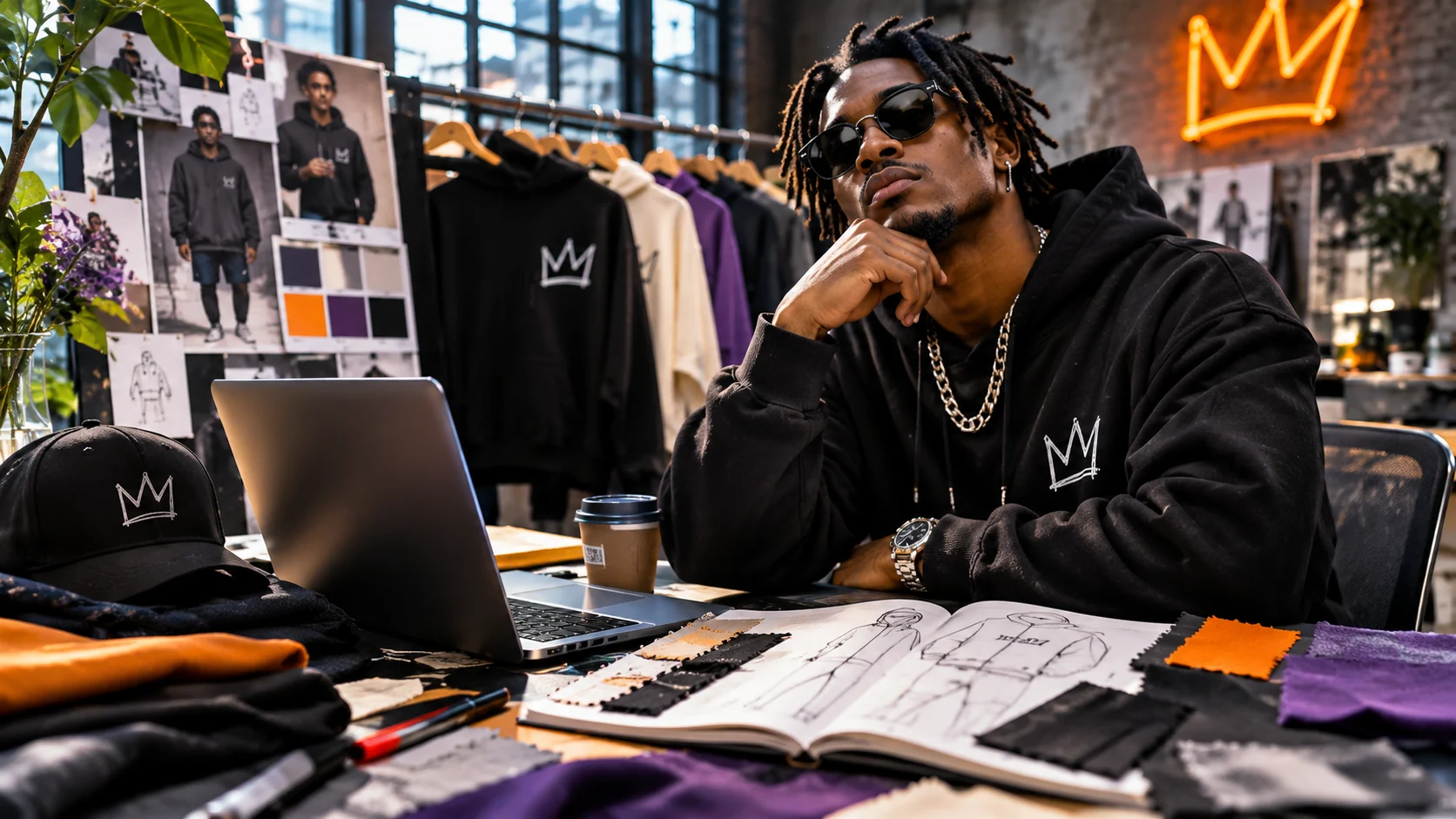
To start a streetwear brand with no money, begin with free audience building and product validation. Then use a small savings buffer, print-on-demand, or carefully planned preorders to test one product before investing in inventory. A literally zero-cash launch is difficult: samples, fulfillment, payment fees, and refunds still need funding.
The biggest mistake new founders can make is spending heavily on inventory before proving that customers want to buy. Launch small, test demand, and reinvest completed sales into stronger products and, when appropriate, custom manufacturing.
This guide explains a realistic low-capital path: choose a focused first drop, reduce production risk, fund samples and inventory without depending on a bank loan, and build a brand with manageable cash flow.
What “No Money” Really Means

“No money” usually means you do not have thousands of dollars for bulk inventory, custom development, professional photoshoots, paid ads, and a large production run. The goal is to reduce the initial investment and use validated customer demand to guide growth.
A low-budget launch can combine:
- Free or low-cost design tools
- Organic social media content
- Print-on-demand or small blank runs
- Transparent preorders
- A limited product range
- Customer-funded production with a refund reserve
- Profits reinvested into the next drop
Print-on-demand reduces unsold-inventory risk because garments are produced after an order. However, it does not remove every upfront cash need. In a typical connected-store setup, the provider bills you separately for fulfillment while customer funds follow your payment processor’s payout schedule. Keep enough money to bridge that gap.
Start With One Product, Not a Full Collection

New brands can overextend by launching hoodies, tees, cargo pants, jackets, caps, and multiple colorways before selling a single product. Start with one clear product category:
- A heavyweight graphic tee
- A boxy hoodie
- A long sleeve shirt
- A crewneck sweatshirt
- A cap, beanie, or limited accessory
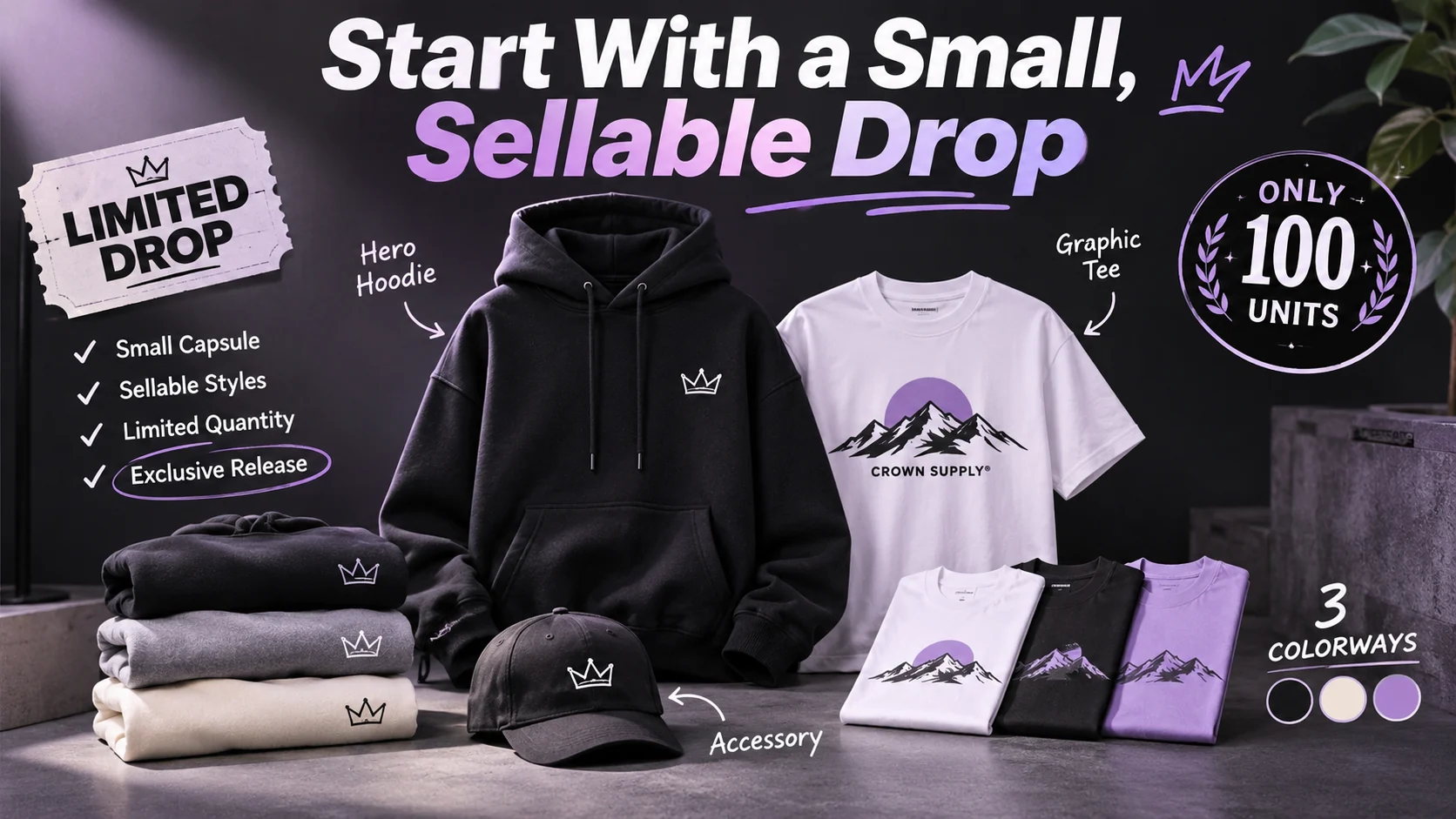
One hero product keeps sampling, photography, sizing, and marketing manageable. Build a story around it and learn what your audience will actually buy. If your budget and demand justify it, add a graphic tee or one accessory later. One to three products is a ceiling for a lean capsule, not a requirement to launch all three.
You do not need 15 styles to look established. You need a product that represents your identity clearly and meets customers’ expectations.
Choose a Streetwear Niche

Streetwear is broad. A clear point of view, community, or subculture makes your offer easier to understand. Possible directions include:
- Skate-inspired streetwear or retro sports aesthetics
- Underground music culture or local city pride
- Minimalist premium basics
- Vintage workwear, Y2K, or techwear-inspired silhouettes
- Motorcycle or racing culture
- Art-driven graphics or original illustrated characters
- Religious or spiritual messaging
- Regional culture or gender-neutral oversized fits
Choose something you understand and can contribute to. Your experience in a local creative scene, music community, or subculture can shape the brand’s story.
Use original artwork or properly licensed material. Anime characters, racing logos, band graphics, and other recognizable imagery may require permission; being “inspired by” a theme does not automatically give you usage rights. Streetwear grows through identity and cultural relevance as well as clothing.
Use Print-on-Demand to Test Demand

Print-on-demand can be a low-inventory starting point. You create a design, list it on a product, and a fulfillment partner prints and ships it after an order. You usually avoid buying a bulk run, renting storage, and packing every parcel yourself.
That makes POD useful for testing graphics, colorways, slogans, and price points. It also has limits: higher unit costs, restricted fits and fabrics, variable print results, and less packaging control. Order a sample before promoting a product as a finished, tested item.
Check the payment flow before launch. Printful’s connected-store payment guidance explains that customers pay your store while Printful charges you separately for fulfillment. You remain responsible for customer refunds. Other providers and storefront models can work differently.
A practical test strategy is:
- Create three to five design concepts.
- Use audience feedback to select one or two for a small test.
- Publish clear photos or accurately labeled mockups.
- Promote them through relevant organic content.
- Track sales, margins, returns, and feedback.
- Keep the strongest product and improve it.
POD can remain a long-term model if its quality, economics, and customer experience suit your brand. Moving to bulk production is an option, not an automatic requirement.
Use Preorders to Fund Your First Run
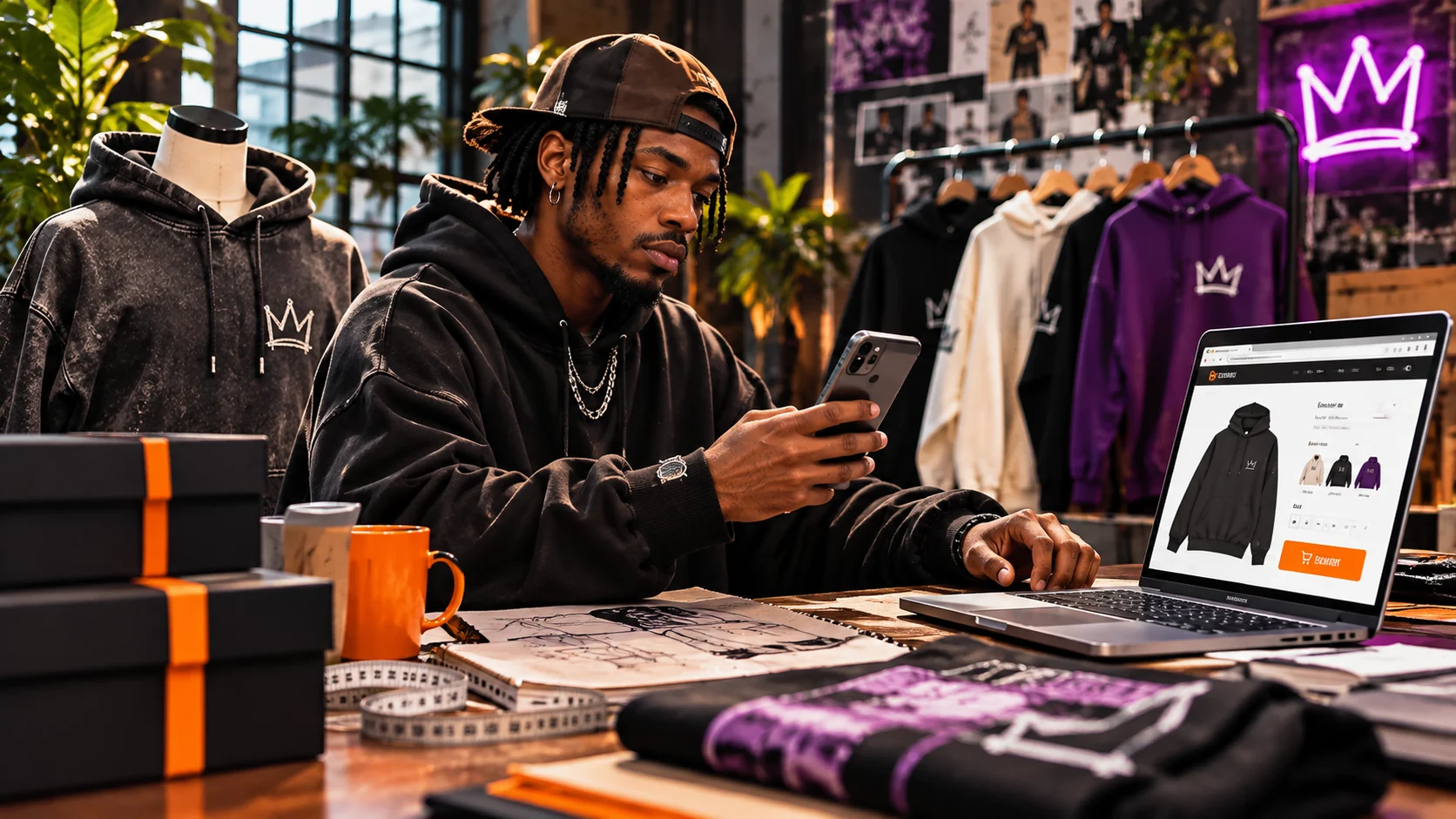
Preorders let customers reserve a product before a full production run. They can reduce inventory risk, but customer payments create fulfillment and refund obligations.
- Create a strong design and product specification.
- Produce and approve a sample.
- Build a simple product page with sizing and material details.
- Confirm supplier quantities, price, and payment terms.
- Set a preorder deadline, minimum order threshold, and realistic shipping estimate.
- Collect orders and confirm cleared funds.
- Retain reserves, place production, and communicate progress.
- Deliver within the stated window or handle delays and refunds properly.
Mockups can test interest before sampling, but label them clearly and avoid presenting untested details as confirmed. For paid custom preorders, an approved sample is the stronger basis for quality and delivery promises.
Explain the timeline using actual dates when you launch. For example: “Preorders close on [date]. Production begins after the minimum is reached. Estimated dispatch is [confirmed window], followed by the stated shipping time.” A generic 4–6-week estimate is not a substitute for a supplier’s production plan.
Budget for payout delays and payment reserves. Keep funds for taxes, refunds, chargebacks, and delivery. For U.S. orders covered by the FTC shipping rule, shipment claims need a reasonable basis and delays require the appropriate consent or refund process. Clear communication alone does not remove those obligations.
See our related guide to financing your first streetwear drop without a bank loan for a deeper cash-flow plan.
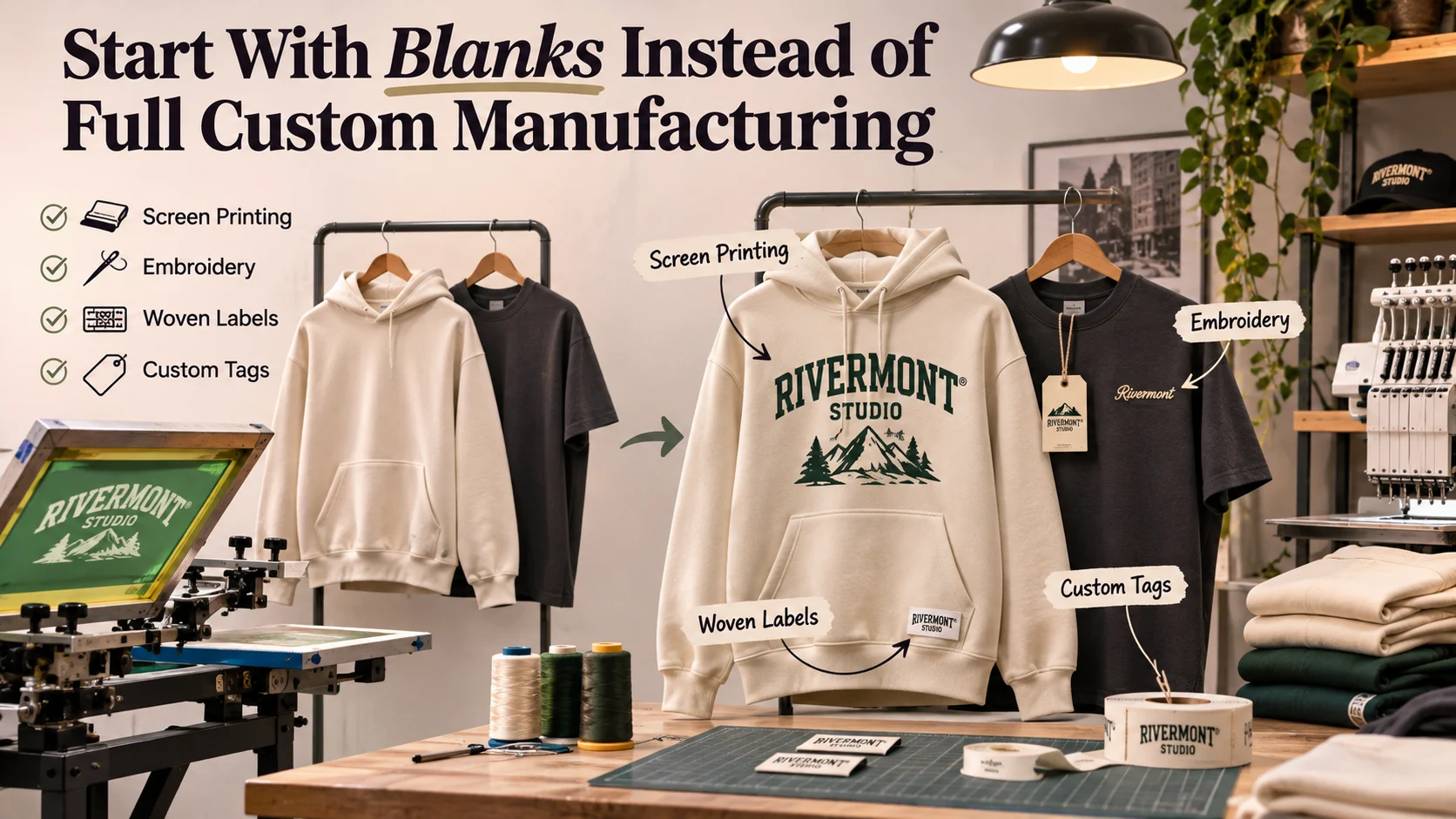
Start With Quality Blanks

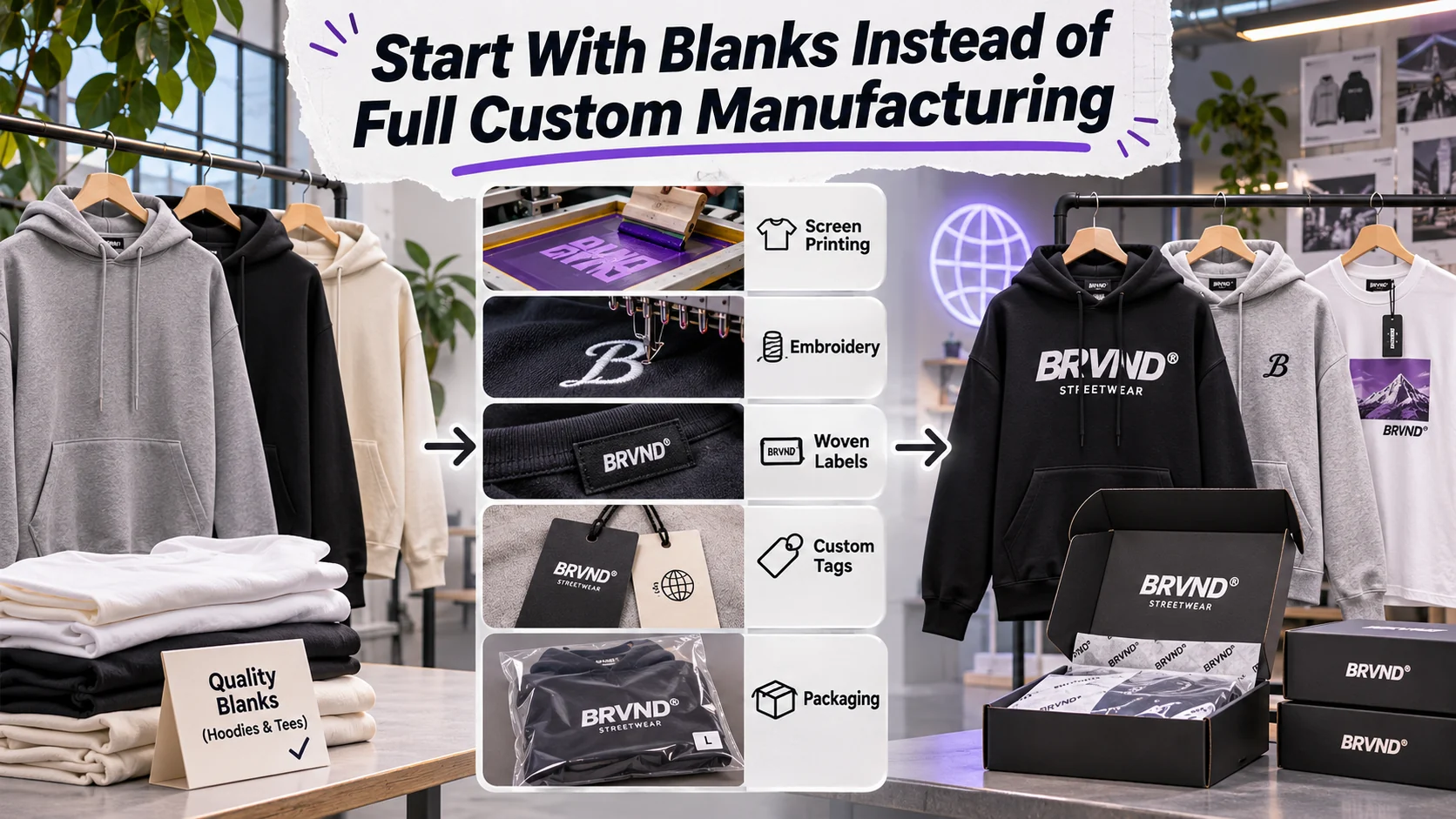
After testing demand, consider blanks with printing or embroidery when you want more control over the garment and decoration. Blanks are premade garments you can customize with:
- Screen printing or DTG printing
- Embroidery and puff print
- Chenille patches
- Woven labels and neck tags
- Custom packaging
A small blank-based run might use 30–50 tees, one main graphic, one or two colors, and simple mailers. This is an example, not a universal minimum: decoration methods, blank availability, and size splits affect what is practical.
Compare fit, fabric, shrinkage, and print durability on a physical sample. Confirm which labels can be replaced and preserve required garment information. Blanks can improve control, but compare total cost with POD rather than assuming the margin is always better.
Move to Custom Manufacturing Only After Demand Is Proven

Custom cut-and-sew gives you greater control over fit, fabric, construction, labels, and trims. It also brings development costs and longer planning cycles. Before committing, prepare:
- Evidence of demand and a clear product direction
- A reliable manufacturer and written specification
- A realistic development and production budget
- Approved sizing, fit, fabric, and decoration
- Cash for samples, production, freight, and delays
Minimum order quantities vary by style, color, material, and factory. Avoid treating a general 50–150-unit range as a rule; ask for the actual minimum and whether fabric or decoration minimums create extra cost.
A possible progression is POD testing, selected blanks, a custom version of your bestseller, then larger runs as repeat demand grows. A founder with proven preorders and enough development cash may choose a different route.
For example, improve a bestselling tee with your preferred fabric weight, boxy fit, collar, label, and packaging before expanding into several new categories.
Calculate Your True Cost Per Unit

Blank plus print cost is only the starting point. Include every expense needed to develop, sell, and deliver the product:
- Blank or manufacturing cost and decoration
- Sampling and development allocated across the run
- Labels, tags, packaging, and mailers
- Freight, customs clearance, and duties
- Payment processing and marketplace fees
- Website and app costs
- Marketing and customer acquisition
- Returns, replacements, storage, and fulfillment
A hypothetical hoodie costing $20 to manufacture could cost $26 or more after other expenses. That is an illustration, not a supplier quotation. Separate landed product cost from selling and overhead costs so you do not count charges twice.
If an illustrative order sells for $50 and its variable costs total $32, it contributes $18 toward fixed costs and profit before applicable taxes. A 36% contribution margin is not automatically a 36% net profit. Use your own quotations and sales data.
Build a Simple Brand Identity
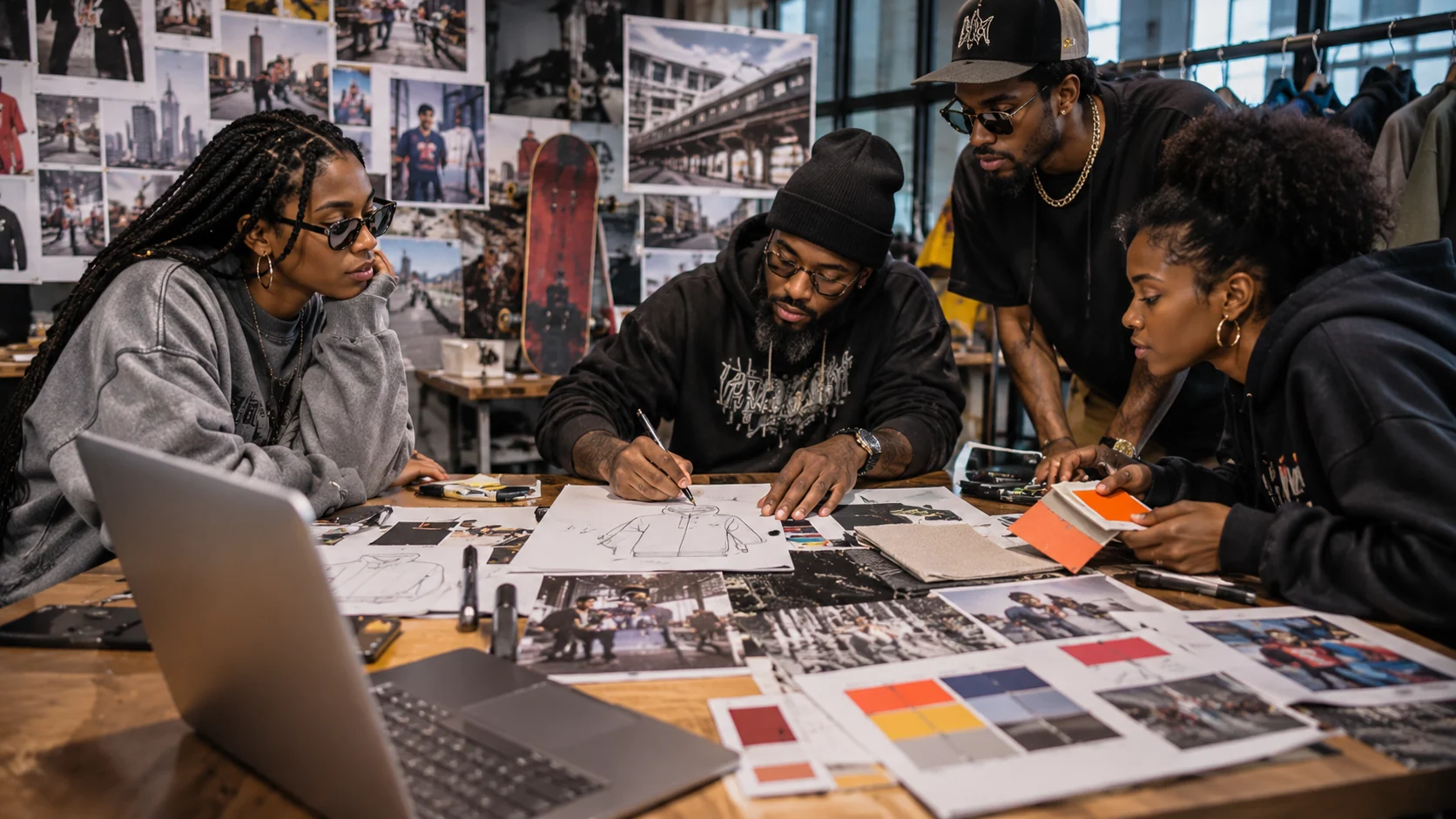
You do not need an expensive logo or elaborate website. You need an identity people can recognize:
- A memorable name and clear wordmark
- A consistent color palette and design language
- A specific target customer
- A brand story and tone of voice
- A recognizable visual style
Ask what the brand represents, how the clothes should feel, what makes the designs distinct, and why someone would choose them. Check name availability and relevant trademark conflicts before investing heavily.
Study established labels for quality and presentation, then develop your own perspective. Copying a successful brand’s logo, graphics, or identity is not a reliable launch strategy.
Create Content Before You Create Inventory
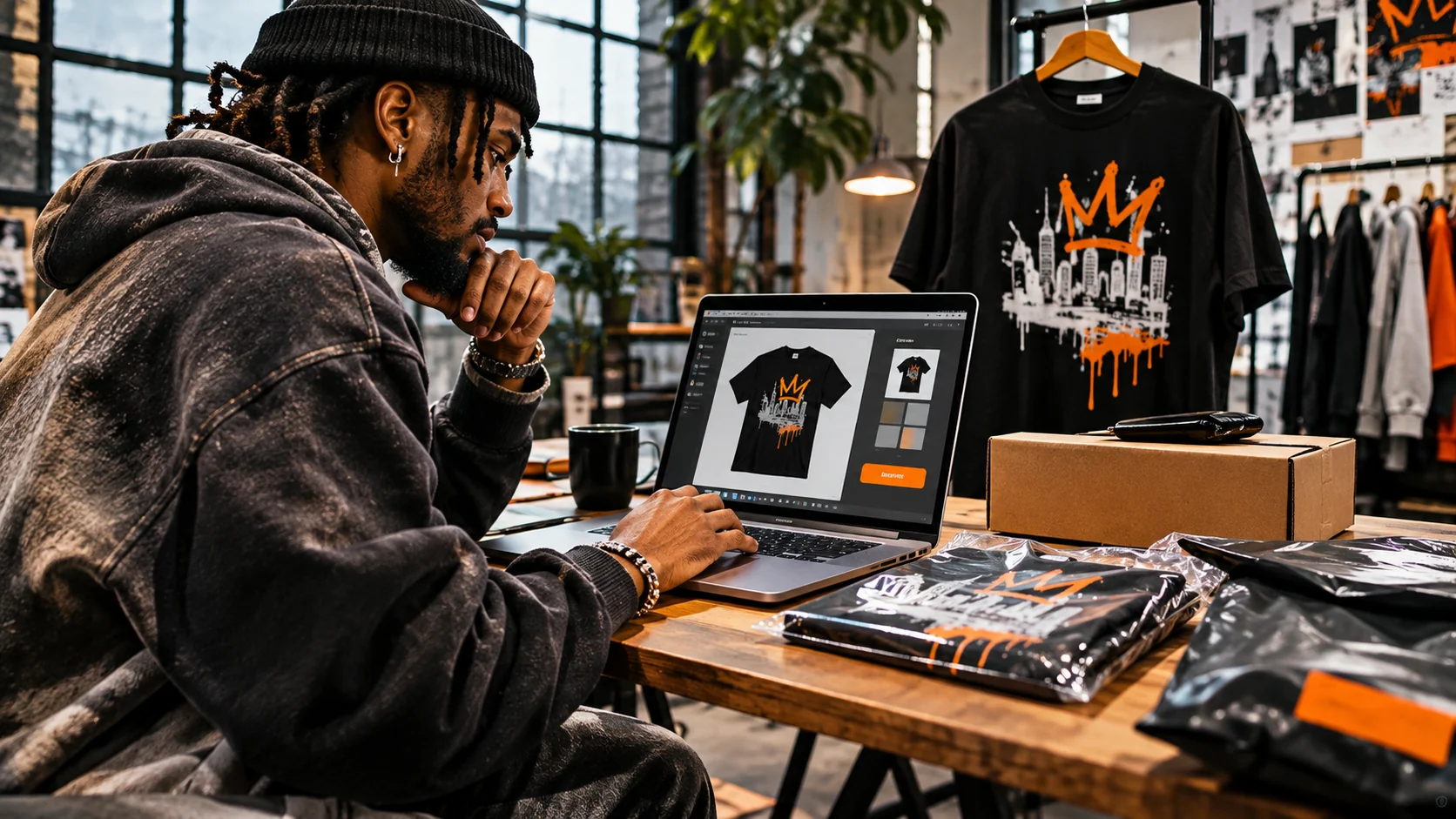
Content can build demand before you commit to stock. It supports financing indirectly by helping you reach future customers; views and likes are not cash or guaranteed sales.
Choose channels your audience uses, such as Instagram Reels, TikTok, YouTube Shorts, Pinterest, X, or a relevant community. Use email for people who have opted in.
Content ideas include sketches, blank comparisons, sample unboxings, print tests, styling, packing, customer feedback, drop countdowns, local inspiration, and the founder’s story. Share only work you own or have permission to show.
A phone, natural light, and consistent editing can be enough. Focus on useful product details and a clear path to join the waitlist or buy. Measure signups and orders alongside engagement.
Build an Email List and Community

An opted-in email list gives you a more direct route to supporters than relying entirely on social feeds. You still depend on service providers, deliverability, and privacy rules, so treat access to subscribers as a responsibility.
Offer early drop access, a launch waitlist, behind-the-scenes updates, exclusive colorway previews, or a carefully budgeted founding-supporter discount. Make the signup purpose clear and provide an easy unsubscribe route.
Communities on Discord, WhatsApp, Instagram broadcast channels, or a private mailing list can also help. Choose a format you can maintain and respect members’ preferences. Give people something useful to participate in before asking them to buy.
Use Organic Marketing Before Paid Ads
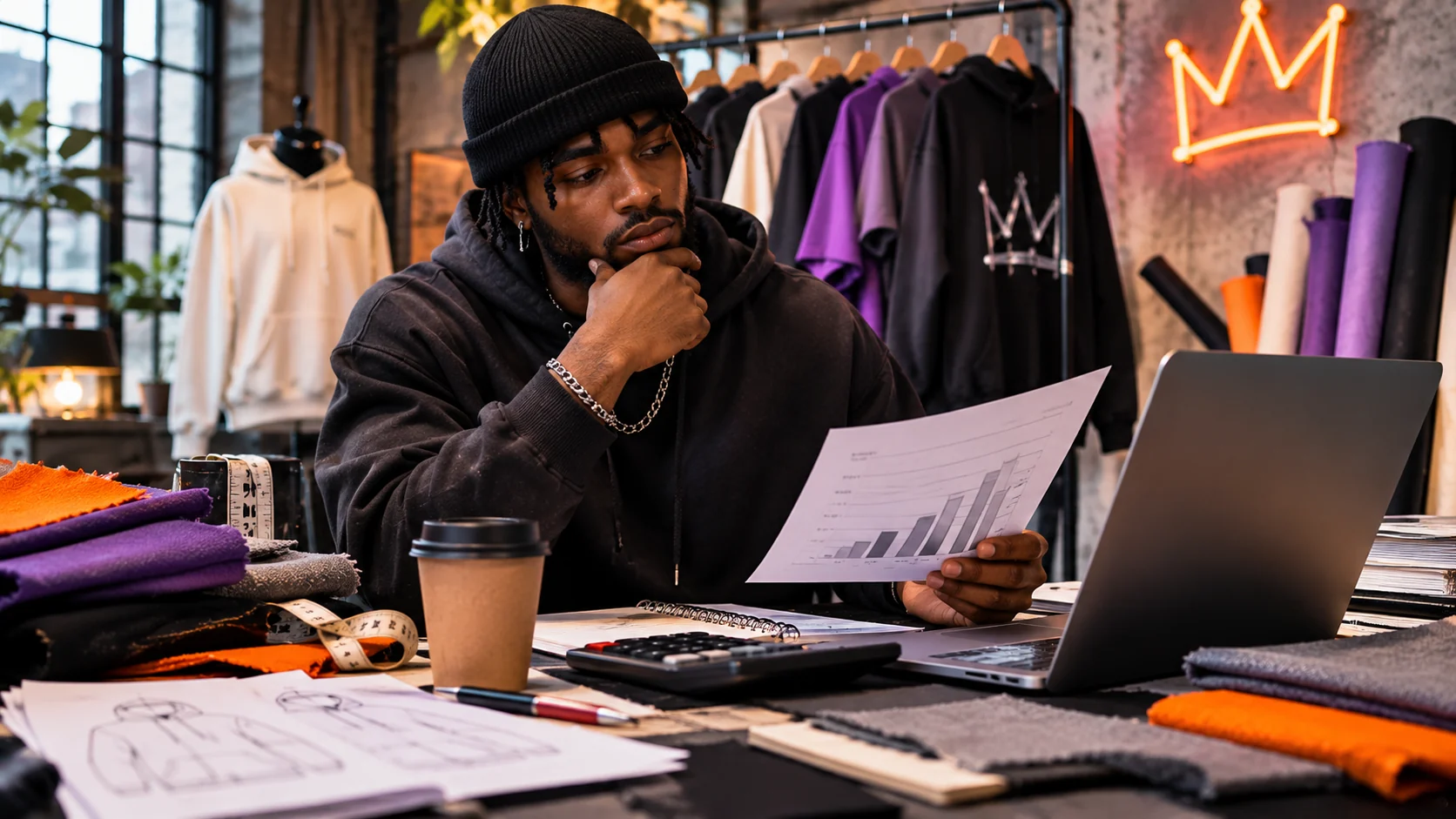
When cash is limited, start with organic content and small collaborations. Paid ads can drain a budget if the product, offer, checkout, or margin is untested.
- Post short videos consistently at a sustainable pace
- Collaborate with small creators in your niche
- Budget carefully for sample seeding and shipping
- Attend relevant local events or pop-ups if affordable
- Invite early supporters to share voluntarily
- Use relevant local communities and tags
- Repurpose content across suitable channels
Organic marketing costs time and sometimes product or travel expenses. Do not assume it is free. Once content produces measurable visits and orders, test a small paid budget against an acceptable customer-acquisition cost.
Negotiate Low Deposits With Manufacturers
First-order credit is not guaranteed, but organized buyers can ask about payment options. Discuss a lower deposit, split payments, sample approval before bulk production, inspection before the balance, or short terms on repeat orders. Payment after delivery requires explicit supplier approval.
A clear enquiry could say:
We are launching a limited streetwear capsule with 50 units across two styles. We can provide a 30% deposit and are looking for a long-term manufacturing partner. Are you open to discussing flexible payment terms for qualified new brands?
First confirm that the quantity meets each style’s minimum. Put due dates, inspection arrangements, currency, and delivery responsibilities in writing. Net terms run from the agreed trigger, which may be the invoice date rather than delivery.
Supplier credit still creates an obligation to pay. Build trust through realistic plans and reliable payments rather than assuming Net 90 is available on an unproven first order.
Avoid Dead Stock

Dead stock is inventory you paid for but cannot sell. It ties up cash you may need for delivery, refunds, or the next release.
- Test one hero product before expanding
- Start with small quantities and limited colors
- Use preorders when the fulfillment plan supports them
- Track sell-through by style, color, and size
- Reorder products with evidence of demand
- Avoid ordering 500 units simply to get a lower unit price
Limited drops can help control exposure, but scarcity does not guarantee sales. Keep a sensible allowance for defects or exchanges and use honest quantities in your marketing.
Keep Your First Drop Simple

Your first drop should be easy to produce, photograph, and explain. One heavyweight tee may be enough. A hoodie or accessory can follow when demand and cash allow.
Keep colors and decoration manageable. Each extra style or color can introduce sampling, stock, or manufacturing minimums. Your first goal is to prove that people want to buy from the brand, not to create a huge catalog.
Price for Profit, Not Just for Sales
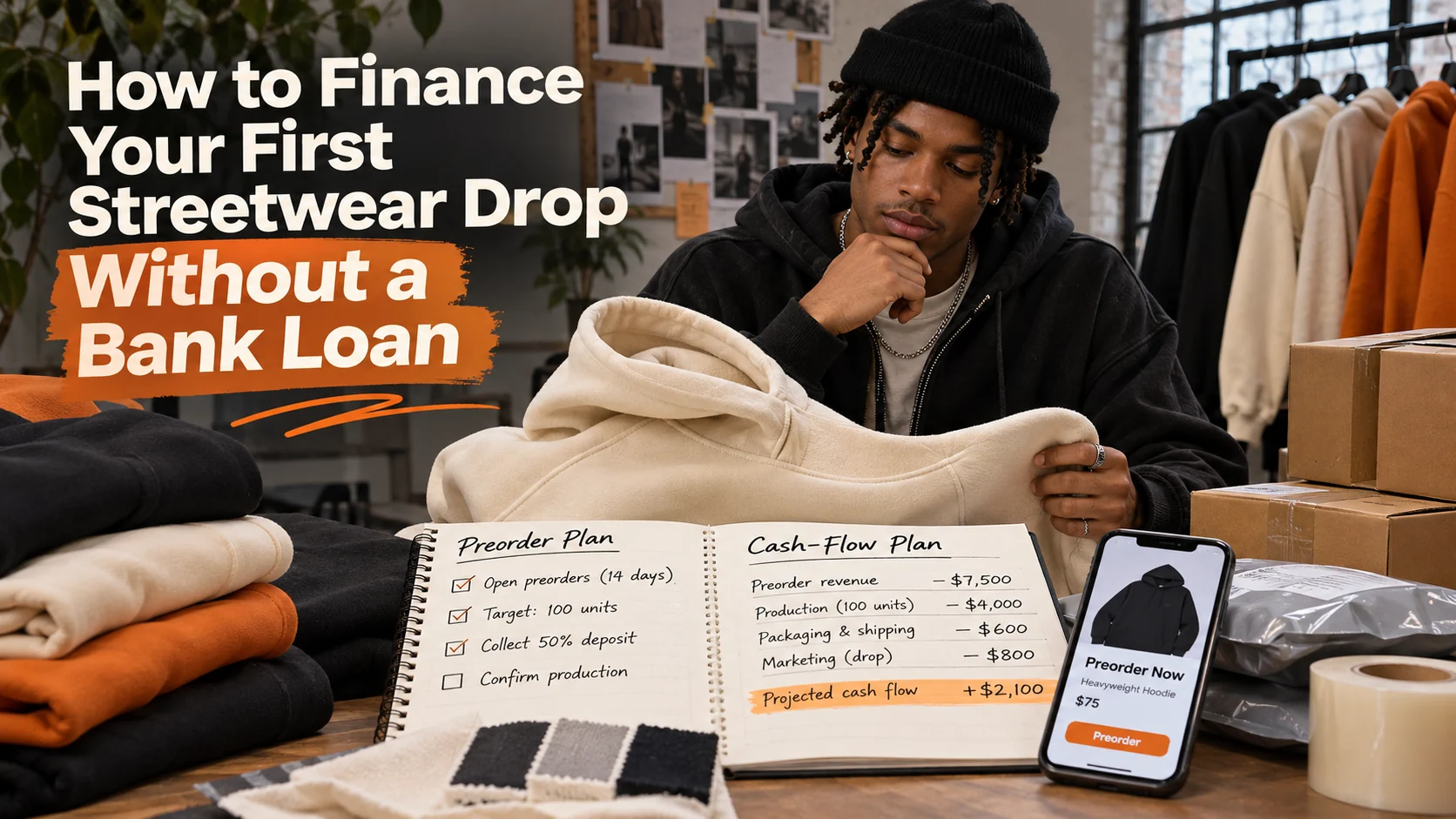
Low prices can generate orders while leaving too little money to deliver reliably or reinvest. Pricing needs to account for product, packaging, shipping subsidies, payment fees, marketing, returns, overhead, and applicable taxes.
Work backward from a realistic selling price and contribution margin. If the numbers do not work, simplify decoration, compare blanks, adjust the offer, or improve sourcing. Reducing quantity lowers total exposure but can increase per-unit cost; calculate both effects.
Do not compete only on price. Identity, quality, storytelling, community, and service all shape value. Reinvest profit after fulfilling orders and covering outstanding obligations, rather than spending gross revenue as if it were profit.
Use Customer Feedback to Improve
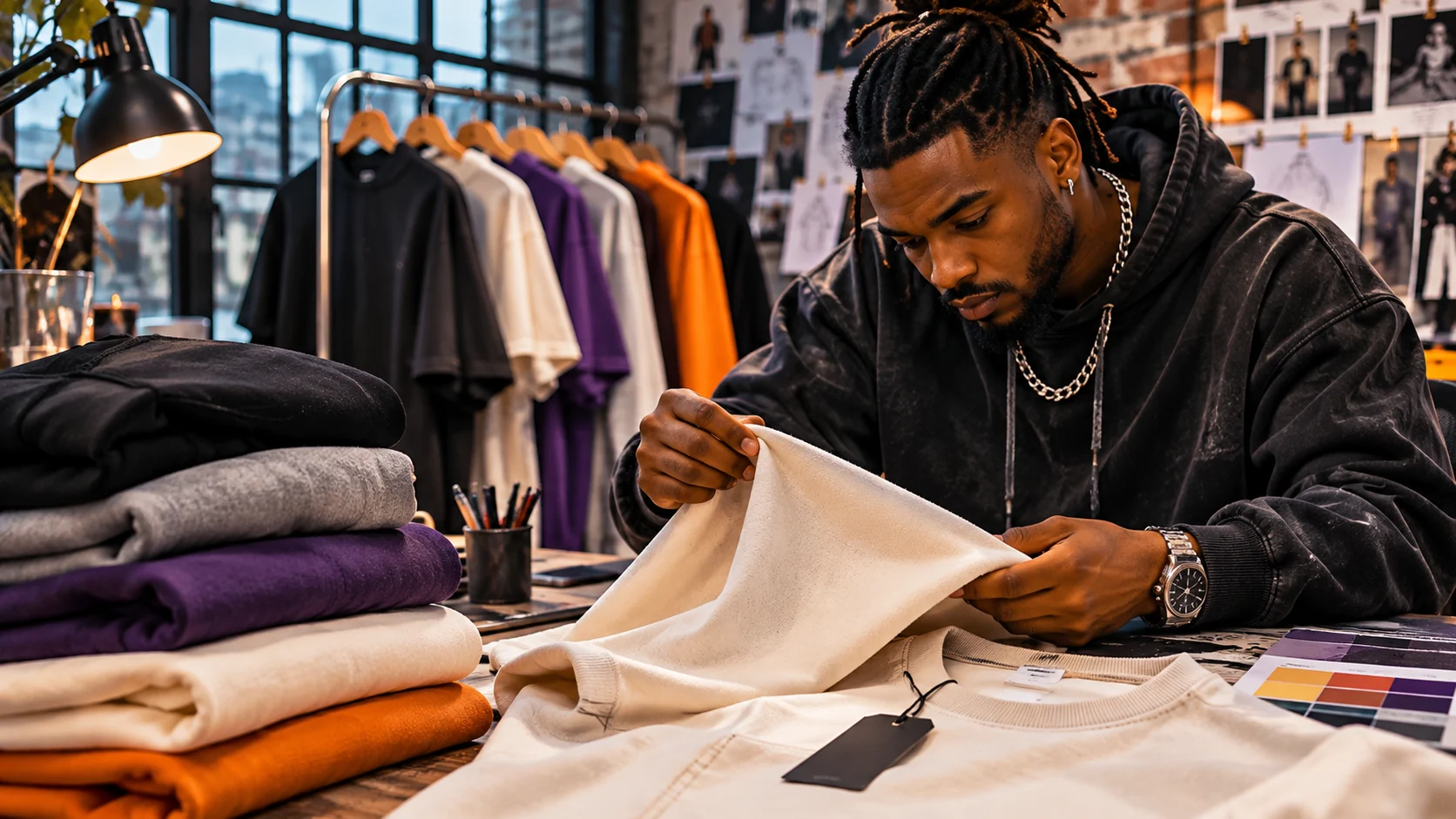
After the first drop, ask customers about fit, fabric, print durability, shipping, packaging, value, and what they want next. Combine feedback with returns, size exchanges, and sales data.
Look for repeated patterns before changing a product. A consistent fit issue needs attention; one request for a new category does not necessarily justify a full collection. Treat constructive criticism as product research and resolve customer problems promptly.
A Low-Budget Launch Plan
Use this 30-day plan for validation and launch preparation. Sampling, production, and delivery may extend beyond the first month; do not promise fulfillment within 30 days without confirmed capacity.
Week 1: Build the Foundation
- Choose your niche and target customer
- Define a brand name and visual direction
- Design one hero product
- Choose a simple sales channel and verify payment availability in your country
- Start collecting interest and opt-in email signups
Week 2: Create Content and Test Interest
- Share designs and product stories
- Compare suppliers and get written quotations
- Order a sample within your budget
- Build a waitlist and explore small collaborations
Week 3: Prepare POD or Preorders
- Review the sample before making confirmed quality claims
- Finalize costs, sizing, photos, and customer policies
- Confirm payout timing and fulfillment cash
- Open sales only when the product and delivery plan are ready
Week 4: Confirm Orders and Learn
- Track paid demand and available funds
- Place a small production order if the minimum and budget are met
- Send realistic updates and handle questions
- Continue fulfillment on the confirmed schedule
- Plan improvements using evidence rather than rushing the next drop
Common Mistakes to Avoid

- Launching too many products at once
- Spending the whole budget on a logo or website
- Ordering large quantities before testing demand
- Ignoring freight, duties, packaging, fees, and refunds
- Assuming POD requires no working capital
- Promising unsupported delivery dates
- Using expensive debt before proving demand
- Copying other brands or using unlicensed artwork
- Relying only on paid ads
- Ignoring feedback and customer service
- Treating community engagement as guaranteed sales
Frequently Asked Questions
Can I start a streetwear brand with no money?
You can start research, design concepts, and community building with free tools. Selling and delivering products usually requires some money for samples, fulfillment, fees, or refunds. POD and preorders reduce inventory needs but do not guarantee a zero-cash launch.
What is the cheapest way to start a streetwear brand?
POD is often a low-inventory route for testing graphics, while small decorated blank runs may suit founders who need more product control. Compare total costs, cash timing, quality, and margins rather than choosing on inventory cost alone.
How much money do I need to start a streetwear brand?
There is no universal figure. Build a budget from actual sample, garment, decoration, shipping, platform, and payment quotations, then add a working-capital buffer. Testing interest can cost very little; fulfilling orders requires a workable cash plan.
How do I fund my first production run?
Combine a small savings buffer, transparent preorders, manageable quantities, and supplier terms where approved. Keep money for customer obligations and avoid large commitments before demand is proven.
Should I start with hoodies or T-shirts?
Choose the product that fits your audience and budget. Tees can be simpler to test, while hoodies generally need more cash per unit. Compare real sample quality and selling margins.
How many products should I launch with?
One hero product is enough to begin. Expand to two or three only when each addition has a clear purpose and fits the budget.
When should I move to custom manufacturing?
When you have evidence of demand, useful feedback, an approved development plan, and enough money for sampling, production, freight, and delays. You can also continue POD or blanks if those models suit your brand.
Final Thoughts

Starting a streetwear brand with limited money means testing demand before committing to inventory. Focus on one product, a clear identity, a relevant community, and realistic cash-flow decisions.
Use POD where it suits the product, use preorders only with a credible fulfillment plan, choose quality blanks when you want more control, and reinvest actual profits. Over time, proven demand can support custom cut-and-sew products and larger runs.
The strongest foundation is consistent execution: products customers want, honest communication, and enough cash to fulfill your promises.
Planning a small streetwear production run? Share your design, target quantity, and budget with ZESTLET to discuss sampling and manufacturing. Flexible terms, if offered, are subject to assessment and a written agreement.