ZESTLET · OEM / ODM · Private Label
How to Finance Your First Streetwear Drop Without a Bank Loan
Build Now, Pay Later · New brands welcome
Launch your brand from 20 pieces. Pay the balance after your stock arrives.
ZESTLET makes your tactical, hunting, uniform and Highland products under your own label. Your first sample and branding setup are free, and orders from $5,000 can pay 60% after delivery.
Budget under $5,000
Startup Launch
- Start from 20 pieces per product
- Your first sample is free
- Labels, screens and digitising are free
- Bulk starts only after you approve the sample
Orders from $5,000
Build Now, Pay Later
- Pay 40% to start production
- Pay the other 60% monthly after delivery
- No interest and no application fee
- Your limit grows with every on-time payment
Your full journey with ZESTLET, step by step
From your first idea to stock in your warehouse. Every step is visible in your free brand dashboard.
- 1Create your free brand accountSign up in about one minute. We email you a 6-digit code to confirm your account.
- 2Check your credit in 30 secondsAnswer 3 short questions in your dashboard and see your pre-qualified credit limit straight away.
- 3Start your projectUpload your design or tech pack, choose the product and quantity. You can start from 20 pieces per product.
- 4Get your quotation within 24 hoursPrice per piece, lead time and payment terms in writing, from real people in Sialkot.
- 5Free sample with your brandingWe make your sample with your logo in 7–10 working days. You only pay the sample shipping.
- 6Approve and pay 40%Bulk production starts only after you approve the sample and pay the 40% deposit.
- 7Production and quality checksCutting, stitching, inspection and packing, with progress updates in your dashboard.
- 8Delivery, then pay 60% monthlyDoor-to-door shipping. Credit orders pay the balance after delivery over 90 to 365 days, with no interest.
What you need to apply
- Your brand name and contact details
- Your product idea, design or tech pack
- An order value from $5,000 for Build Now, Pay Later
- For higher limits: sales history or business registration
Your credit limit grows with you
First credit order
After 2 orders paid on time
After 4 cycles and a review
- Deposit
- 40%
- Balance after delivery
- 60%, monthly
- Repayment
- 90 to 365 days
- Interest and fees
- None
Can I start a clothing brand with a small budget?
Yes. You can start from 20 pieces per product, and your first sample and branding setup are free, so your budget goes into product.
Who can use Build Now, Pay Later?
Brands with orders from $5,000, including new brands with no sales history, after a short review. You pay 40% upfront and 60% in monthly instalments after delivery.
Is the sample free?
Yes, the first sample is made free with your branding. Sample shipping is paid by the buyer.
Credit is subject to approval. Amounts shown in your local currency are approximate.

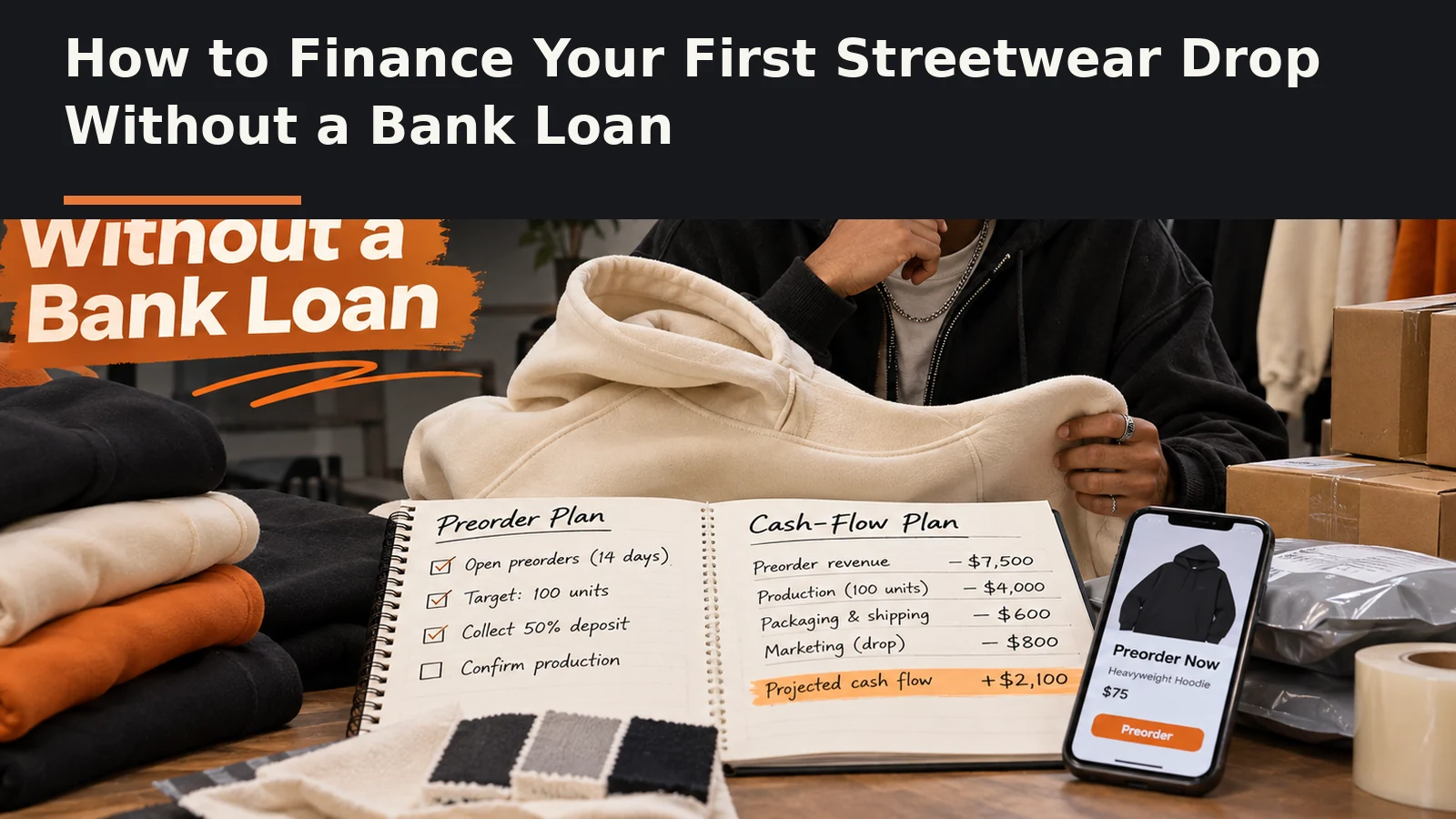
You can finance your first streetwear drop without a bank loan by using customer preorders, starting with a small low-MOQ production run, using quality blanks, negotiating supplier payment terms, and reinvesting early profits.
Starting a streetwear brand does not necessarily require a bank loan or perfect credit. A focused launch can combine savings, a small production run, preorders, and manageable fulfillment to test demand without tying up all your cash. You still need enough money to develop a sample, reach customers, and handle refunds or delays.
New founders can run into trouble when they spend too much too early on inventory, samples, websites, ads, and oversized production runs. This guide explains practical ways to fund your first streetwear drop while keeping financial commitments manageable.
Why Bank Loans Are Not Always the Best Option
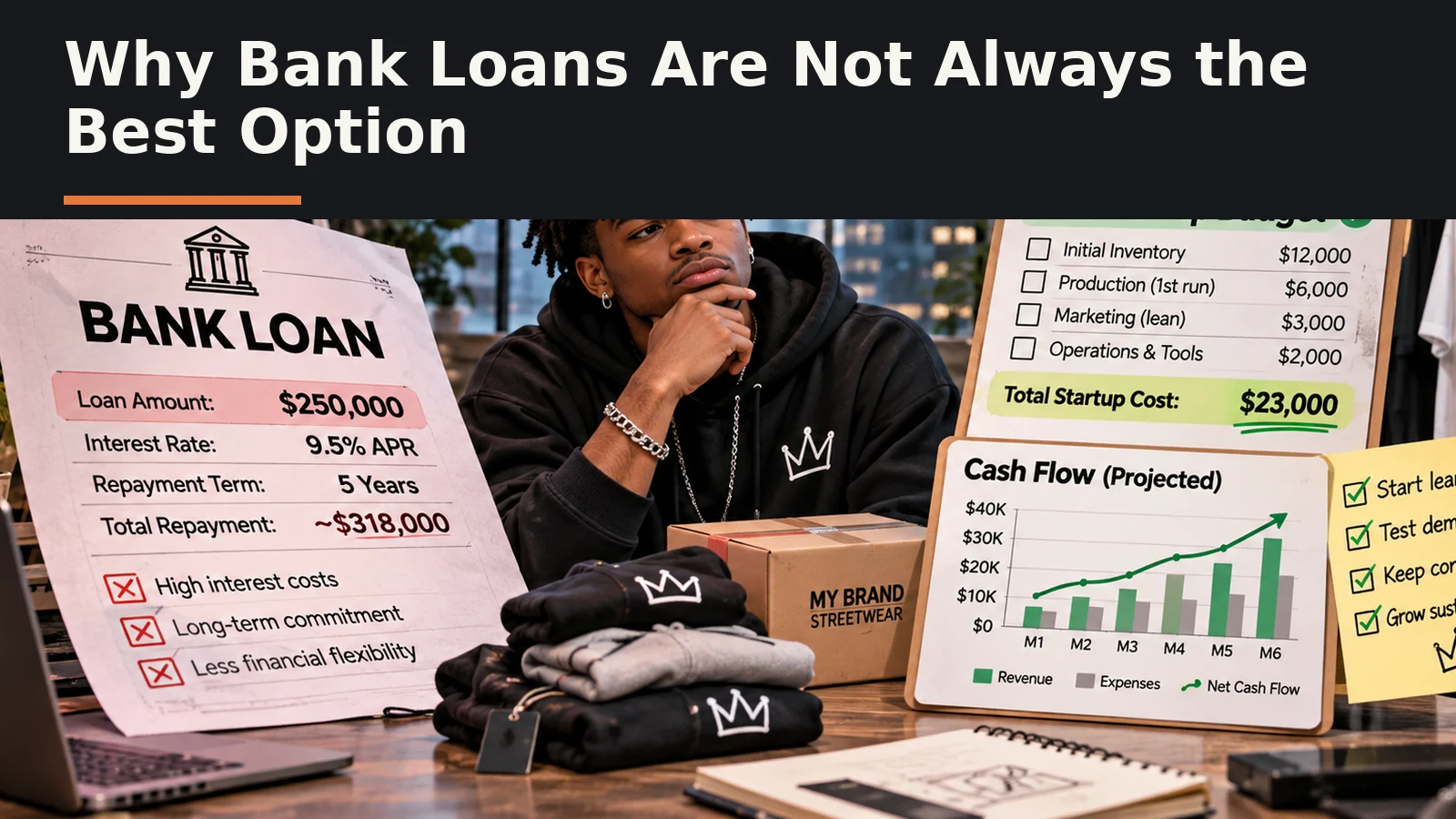
A bank loan can work for an established business with revenue, financial records, and a clear repayment plan. First-time founders may have strong designs and an engaged audience but little operating history to support a loan application.
Borrowing also creates repayment pressure. If a large production run sells slowly, the debt remains. A useful first step is therefore to reduce the cash needed before launch. Finance what you can realistically sell, test, and fulfill instead of building a huge inventory order.
Start With a Small, Sellable Drop

Launching with 20 styles, 10 colorways, and hundreds of units per style can quickly consume your budget. Start with a focused collection:
- One hero hoodie or heavyweight tee
- One graphic tee or long sleeve
- One accessory, such as a cap, tote bag, or beanie, if the budget allows
- Two or three colorways maximum
- A limited quantity per style
A small drop reduces upfront cost and gives you real sales data before a larger run. Limited releases can create urgency, but scarcity alone does not create demand. Product quality, pricing, and audience interest still matter.
Calculate Your Real Launch Budget
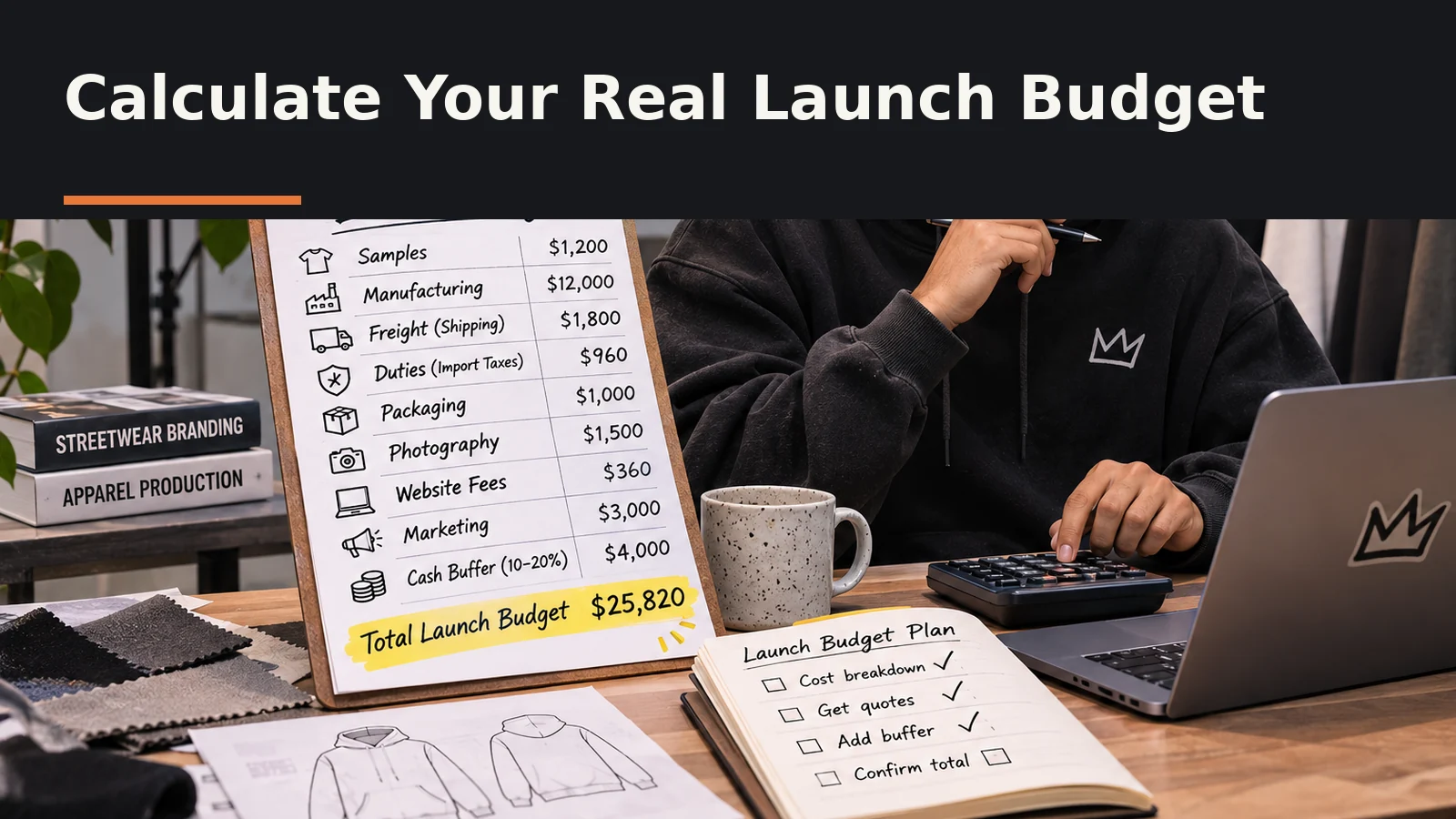
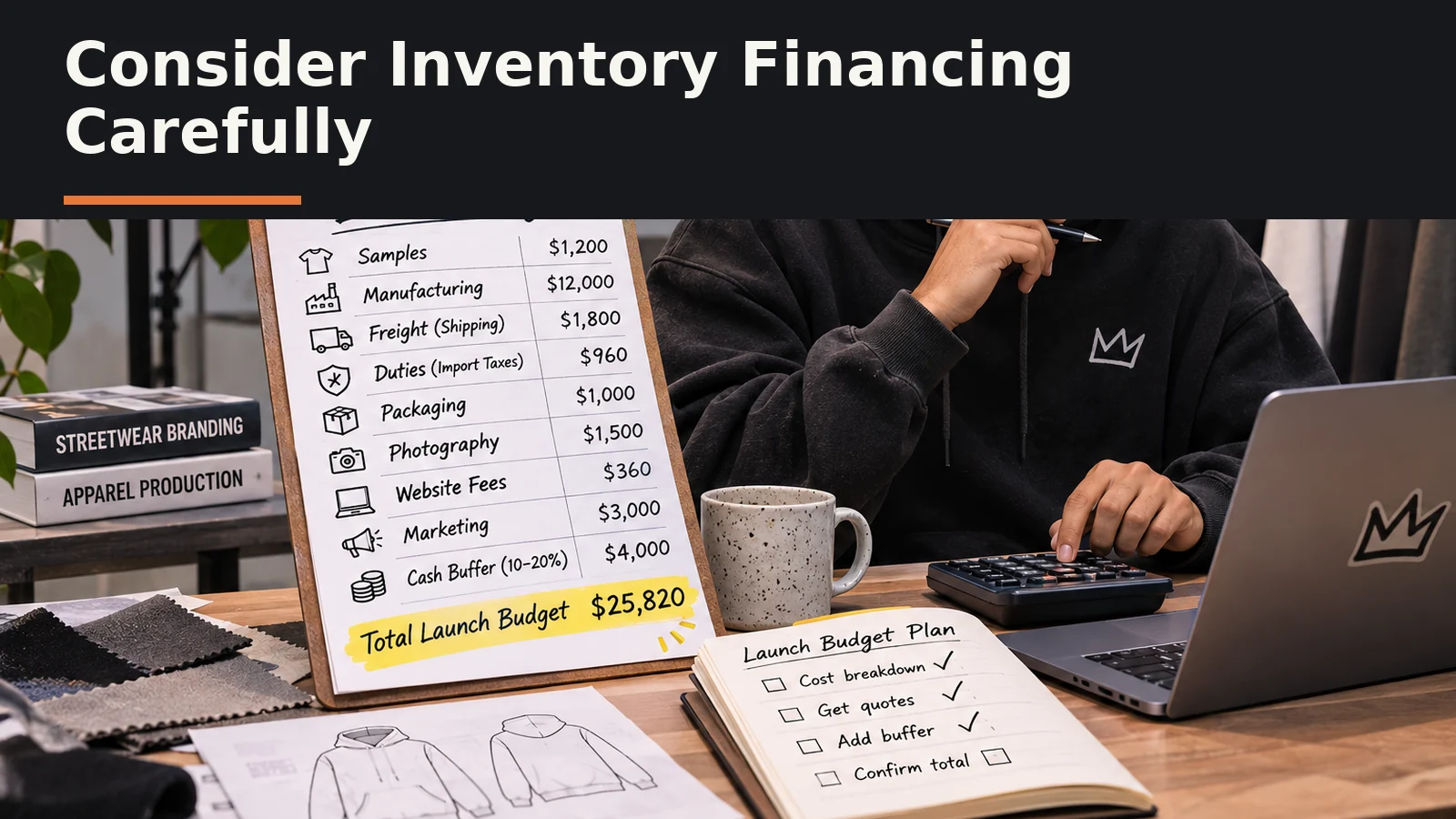
Before looking for financing, calculate the full launch cost rather than manufacturing alone. Include:
- Samples, revisions, and tech packs
- Blanks or custom manufacturing
- Printing, embroidery, labels, and packaging
- Freight, import duties, customs, and clearance
- Photography, website, domain, and payment fees
- Influencer seeding or small marketing tests
- Returns, replacements, and customer service
For illustration, 100 hoodies at $18 each cost $1,800 to manufacture. A hypothetical total of $2,300–$2,500 after sampling, labels, freight, and packaging would mean $23–$25 per hoodie before any omitted selling expenses. These are planning examples, not a ZESTLET quotation.
Keep a separate cash buffer for delays, quality issues, remakes, and marketing. Calculate landed cost and contribution margin after payment fees, fulfillment, expected returns, and customer acquisition costs.
Use Preorders to Fund Production

Preorders can help fund production by collecting customer payments before a full run. A practical campaign works like this:
- Create a clear product concept and visual direction.
- Produce and approve one high-quality sample.
- Build a product or landing page with accurate specifications.
- Set a preorder closing date and a realistic shipping window.
- Collect orders through your website.
- Confirm cleared funds and place the production order.
- Send honest production and shipping updates.
If 60 customers preorder a hoodie, that is stronger demand evidence than likes alone. However, check whether those orders meet the supplier’s MOQ across styles, colors, and sizes. Decide in advance what happens if the minimum is not reached.
Preorder revenue is not automatically available cash or profit. Payment providers can delay payouts or hold reserves. Keep money for taxes, refunds, chargebacks, and fulfillment; do not commit every customer payment to the factory. Shopify explains how payment reserves work.
Give customers a shipping estimate supported by your production plan. For U.S. orders covered by the FTC rule, shipping promises need a reasonable basis; delays require appropriate customer consent or refunds. See the FTC shipping rule and check the rules in your sales markets.
If you have no audience, build anticipation first through sample videos, design previews, email signups, and community engagement.
Start With Blanks Instead of Full Custom Manufacturing
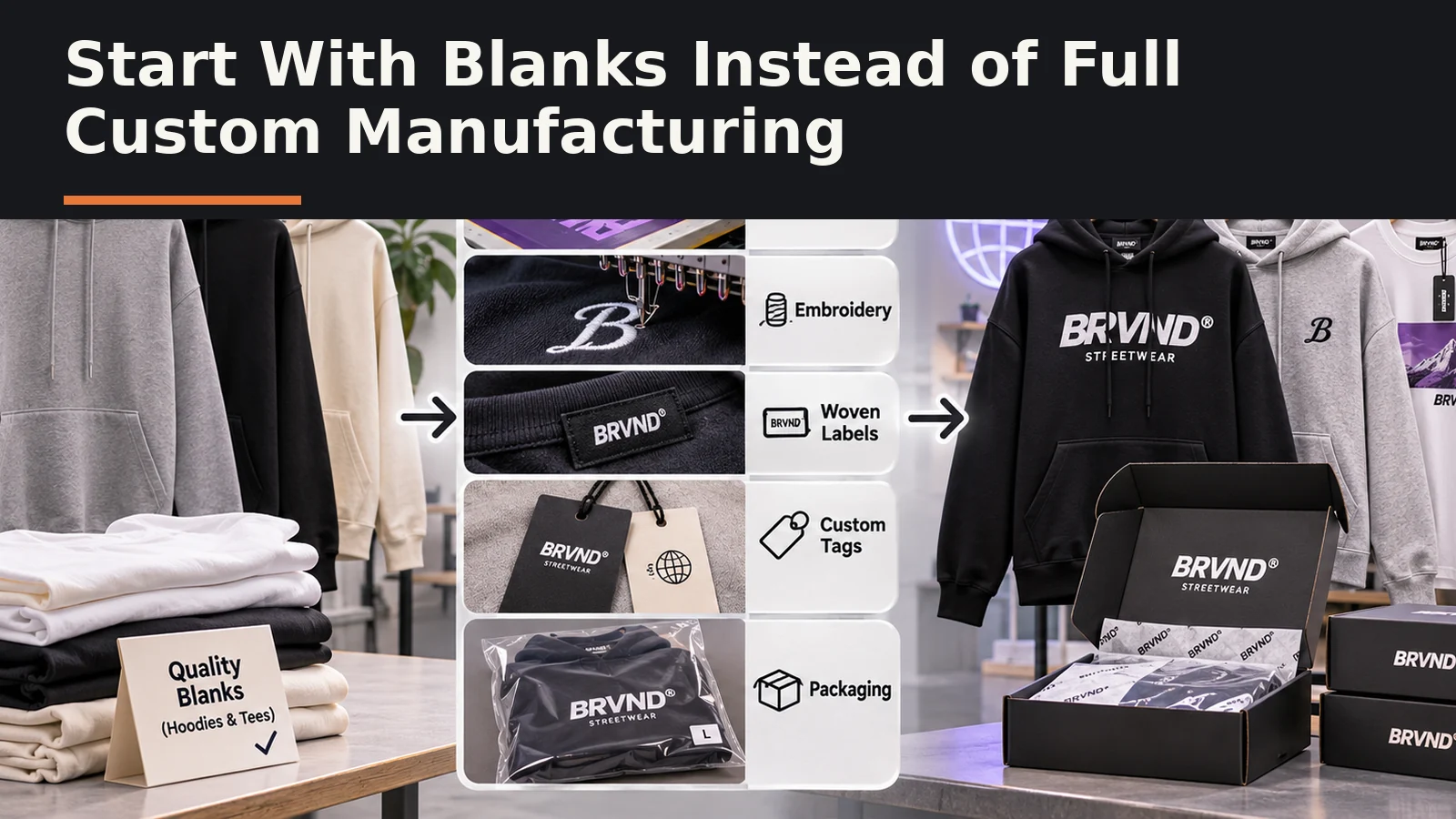
Cut-and-sew gives you control over fit, fabric, construction, and branding, but usually requires more development time and money. Quality blanks can make a first launch simpler.
Customize blanks with screen printing, embroidery, puff print, chenille patches, woven labels, tags, and packaging. Confirm decoration minimums, relabeling permissions, and any legally required garment information before production.
Once a style sells consistently, develop a custom version with your own fit, fabric weight, ribbing, and labels. This lets actual demand guide the investment in patterns and sourcing.
Negotiate Better Payment Terms With Manufacturers

Some suppliers negotiate payment structures, but first-order credit is never guaranteed. Possible arrangements include:
- 50% deposit and 50% before shipment
- 30% deposit and 70% before shipment
- A deposit with the balance on delivery, if approved
- Net 30, Net 60, or Net 90 for qualified buyers
“Net” terms run from the date defined in the written agreement, which may be the invoice date; they do not automatically mean days after delivery. Clarify the due date, currency, inspection rights, late charges, and delivery responsibilities.
For a first order, ask about a lower deposit, milestone payments, sample approval before bulk production, or a balance after quality inspection. Seek short credit terms on repeat orders as you build trust. Agree on terms before opening preorders so your cash-flow plan matches the supplier’s actual requirements.
Build a Manufacturer Relationship Before Asking for Credit

Supplier credit depends on showing that you can meet your commitments. Prepare a brand one-pager, designs or tech packs, realistic quantities, production timeline, target customer, sales channels, delivery address, professional email, and a simple sales forecast. Add business and banking information or past order evidence when relevant to an application.
Avoid vague requests for free production. A clearer enquiry is:
We are launching a limited streetwear capsule with 100 units across two styles. We can provide a 30% deposit now and are looking for a manufacturing partner for repeat orders. Are you open to discussing flexible payment terms for qualified new brands?
This opens a discussion without assuming approval. Supplier credit is still a payment obligation, even when no bank is involved.
Use Purchase Order Financing for Confirmed Orders
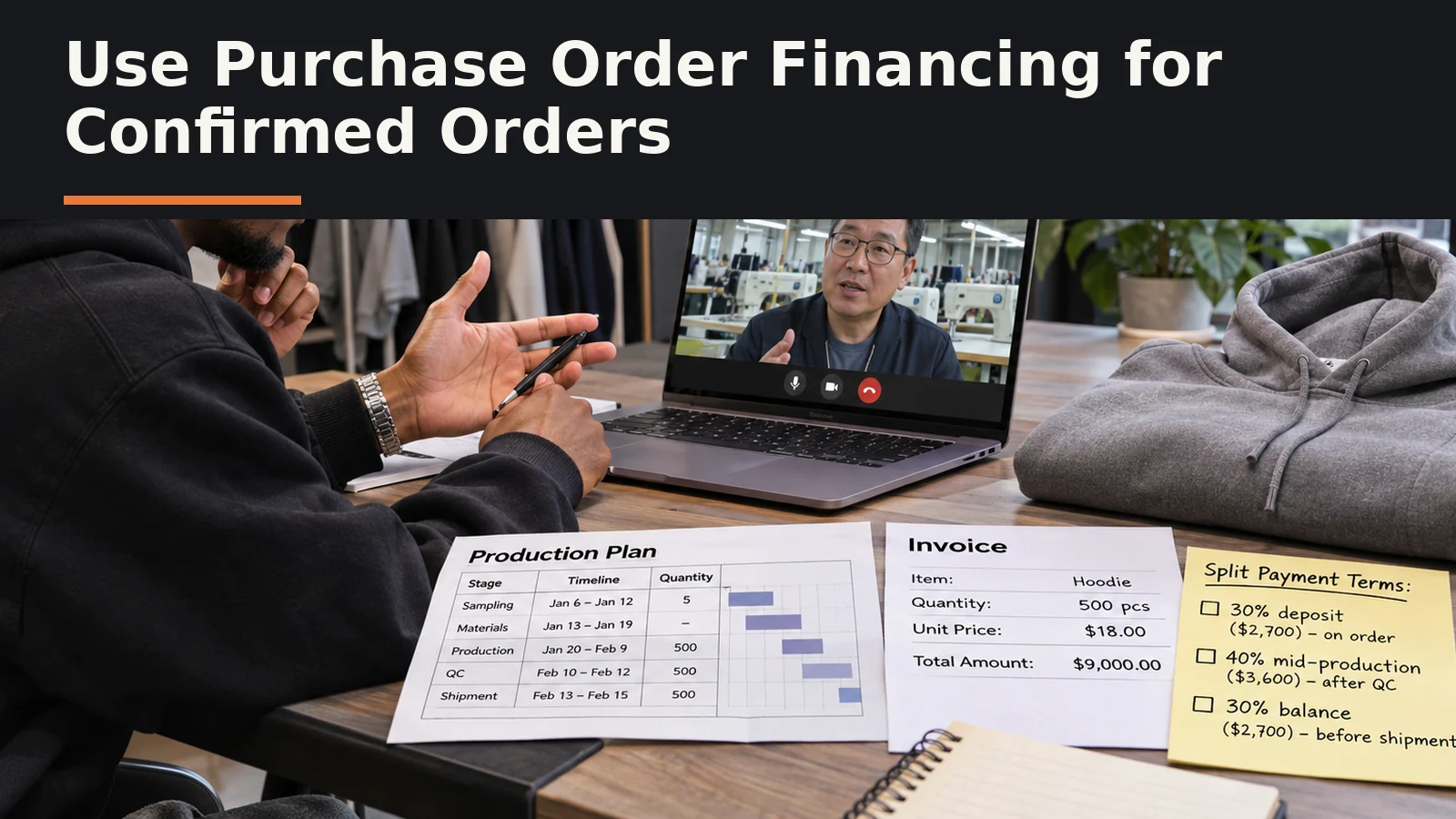
Purchase order financing may help when a creditworthy retailer or wholesale customer places a confirmed order and you lack the cash to pay the supplier. Depending on the agreement, a finance provider pays the supplier, and customer receipts repay the advance and fees. Some arrangements also involve invoice financing.
It may suit a large retail order, corporate merchandise project, distributor commitment, or other confirmed B2B sale. It is generally less suitable for a first direct-to-consumer drop without an eligible purchase order.
Compare the total cost, fee periods, minimum charges, guarantees, and consequences of late payment or rejected goods. Availability and structures vary by provider. Use it only when the order’s margin and cash flow can absorb the full financing cost.
Consider Inventory Financing Carefully
Inventory financing can provide capital against eligible inventory or stock purchases. It creates repayment obligations and may require security or guarantees.
It may make sense for a proven bestseller, consistent sales, predictable demand, and a margin that covers financing costs. It is harder to justify for an untested first product, thin margins, or a forecast based only on hope.
For eligible U.S. businesses, the SBA Microloan program offers loans up to $50,000 through intermediaries and permits uses such as inventory, supplies, and working capital. It is a separate loan option, not inventory financing or debt-free funding, and eligibility and terms depend on the program and lender.
For a first drop, prioritize demand validation and a small commitment before considering borrowing.
Use Crowdfunding and Community Funding

Reward-based crowdfunding can support a launch through early customer backing. A website preorder campaign serves a similar demand-testing purpose, although its payment and campaign rules differ from platforms such as Kickstarter.
Potential rewards include early-bird pricing, genuinely limited editions, exclusive colorways, numbered pieces, behind-the-scenes access, or shipping included in the price. Cost each reward carefully.
Check platform availability, eligibility, fees, payout timing, funding model, and fulfillment obligations before relying on the funds. Build a small engaged audience first with sketches, fabric choices, sample videos, packaging previews, and the story behind the collection.
Sell Through a Drop Model, Not a Full Inventory Model

A limited drop model can reduce the stock you hold year-round:
- Announce the release date.
- Share product previews and sample content.
- Open clearly marked preorders or sell existing limited stock.
- Keep a defined sales window, such as 7–14 days.
- Close the drop and confirm quantities.
- Produce the preorder quantity plus a justified allowance for defects or exchanges.
- Deliver within the stated timeframe.
- Use feedback to improve the next release.
Clearly distinguish ready-to-ship stock from products that still need manufacturing. Small drops reduce dead-stock exposure, but forecasts, supplier minimums, and returns still need planning.
Avoid These Common Financing Mistakes
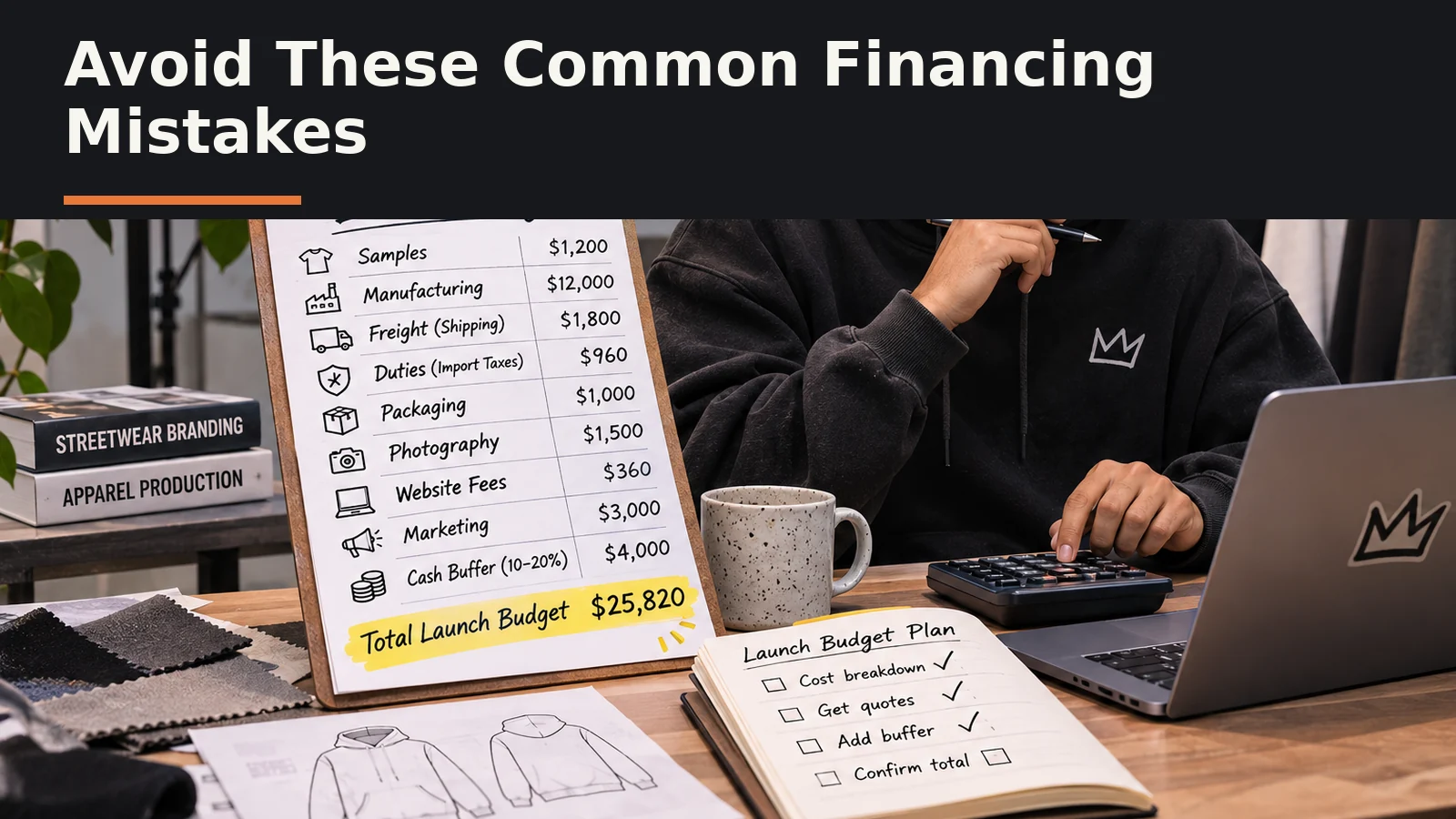
Protect your launch budget by checking these common sources of cash-flow pressure before committing to production.
Ordering Too Much Inventory

Do not order 500 hoodies simply because the unit price is lower. Unsold stock ties up cash and can outweigh any manufacturing discount. Compare total cash required and realistic sell-through.
Spending Too Much on Branding

A logo, website, photoshoot, and packaging matter, but they should not consume the entire budget. Start with clear, consistent branding and reinvest sales into better products and presentation.
Ignoring Freight and Duties
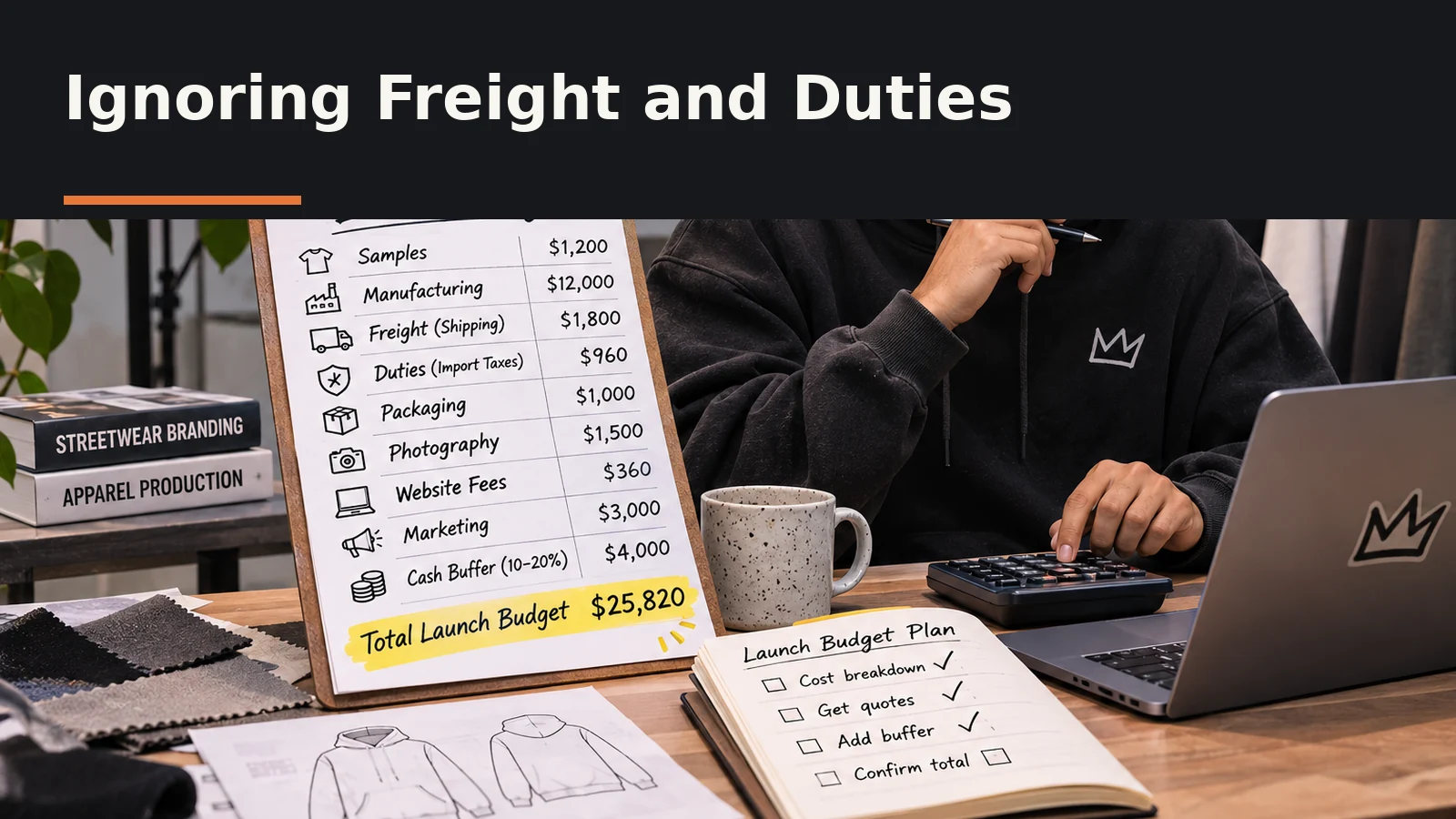
Calculate landed cost, including freight, insurance where needed, customs duties, clearance, handling, and applicable taxes. Confirm shipping terms and who pays each charge instead of comparing factory prices alone.
Promising Delivery Dates You Cannot Control

Base delivery estimates on confirmed sampling, production, quality-control, shipping, and customs timelines. Add a realistic buffer and communicate delays promptly, following applicable customer cancellation and refund rules.
Using High-Interest Debt Too Early
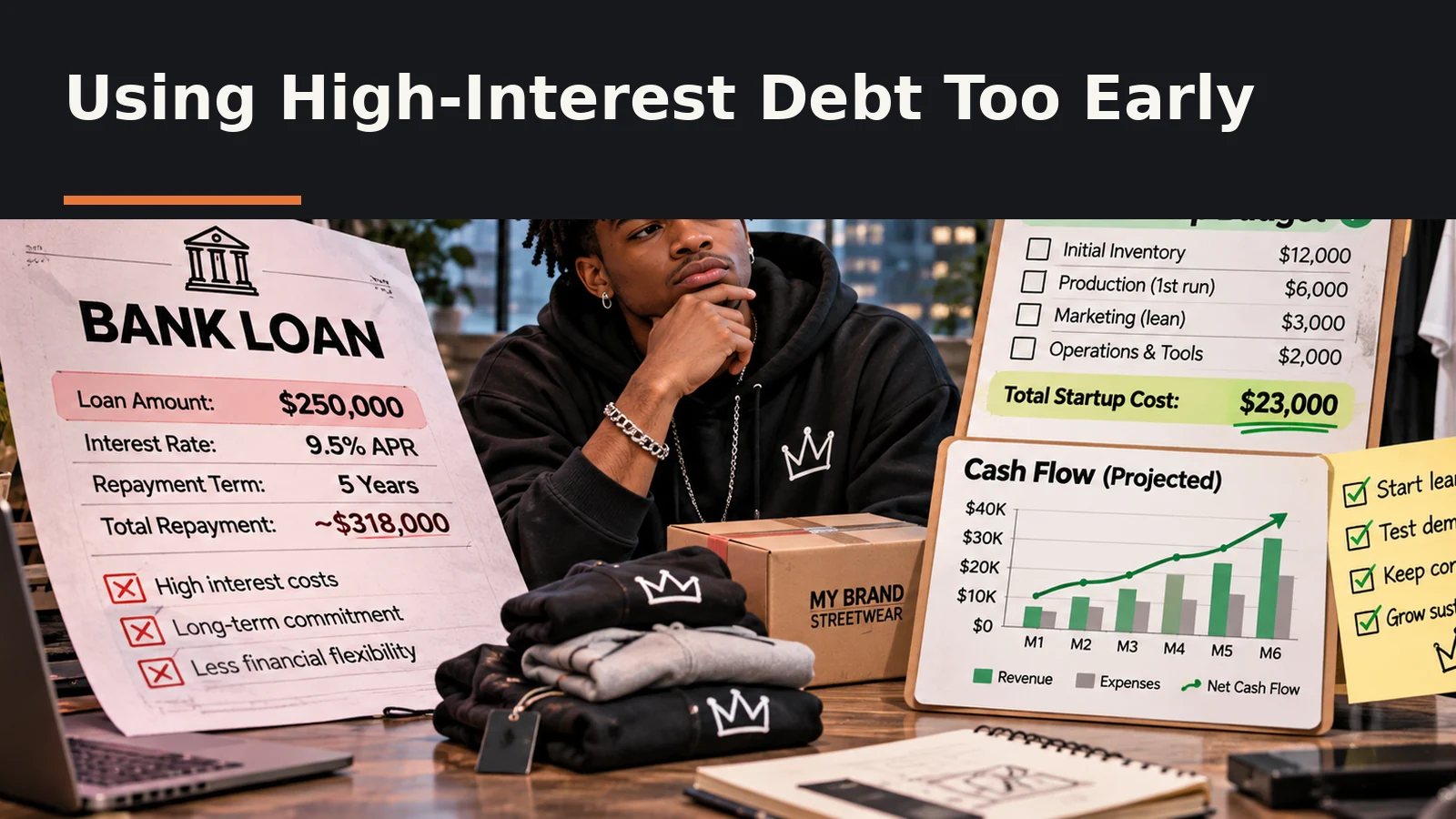
Credit cards, merchant cash advances, and expensive short-term financing can put pressure on an unproven launch. Compare total repayment and payment timing, and validate demand before taking on costly obligations.
Launching Without a Marketing Plan
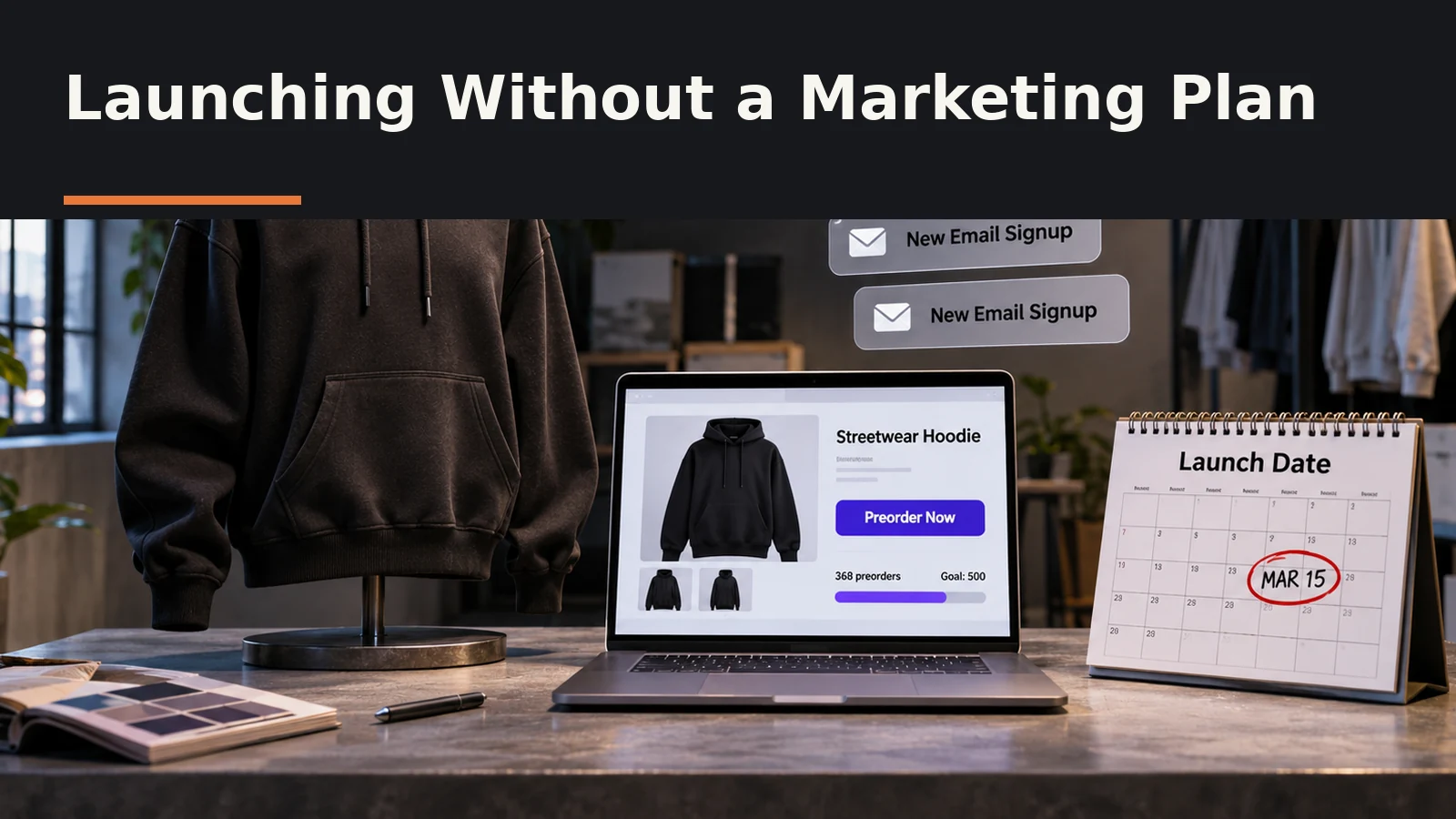
Reserve money and time for content, creator collaborations, email marketing, and carefully measured advertising. Test response before scaling paid acquisition. A product needs a route to customers as well as a production plan.
A Practical Financing Plan for Your First Drop

Use the following sequence to connect demand, manufacturing commitments, and available cash. Confirm supplier terms and payment-provider availability before accepting customer orders.
Step 1: Validate the Concept

Share designs, colorways, and concepts on the channels your audience uses. Track saves, comments, DMs, email signups, and willingness to pay. Paid orders are stronger evidence than engagement alone.
Step 2: Produce One Strong Sample

Approve fit, fabric, construction, decoration, and wash performance before bulk production. Use the sample for photography, videos, fit testing, and accurate preorder content.
Step 3: Open Preorders

Set a limited window, such as 10–14 days, with clear minimum quantities, shipping estimates, and refund information. Offer early-bird pricing only if it preserves margin. Check when payouts will actually reach your account.
Step 4: Place a Small Production Order

Use cleared preorder funds plus savings to fund a manageable run, retaining reserves for customer obligations. Match quantities to the approved specifications and supplier minimums rather than assuming every color can be produced in tiny quantities.
Step 5: Negotiate Supplier Terms
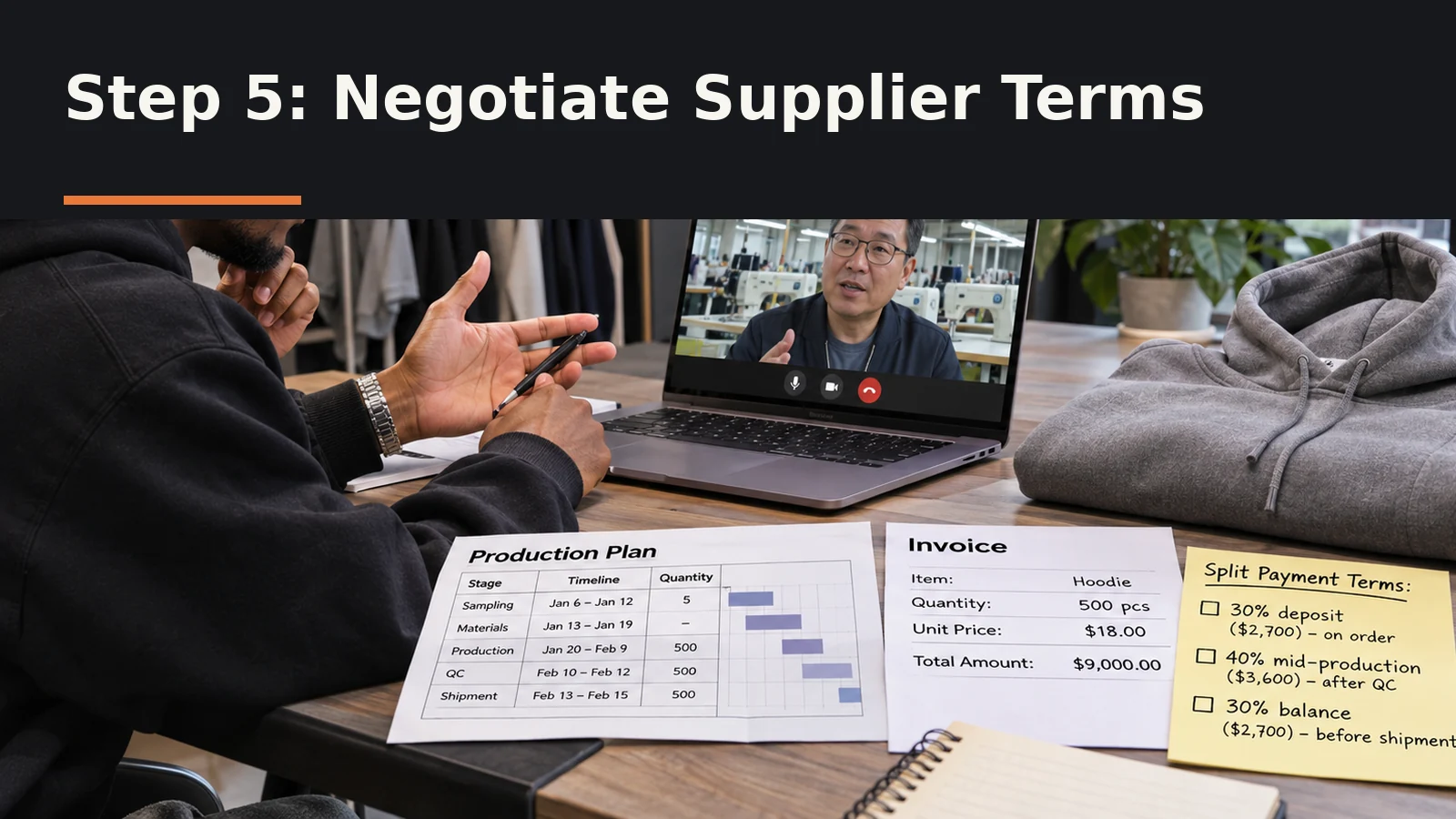
Ask about a 30%–50% deposit and a balance tied to agreed milestones, inspection, shipment, or delivery if approved. Put the actual terms in writing before committing; better terms on future orders depend on trust and assessment.
Step 6: Keep a Cash Buffer

Keep funds for freight, duties, fulfillment, marketing, replacements, and refunds. Model a slower sales period or delayed payout so one unexpected cost does not stop delivery.
Step 7: Launch With Urgency
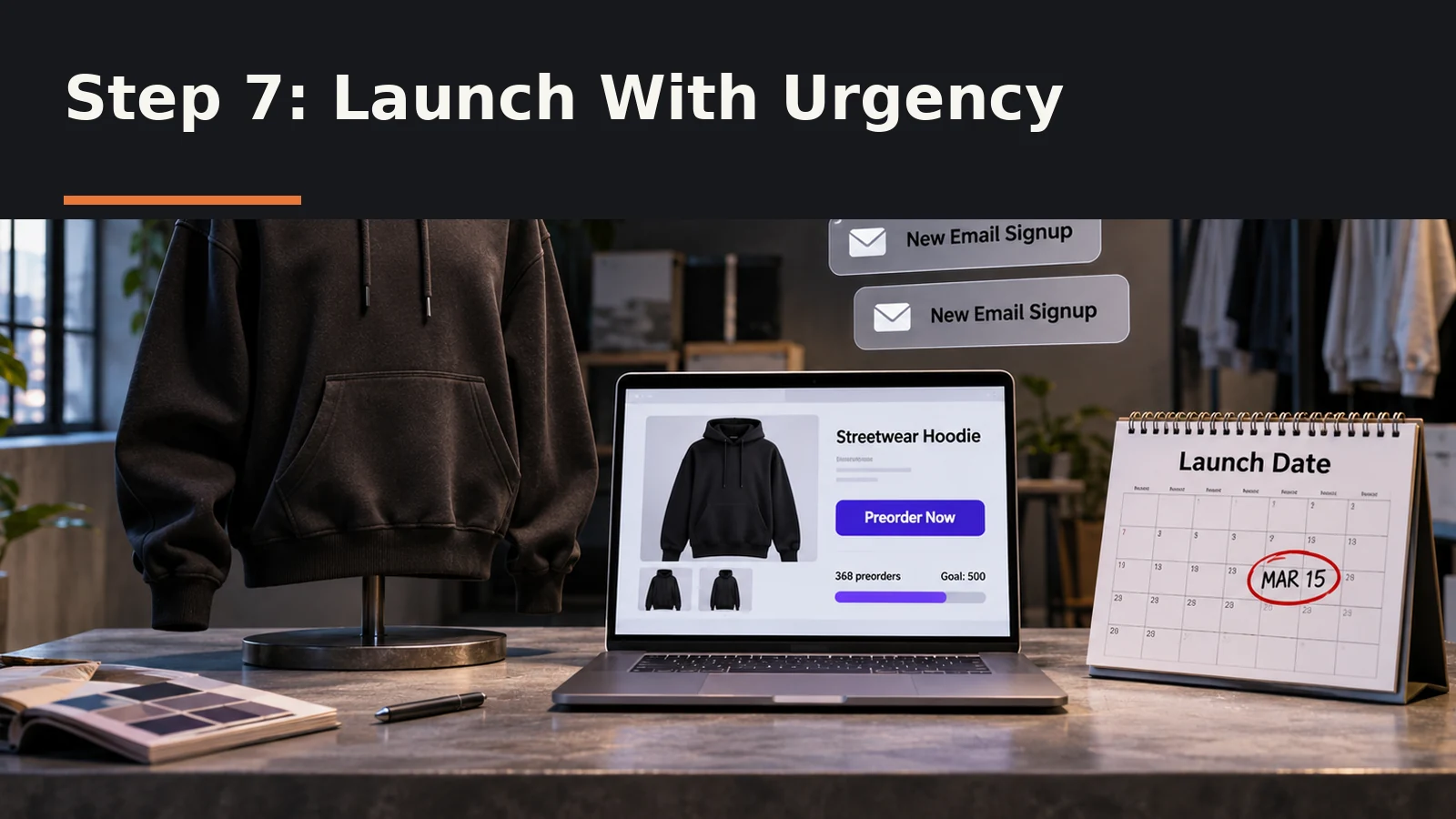
Use a clear drop date, honest limited quantities, a countdown, email reminders, and strong sample content. Avoid false scarcity or delivery promises unsupported by your production plan.
Step 8: Reinvest Profits

After fulfilling orders and allowing for returns, taxes, and outstanding bills, reinvest actual profit into fabric quality, custom patterns, and gradual increases in quantity. Revenue alone is not money available to spend.
How to Know If You Are Ready to Launch
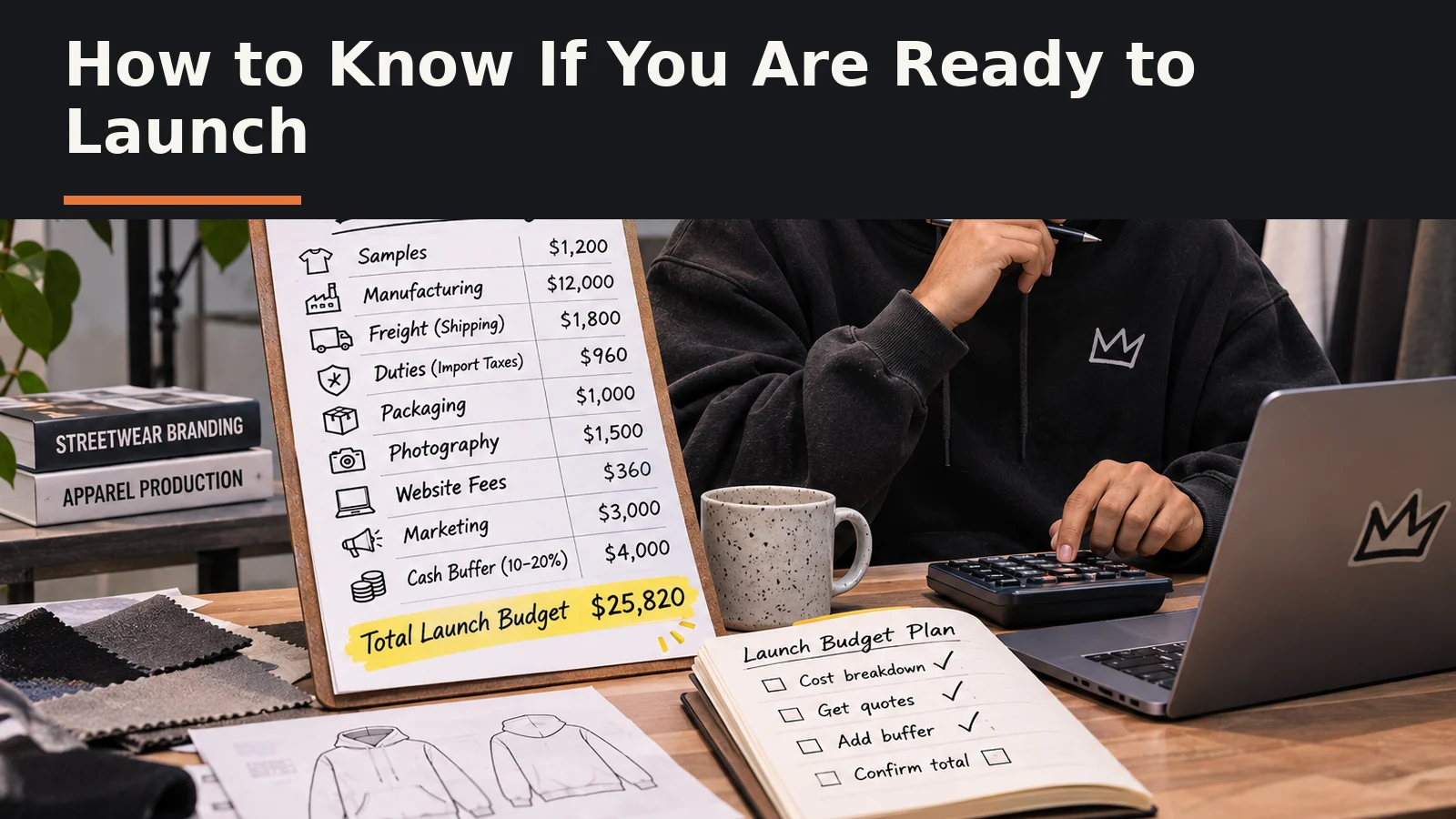
Check that you can answer yes to these questions:
- Have you tested interest through content, signups, or preorders?
- Do you know your true landed cost per unit?
- Can you fund production and fulfillment without excessive borrowing?
- Do you have approved samples and a realistic delivery timeline?
- Have you calculated margin after all selling costs?
- Do you have customer-service, returns, and refund plans?
- Can you handle a delay without running out of cash?
- Is the collection focused and manageable?
If you cannot cover essential production, delivery, or refund obligations, resolve that gap before launch rather than relying on a majority of positive answers.
FAQ: Financing Your First Streetwear Drop

Can I start a streetwear brand with no money?
You can begin audience building and planning with very little money, but samples, selling, and fulfillment usually involve costs. Preorders, print-on-demand, blanks, and small runs can reduce upfront needs; none guarantees a zero-cost launch.
How much money do I need for a first streetwear drop?
It depends on the product, quantity, country, and manufacturing method. Get sample, production, freight, and decoration quotations, then add selling costs and a buffer. A small blank-based release can cost less than a fully custom collection.
Can I get clothing made with no deposit?
Some approved buyers receive credit terms, but many suppliers require a deposit for first orders. Ask for written terms and build trust through realistic quantities and reliable payments.
What is the best way to finance a streetwear brand?
A practical starting mix is savings, preorders backed by approved samples, small production runs, negotiated supplier payments, and reinvested profits. The right combination depends on demand, margin, and cash availability.
Is purchase order financing good for new brands?
It can suit eligible confirmed orders from creditworthy business buyers. It is generally less suitable for a brand-new direct-to-consumer launch without a qualifying purchase order.
Should I use a credit card for inventory?
Large balances can become expensive if products sell slowly. Understand the full cost and repayment plan before using credit, especially for untested inventory.
How do I avoid dead stock?
Start small, use preorders where appropriate, test demand, and avoid buying excessive quantities solely for a unit-price discount.
Final Thoughts

You do not necessarily need a bank loan to launch your first streetwear drop. You need a realistic cash-flow plan: a focused collection, approved sample, validated demand, manageable supplier terms, and enough cash for fulfillment and customer obligations.
As sales prove demand, move gradually from blanks and small runs toward custom manufacturing and larger orders. Control inventory, understand your numbers, and use completed sales to fund the next release.
Ready to plan your first streetwear drop? Discuss your designs, target quantity, sample needs, and manufacturing budget with ZESTLET. Any payment terms or credit are subject to assessment and a written agreement.