ZESTLET · OEM / ODM · Private Label
How Knitted Glove Liners Are Made: Yarn, Knitting Set-Up, Fitting and Inspection
Build Now, Pay Later · New brands welcome
Launch your brand from 20 pieces. Pay the balance after your stock arrives.
ZESTLET makes your tactical, hunting, uniform and Highland products under your own label. Your first sample and branding setup are free, and orders from $5,000 can pay 60% after delivery.
Budget under $5,000
Startup Launch
- Start from 20 pieces per product
- Your first sample is free
- Labels, screens and digitising are free
- Bulk starts only after you approve the sample
Orders from $5,000
Build Now, Pay Later
- Pay 40% to start production
- Pay the other 60% monthly after delivery
- No interest and no application fee
- Your limit grows with every on-time payment
Your full journey with ZESTLET, step by step
From your first idea to stock in your warehouse. Every step is visible in your free brand dashboard.
- 1Create your free brand accountSign up in about one minute. We email you a 6-digit code to confirm your account.
- 2Check your credit in 30 secondsAnswer 3 short questions in your dashboard and see your pre-qualified credit limit straight away.
- 3Start your projectUpload your design or tech pack, choose the product and quantity. You can start from 20 pieces per product.
- 4Get your quotation within 24 hoursPrice per piece, lead time and payment terms in writing, from real people in Sialkot.
- 5Free sample with your brandingWe make your sample with your logo in 7–10 working days. You only pay the sample shipping.
- 6Approve and pay 40%Bulk production starts only after you approve the sample and pay the 40% deposit.
- 7Production and quality checksCutting, stitching, inspection and packing, with progress updates in your dashboard.
- 8Delivery, then pay 60% monthlyDoor-to-door shipping. Credit orders pay the balance after delivery over 90 to 365 days, with no interest.
What you need to apply
- Your brand name and contact details
- Your product idea, design or tech pack
- An order value from $5,000 for Build Now, Pay Later
- For higher limits: sales history or business registration
Your credit limit grows with you
First credit order
After 2 orders paid on time
After 4 cycles and a review
- Deposit
- 40%
- Balance after delivery
- 60%, monthly
- Repayment
- 90 to 365 days
- Interest and fees
- None
Can I start a clothing brand with a small budget?
Yes. You can start from 20 pieces per product, and your first sample and branding setup are free, so your budget goes into product.
Who can use Build Now, Pay Later?
Brands with orders from $5,000, including new brands with no sales history, after a short review. You pay 40% upfront and 60% in monthly instalments after delivery.
Is the sample free?
Yes, the first sample is made free with your branding. Sample shipping is paid by the buyer.
Credit is subject to approval. Amounts shown in your local currency are approximate.
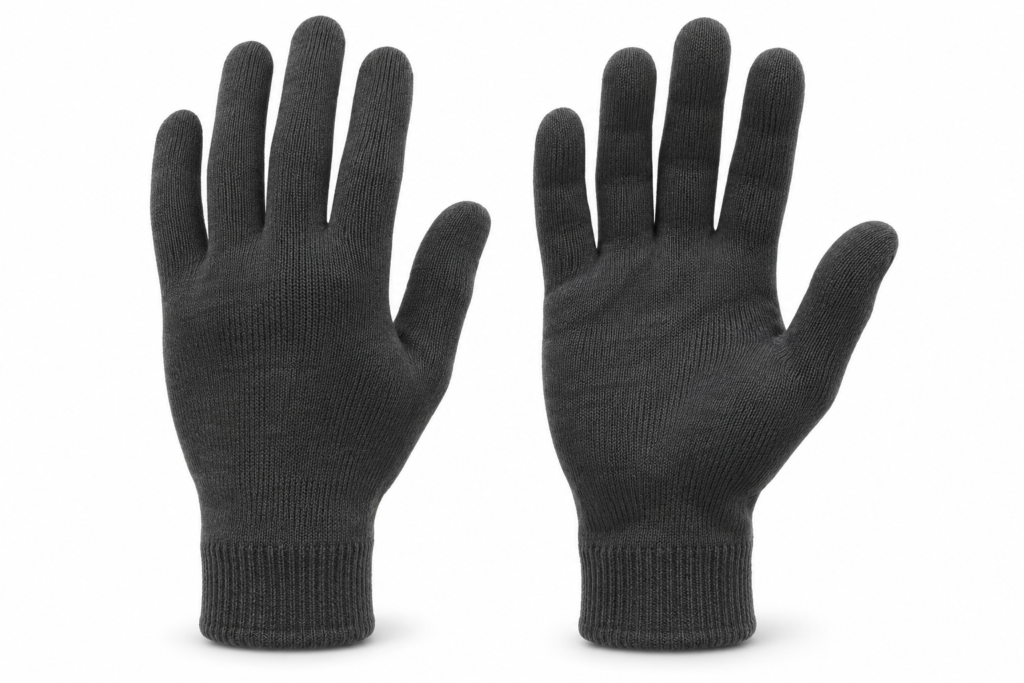
A knitted glove liner is made differently from a cut-and-sewn work glove. Instead of cutting fabric pieces and sewing them together, the glove is formed from yarn, so most decisions sit in the yarn and the knitting set-up rather than in a sewing line. That is why liners need a clear brief and a fitted sample: once the knitting is set, every pair follows it. This article explains how ZESTLET develops and makes knitted glove liners in Sialkot, step by step, and what to check at each stage.
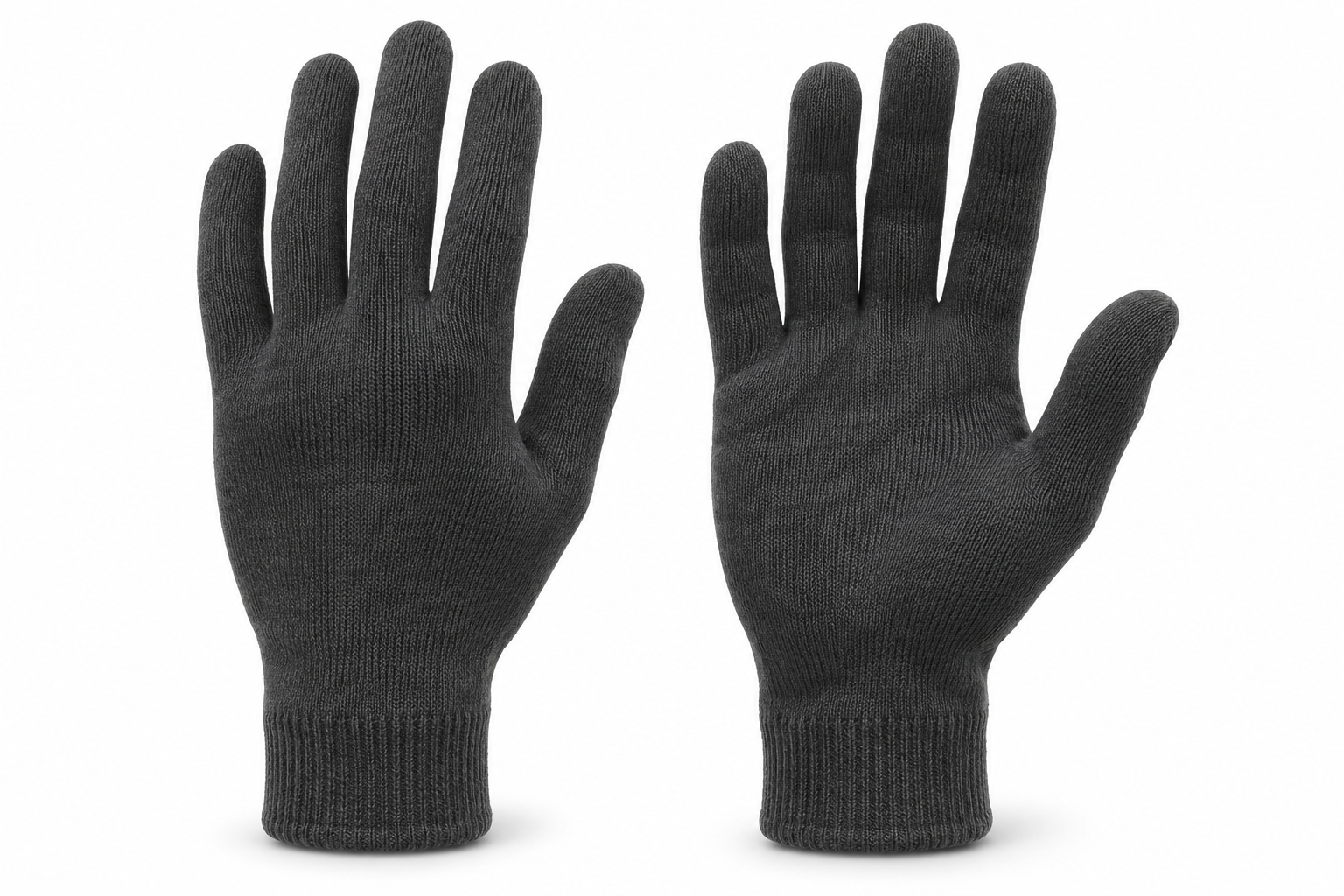
For yarn, gauge and size choices, read the Knitted Glove Liners Buyer’s Guide. For faults to avoid, see common knitted glove liner problems. Our general notes on glove sample development also apply.
Step 1: The brief and the outer glove
The brief states how the liner will be used, the market, the size chart or hand measurements, the size mix, quantities, colour, branding and destination. For a liner, one more item matters: the outer glove it must fit. Sending that glove, or its size chart, saves a round of samples.
Step 2: Yarn sourcing
Yarn composition, count and colour are selected and agreed. Yarn behaviour sets softness, stretch, pilling and washing behaviour, so the agreed composition is written down and used to check bulk yarn.
Step 3: Knitting set-up and sizes
Liners like this are usually knitted on glove knitting machines, which form the fingers, hand and rib cuff as a continuous knit. Each size is set up with its own finger lengths, hand width and cuff length. The gauge decides how fine the knit can be. The exact method is confirmed during sampling.
Step 4: Sample and fitting
A sample is knitted in the agreed yarn and density. It is fitted alone and inside the outer glove: finger length, fingertip bunching, thumb position, cuff overlap and ease of removal. Changes go back into the set-up and a new sample is knitted if needed. Bulk starts only from an approved sample.
Step 5: Bulk knitting
Production follows the approved set-up and yarn. Bulk yarn is compared with the approved composition and colour before knitting starts.
Step 6: Inspection of the knit
Each liner is checked for dropped stitches, holes, thin areas, loose yarn tails and uneven fingers. Knit faults are easy to miss on a dark yarn, so inspection needs good light.
Step 7: Finishing
Yarn tails are trimmed and the liners may be shaped or pressed so pairs look even. Labels or size identification are added as agreed. Any decoration is applied only after a trial on the knit, because it can stiffen the fabric or crack when it stretches.
Step 8: Pairing and packing
Liners are paired by size, checked against the size chart, packed as agreed (pairs, header cards, multipacks) and marked with barcodes and carton marks.
Knitted liner versus cut-and-sewn glove
In a sewn glove, fit is adjusted by changing pattern pieces and seams. In a knitted liner, fit is adjusted in the knitting set-up and the yarn. That has two consequences for buyers. First, changes after approval are slower to make, so it pays to fit the sample carefully with the outer glove. Second, consistency comes from controlling the yarn: a different yarn lot or count can change the size and feel of the liner even with the same set-up.
What to check at each stage
| Stage | What the buyer should check |
|---|---|
| Brief | Outer glove sample or chart included; use and market clear |
| Yarn | Composition and colour written down and matched to bulk yarn |
| Set-up and sizes | Finger lengths, hand width and cuff length per size |
| Sample | Fit alone and inside the outer glove, no bunching, cuff overlap |
| Knit inspection | No holes, dropped stitches or thin areas |
| Packing | Correct sizes and pairs, labels, barcodes, carton marks |
Pre-shipment checklist
- Random pairs compared with the approved sample.
- Sizes measured against the chart.
- A few liners tried inside the outer glove.
- Knit checked under good light.
- Labels, barcodes and pack counts verified.
Make knitted glove liners with ZESTLET
ZESTLET is a glove and apparel manufacturer in Sialkot, Pakistan, working with brands, shops and distributors.
- Small batches for launches and test runs
- Sample first: approved inside your outer glove before bulk
- Private label: your labels, barcodes and packs
See the Knitted Glove Liners or request a quote to start your sample.
Frequently asked questions
How are knitted glove liners made?
Yarn is selected, the knitting is set up for each size, a sample is fitted and approved, and then liners are knitted, inspected, finished, paired and packed.
Are knitted liners sewn?
Liners of this type are usually knitted as a continuous glove rather than sewn from pieces. The method is confirmed during sampling.
Why fit the sample inside the outer glove?
Because a liner that fits alone can bunch or tighten the outer glove. The system is what the customer wears.
How do you check knit quality?
Each liner is inspected for holes, dropped stitches, thin areas and uneven fingers under good light.
Where are ZESTLET liners made?
ZESTLET develops and makes them in Sialkot, Pakistan, in small batches under your private label.