
ZESTLET · OEM / ODM · Private Label
Textured-Palm Work Gloves: 6 Problems with Texture Wear, Peeling and Grip (and How to Avoid Them)
Build Now, Pay Later · New brands welcome
Launch your brand from 20 pieces. Pay the balance after your stock arrives.
ZESTLET makes your tactical, hunting, uniform and Highland products under your own label. Your first sample and branding setup are free, and orders from $5,000 can pay 60% after delivery.
Budget under $5,000
Startup Launch
- Start from 20 pieces per product
- Your first sample is free
- Labels, screens and digitising are free
- Bulk starts only after you approve the sample
Orders from $5,000
Build Now, Pay Later
- Pay 40% to start production
- Pay the other 60% monthly after delivery
- No interest and no application fee
- Your limit grows with every on-time payment
Your full journey with ZESTLET, step by step
From your first idea to stock in your warehouse. Every step is visible in your free brand dashboard.
- 1Create your free brand accountSign up in about one minute. We email you a 6-digit code to confirm your account.
- 2Check your credit in 30 secondsAnswer 3 short questions in your dashboard and see your pre-qualified credit limit straight away.
- 3Start your projectUpload your design or tech pack, choose the product and quantity. You can start from 20 pieces per product.
- 4Get your quotation within 24 hoursPrice per piece, lead time and payment terms in writing, from real people in Sialkot.
- 5Free sample with your brandingWe make your sample with your logo in 7–10 working days. You only pay the sample shipping.
- 6Approve and pay 40%Bulk production starts only after you approve the sample and pay the 40% deposit.
- 7Production and quality checksCutting, stitching, inspection and packing, with progress updates in your dashboard.
- 8Delivery, then pay 60% monthlyDoor-to-door shipping. Credit orders pay the balance after delivery over 90 to 365 days, with no interest.
What you need to apply
- Your brand name and contact details
- Your product idea, design or tech pack
- An order value from $5,000 for Build Now, Pay Later
- For higher limits: sales history or business registration
Your credit limit grows with you
First credit order
After 2 orders paid on time
After 4 cycles and a review
- Deposit
- 40%
- Balance after delivery
- 60%, monthly
- Repayment
- 90 to 365 days
- Interest and fees
- None
Can I start a clothing brand with a small budget?
Yes. You can start from 20 pieces per product, and your first sample and branding setup are free, so your budget goes into product.
Who can use Build Now, Pay Later?
Brands with orders from $5,000, including new brands with no sales history, after a short review. You pay 40% upfront and 60% in monthly instalments after delivery.
Is the sample free?
Yes, the first sample is made free with your branding. Sample shipping is paid by the buyer.
Credit is subject to approval. Amounts shown in your local currency are approximate.
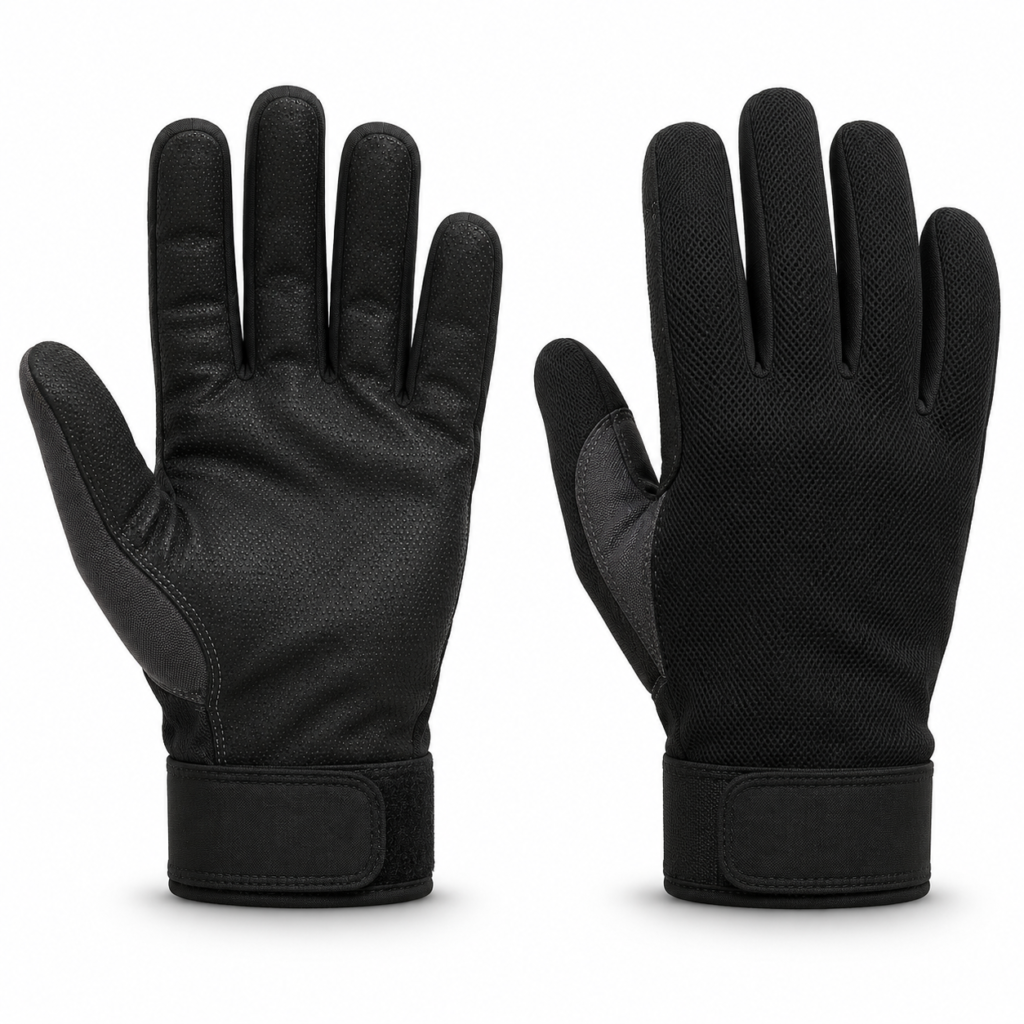
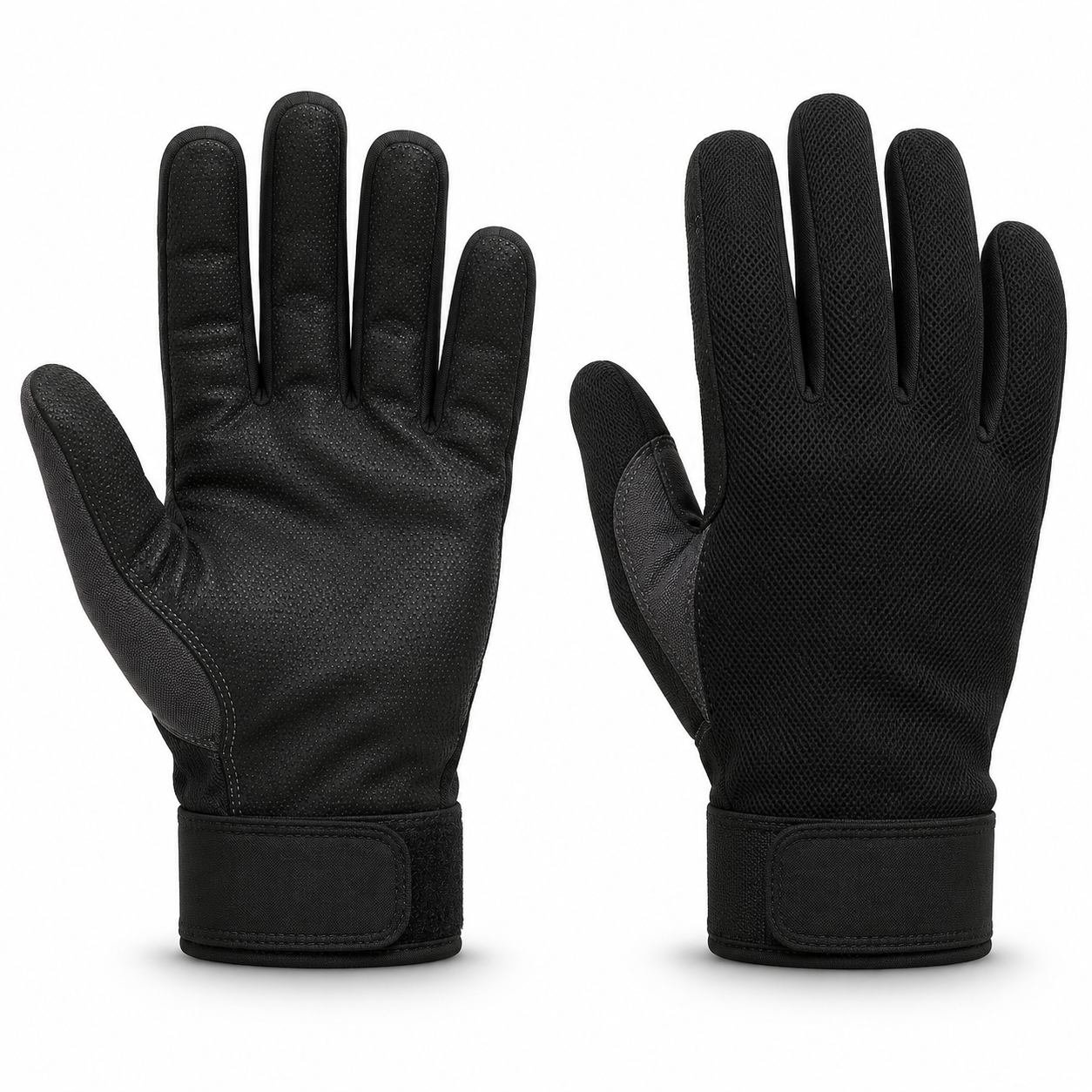
Textured-palm work gloves look simple: a black textured synthetic contact panel on the palm, a black stretch mesh back, a charcoal saddle overlay over the thumb and a short, wide hook-and-loop cuff. Buyers usually choose them for one reason: they want the palm to hold handles and materials better than a smooth palm does. That single expectation is also where most problems start, because the texture, the substrate under it and the coating chemistry decide how the glove behaves, and none of that can be judged from a photograph.
This article is for brand owners, workwear and hardware shops and buyers who are developing their own textured-palm gloves. Here are the six problems we see most often during development, and what to do at sample stage so they do not reach your customers.
Problem 1: The texture was chosen from a photo, not from the handle
A deep, aggressive pattern looks strong on a product image, but grip is a relationship between two surfaces. A texture that suits a rubber tool handle can feel different on smooth painted steel, cardboard cartons, rope or timber. When the texture is selected by looks alone, the glove often disappoints on the one task the buyer cared about.
How to avoid it: tell your manufacturer what the wearer actually holds and in what conditions. Ask for two or three texture options on the same pattern, and compare the dry samples on the real handles before you decide. Write down which option was approved so the bulk order uses exactly that material.
Problem 2: The texture wears smooth in the high-contact zones
Gloves do not wear evenly. The thumb, the index fingertip and the heel of the palm take most of the friction. If the textured layer is thin or soft in those areas, the pattern flattens and the glove starts to feel like a smooth palm long before the rest of it is worn out.
How to avoid it: wear the sample for the intended task and look at the contact zones afterwards, not just at a new glove on the table. The thumb saddle overlay on this design exists because the thumb area works hard. Ask whether overlays, panel position or a different texture would suit your use better, and record the change on the bill of materials.
Problem 3: The coating peels away from the substrate
A textured palm is usually a coating or a pressed surface on a base material. If the adhesion between the two is weak, the texture can lift at the edges, at the seams or where the glove folds. Peeling is one of the fastest ways to get returns, because customers see it immediately.
How to avoid it: check adhesion on the sample by flexing, rubbing and pulling at the panel edges and around the stitching. Make sure the substrate, texture and coating chemistry are recorded in the approved specification. Bulk should be cut from the same approved material, so a later material substitution does not quietly change the adhesion.
Problem 4: Cracks appear across the finger joints and palm fold
Every time a hand closes, the palm material folds at the same lines. A textured layer that is too stiff for the substrate can develop fine cracks across the knuckle creases and the palm fold. At first they look cosmetic; later they can spread and let the texture break away.
How to avoid it: close and open the gloved hand many times, grip a handle, then inspect the fold lines in good light. Check flex cracking on more than one size, because the fold falls in a different place on small and large hands. If cracking appears, discuss a more flexible texture, a different panel shape or seam position before approving.
Problem 5: The listing promises more grip than anyone has checked
Buyers often write “anti-slip” or “oil grip” in a listing because the palm is textured. A texture is not proof of performance, and wet or oily conditions behave very differently from dry ones. ZESTLET does not infer anti-slip or certified grip performance from the look of a palm, and neither should your product page.
How to avoid it: compare dry samples first. If your customers work with wet or oily materials, agree a repeatable method for checking the sample in those conditions and keep the result with your approval file. Describe the glove honestly: a textured synthetic palm, mesh back, thumb overlay and adjustable cuff.
Problem 6: The hook-and-loop cuff snags the mesh back
Stretch mesh is comfortable and breathable, but its open structure catches the hook side of a hook-and-loop fastener. Gloves packed in pairs, thrown in a bin or washed together can arrive with pulled mesh before anyone has worn them.
How to avoid it: check how the cuff tab sits when the glove is closed and when it is open, and how pairs are presented in the pair bag. Small changes to the tab length or the way the pair is folded reduce contact between the hook side and the mesh.
Sample-stage checklist
| Problem | What you see | What to check on the sample |
|---|---|---|
| Wrong texture | Poor feel on the real handle | Compare 2 to 3 textures on actual handles, dry |
| Fast wear | Smooth patches at thumb and fingertips | Inspect contact zones after realistic use |
| Peeling | Texture lifting at edges or seams | Flex, rub and pull at panel edges and stitching |
| Flex cracking | Fine cracks across folds | Repeated hand closing on two sizes |
| Overclaiming | Returns from wet or oily use | Agreed repeatable method before any claim |
| Mesh snagging | Pulled loops on the back | Cuff tab position and pair packing |
Also compare the black palm and black mesh shades across both gloves of a pair and across sizes; black materials from different lots can look different under shop lights.
If you are still deciding between a textured palm and a padded one, our article on padded-palm work glove problems covers the other side of that choice. For materials, texture options and sizing, read the textured-palm work gloves buyer’s guide, and to see how the glove is built step by step, read how textured-palm work gloves are made.
Develop your own textured-palm work gloves with ZESTLET
ZESTLET is a manufacturer in Sialkot, Pakistan, developing private-label gloves for brands, shops and distributors.
- Small batches welcome
- Physical sample first, approved before bulk
- Your texture, colours, labels and pair packaging
- Honest specifications, with no performance claims we have not agreed and checked
See the Textured-Palm Work Gloves or request a quote with your task, handle material, sizes and quantity.
Frequently asked questions
Why does the texture on my work gloves wear off so quickly?
Usually because the textured layer is too thin or too soft for the contact zones that work hardest, such as the thumb and fingertips. Inspect a worn sample, not a new one, and adjust the texture, overlays or panel position before bulk.
Can a textured palm peel off?
Yes, if adhesion between the coating and the substrate is weak. Check the panel edges, seams and fold lines on the sample by flexing and rubbing, and keep bulk on the same approved material.
Are textured-palm gloves anti-slip?
A texture alone does not prove anti-slip performance. Compare dry samples on the actual handles, and agree a repeatable method for any wet or oily use before describing grip in your listings.
How do I stop the hook-and-loop cuff damaging the mesh back?
Check the tab length and position on the sample and how pairs are folded in the pair bag, so the hook side does not rest on the mesh.
What should I send for a quote?
Your drawing or reference, the intended task and handle material, material preference, size breakdown, quantity, destination and authorized artwork. Sample cost, MOQ and lead time are confirmed in the written quotation.