ZESTLET · OEM / ODM · Private Label
Layered Leather-Palm Winter Gloves: 6 Problems at the Seams, Cuff and Layer Stack (and How to Avoid Them)
Build Now, Pay Later · New brands welcome
Launch your brand from 20 pieces. Pay the balance after your stock arrives.
ZESTLET makes your tactical, hunting, uniform and Highland products under your own label. Your first sample and branding setup are free, and orders from $5,000 can pay 60% after delivery.
Budget under $5,000
Startup Launch
- Start from 20 pieces per product
- Your first sample is free
- Labels, screens and digitising are free
- Bulk starts only after you approve the sample
Orders from $5,000
Build Now, Pay Later
- Pay 40% to start production
- Pay the other 60% monthly after delivery
- No interest and no application fee
- Your limit grows with every on-time payment
Your full journey with ZESTLET, step by step
From your first idea to stock in your warehouse. Every step is visible in your free brand dashboard.
- 1Create your free brand accountSign up in about one minute. We email you a 6-digit code to confirm your account.
- 2Check your credit in 30 secondsAnswer 3 short questions in your dashboard and see your pre-qualified credit limit straight away.
- 3Start your projectUpload your design or tech pack, choose the product and quantity. You can start from 20 pieces per product.
- 4Get your quotation within 24 hoursPrice per piece, lead time and payment terms in writing, from real people in Sialkot.
- 5Free sample with your brandingWe make your sample with your logo in 7–10 working days. You only pay the sample shipping.
- 6Approve and pay 40%Bulk production starts only after you approve the sample and pay the 40% deposit.
- 7Production and quality checksCutting, stitching, inspection and packing, with progress updates in your dashboard.
- 8Delivery, then pay 60% monthlyDoor-to-door shipping. Credit orders pay the balance after delivery over 90 to 365 days, with no interest.
What you need to apply
- Your brand name and contact details
- Your product idea, design or tech pack
- An order value from $5,000 for Build Now, Pay Later
- For higher limits: sales history or business registration
Your credit limit grows with you
First credit order
After 2 orders paid on time
After 4 cycles and a review
- Deposit
- 40%
- Balance after delivery
- 60%, monthly
- Repayment
- 90 to 365 days
- Interest and fees
- None
Can I start a clothing brand with a small budget?
Yes. You can start from 20 pieces per product, and your first sample and branding setup are free, so your budget goes into product.
Who can use Build Now, Pay Later?
Brands with orders from $5,000, including new brands with no sales history, after a short review. You pay 40% upfront and 60% in monthly instalments after delivery.
Is the sample free?
Yes, the first sample is made free with your branding. Sample shipping is paid by the buyer.
Credit is subject to approval. Amounts shown in your local currency are approximate.
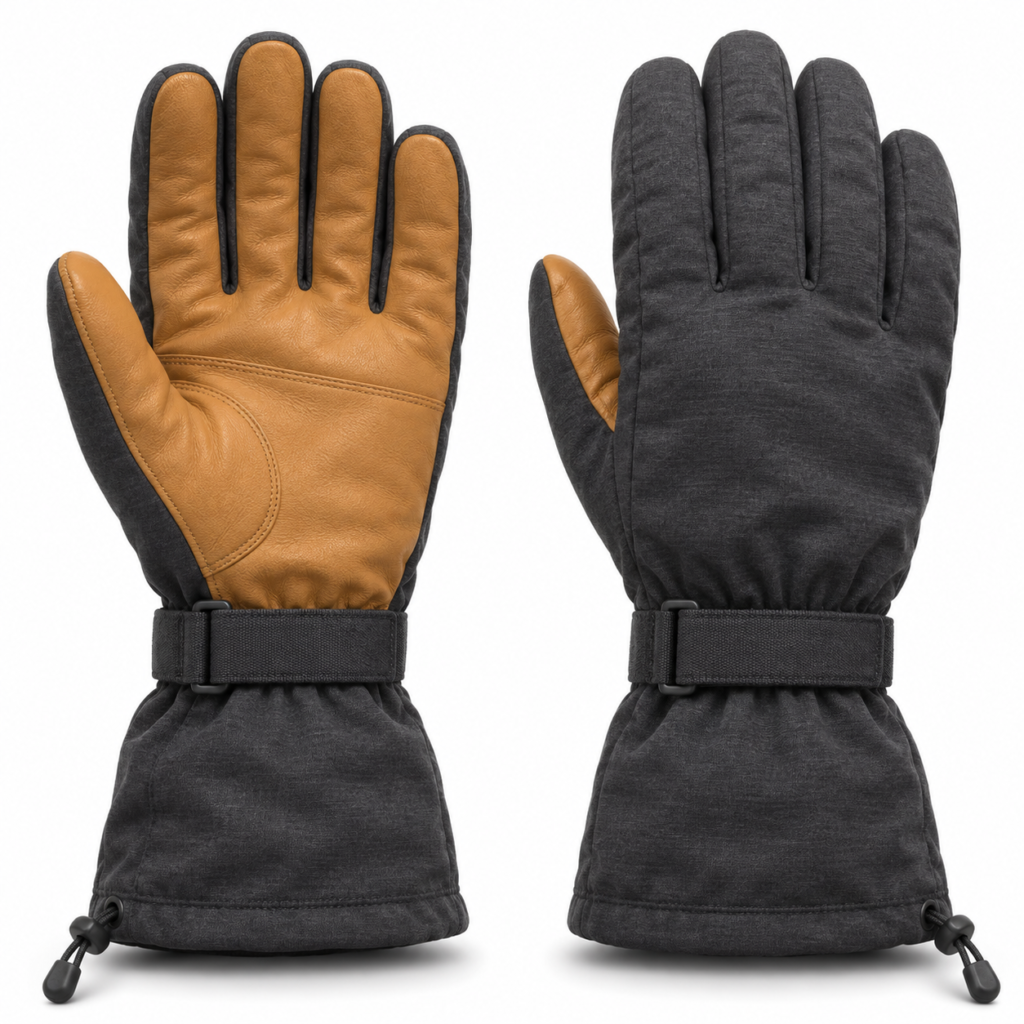
Layered leather-palm winter gloves look simple on a product page: a tan leather palm and thumb, a charcoal jersey-style back, a lining with insulation, and an extended textile cuff with a wrist strap and a drawcord. In practice, they combine more materials and more seams than almost any other work glove in a range. When something goes wrong, it usually goes wrong where two of those layers meet.
This article is for brand owners, workwear shops and buyers who are developing their own layered winter glove. It lists the six problems we see most often at sample stage and how to avoid each one before bulk production starts.

Why layered winter gloves are harder to get right
A summer work glove usually has two main materials: a palm and a back. A layered winter glove adds a lining, an insulation layer and a longer cuff with its own fastenings. Each layer changes the thickness of the glove, the way it bends and the space left inside for the hand. If the pattern, the sizes and the seams are decided before the full layer stack is approved, the finished pair rarely behaves like the drawing.
The rule that prevents most of the problems below: approve the complete layer stack first, then grade the pattern.
Problem 1: The palm feels stiff and the grip feels dead
Leather that feels supple on its own can feel stiff once lining and insulation sit behind it. The wearer has to squeeze harder to hold a tool, a shovel handle or a steering wheel, and the hand tires faster.
How to avoid it: choose the leather species, finish and thickness together with the layers behind the palm, not separately. Ask for the sample to be tried on the actual task: closing the hand around the handles your customers use. If the palm resists folding, the answer may be a different leather thickness or a lighter layer under the palm rather than a different glove.
Problem 2: Fingers are too short or too bulky once the lining is in
Insulation and lining take up space inside each finger. A pattern that fits well as a shell can feel short at the fingertips and tight across the knuckles when all layers are in place. Buyers often discover this only after the size set has been graded.
How to avoid it: fit the complete sample, with lining and insulation, before grading. Check finger lengths and hand circumference against your size chart at both ends of the range, not only in the middle size. Note any change in seam positions on the approved sample so the grading follows it.
Problem 3: The leather-to-textile seam pulls or opens
The junction between the leather palm and the jersey-style back is the busiest seam on this glove. Leather and knitted textile stretch differently, and the seam is flexed every time the hand closes. Weak points show up as puckering, needle holes opening in the leather or the textile pulling away from the stitch line.
How to avoid it: agree on the seam position, the thread and the stitch type in the bill of materials, and check this seam on the physical sample after repeated gripping. Look at the fingertips and the side of the index finger, where the two materials meet under the most movement.
Problem 4: The lining comes out with the hand
When a wearer pulls a warm, damp hand out of the glove, a loosely attached lining can follow, and it is hard to put back. We covered this in detail in our article on common winter work glove problems. For a layered leather-palm glove, the same check applies: on the sample, take the glove off and on several times with a warm hand and confirm that the lining stays in place, especially at the fingertips.
Problem 5: A cold gap between cuff and jacket sleeve
The extended textile cuff, the adjustable wrist strap and the drawcord opening are there to close the gap between glove and sleeve. They only work if they match the garments your customers wear. A cuff that is too narrow will not go over a thick jacket sleeve; a cuff that is too short leaves the wrist exposed when the arm reaches forward.
How to avoid it: try the sample with the jacket or workwear your customers will use. Check cuff overlap with the arm extended, check that the wrist strap holds the glove without pressing, and check that the drawcord can be tightened and released while wearing the other glove.
Problem 6: Expecting performance the sample does not declare
A layered glove looks warm and protective, and buyers sometimes assume it is waterproof or carries a thermal rating. This design reference declares no waterproof or thermal rating. A membrane or sealed-seam option is possible to discuss, but it needs a separate feasibility check and test confirmation before any claim appears on packaging or in your listings.
How to avoid it: write down which claims you want to make, and ask for them to be confirmed in writing before you print hang cards or publish product copy.
Sample approval checklist
| Check | How to check it | Approve when |
|---|---|---|
| Layer stack | Compare leather, back textile, lining and insulation with the bill of materials | Every layer matches the agreed specification |
| Grip | Close the hand around the real handles or tools | The palm folds without pressure points |
| Finger fit | Try smallest and largest sizes with all layers in | Fingertips reach the end without being crushed |
| Leather-to-textile seams | Flex the hand repeatedly, then inspect | No puckering, open stitches or pulled textile |
| Lining | Take the glove off and on with a warm hand | Lining stays in place |
| Cuff, strap and drawcord | Wear with the intended jacket, arm extended | Cuff overlaps the sleeve and closes easily |
| Claims | Compare packaging text with confirmed tests | No unconfirmed waterproof or thermal claims |
For a full overview of materials and sizing, read our layered winter gloves buyer’s guide. To see where each of these checks happens in production, read how layered leather-palm winter gloves are made.
Develop your layered winter gloves with ZESTLET
ZESTLET is a glove and apparel manufacturer in Sialkot, Pakistan. We develop private-label winter gloves from your brief and confirm every detail on a physical sample first.
- Leather, back textile, lining and insulation chosen as one layer stack
- Pattern graded to your own size chart
- Your labels, hang cards and pair packaging
- Small batches welcome, sample first
See the layered leather-palm winter glove or request a quote with your drawing and size breakdown.
FAQ
What is the most common problem with layered winter gloves?
Fit changes once lining and insulation are added. Fingers can feel short and the palm stiff. Approving the complete layer stack before grading the pattern prevents most of it.
Why does the leather palm feel stiff on my sample?
Leather thickness, finish and the layers behind the palm work together. Try the sample on the real task and adjust leather thickness or the layer under the palm if needed.
Are these gloves waterproof?
The design reference declares no waterproof or thermal rating. A membrane or sealed-seam option needs a separate feasibility check and test confirmation.
How do I stop a gap between glove and sleeve?
Try the extended cuff with the jacket your customers wear, arm extended, and check that the wrist strap and drawcord close comfortably.
What should I send for a quotation?
Your drawing, intended task, material preference, size breakdown, quantity, destination and authorised artwork. Sample cost, MOQ, lead time and freight are confirmed in the written quotation.