ZESTLET · OEM / ODM · Private Label
Kilt Waistcoat Problems: Waistband Gap, Wrong Neckline, Points and Back Fit (and How to Avoid Them)
Build Now, Pay Later · New brands welcome
Launch your brand from 20 pieces. Pay the balance after your stock arrives.
ZESTLET makes your tactical, hunting, uniform and Highland products under your own label. Your first sample and branding setup are free, and orders from $5,000 can pay 60% after delivery.
Budget under $5,000
Startup Launch
- Start from 20 pieces per product
- Your first sample is free
- Labels, screens and digitising are free
- Bulk starts only after you approve the sample
Orders from $5,000
Build Now, Pay Later
- Pay 40% to start production
- Pay the other 60% monthly after delivery
- No interest and no application fee
- Your limit grows with every on-time payment
Your full journey with ZESTLET, step by step
From your first idea to stock in your warehouse. Every step is visible in your free brand dashboard.
- 1Create your free brand accountSign up in about one minute. We email you a 6-digit code to confirm your account.
- 2Check your credit in 30 secondsAnswer 3 short questions in your dashboard and see your pre-qualified credit limit straight away.
- 3Start your projectUpload your design or tech pack, choose the product and quantity. You can start from 20 pieces per product.
- 4Get your quotation within 24 hoursPrice per piece, lead time and payment terms in writing, from real people in Sialkot.
- 5Free sample with your brandingWe make your sample with your logo in 7–10 working days. You only pay the sample shipping.
- 6Approve and pay 40%Bulk production starts only after you approve the sample and pay the 40% deposit.
- 7Production and quality checksCutting, stitching, inspection and packing, with progress updates in your dashboard.
- 8Delivery, then pay 60% monthlyDoor-to-door shipping. Credit orders pay the balance after delivery over 90 to 365 days, with no interest.
What you need to apply
- Your brand name and contact details
- Your product idea, design or tech pack
- An order value from $5,000 for Build Now, Pay Later
- For higher limits: sales history or business registration
Your credit limit grows with you
First credit order
After 2 orders paid on time
After 4 cycles and a review
- Deposit
- 40%
- Balance after delivery
- 60%, monthly
- Repayment
- 90 to 365 days
- Interest and fees
- None
Can I start a clothing brand with a small budget?
Yes. You can start from 20 pieces per product, and your first sample and branding setup are free, so your budget goes into product.
Who can use Build Now, Pay Later?
Brands with orders from $5,000, including new brands with no sales history, after a short review. You pay 40% upfront and 60% in monthly instalments after delivery.
Is the sample free?
Yes, the first sample is made free with your branding. Sample shipping is paid by the buyer.
Credit is subject to approval. Amounts shown in your local currency are approximate.
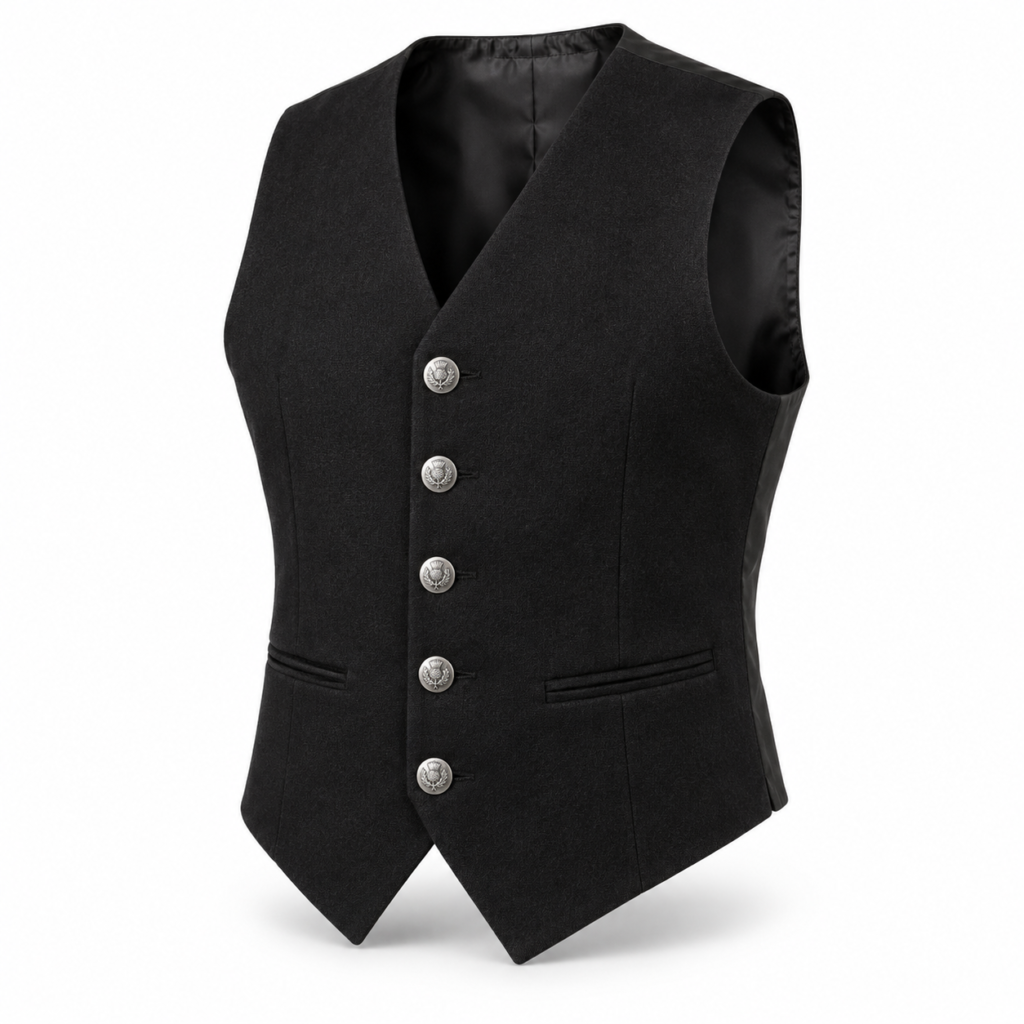
A kilt waistcoat looks like a small, simple garment, and that is exactly why it is so often got wrong. It has to sit cleanly over a high kilt waistband, work with a specific jacket and neckwear, and stay comfortable under a closed or open jacket for a long evening. A waistcoat that would be fine with trousers can look awkward with a kilt.
For Highland outfitters, retailers and band suppliers, these are the problems we see most often with kilt waistcoats, and how to prevent them before bulk production.
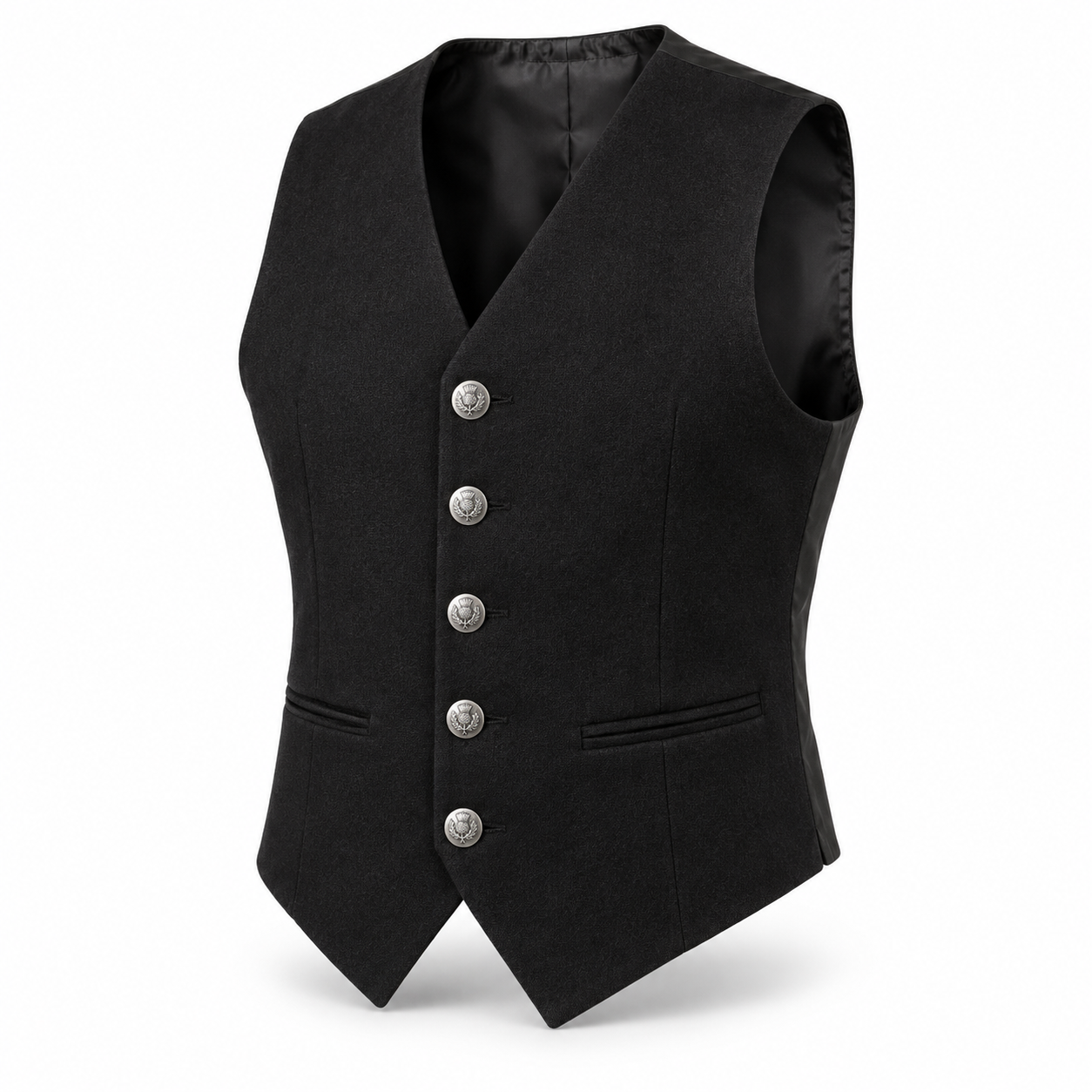
1. A trouser waistcoat cut over a kilt
A kilt sits higher on the body than most trousers. An ordinary trouser waistcoat may leave an awkward gap between waistcoat and kilt waistband, or overlap too much and bunch at the front. Both are visible the moment the jacket is open.
How to avoid it: set the front length for coverage at the kilt waist, not at a trouser waist. Review the sample with the actual kilt and shirt, standing and seated.
2. The wrong neckline for the outfit
A three-button waistcoat with a low evening opening and a higher five-button waistcoat are different style briefs, not a small detail. If the neckline is chosen without knowing the jacket and neckwear, the waistcoat can disappear under a lapel or crowd a bow tie or jabot.
How to avoid it: specify the intended jacket and neckwear first, then approve the neckline and actual button spacing on a front outfit reference.
3. Points that are uneven or flare
The lower front points are right at eye level when the jacket is open. Points that differ left to right, or that flare out over the kilt waistband, make the whole outfit look untidy.
How to avoid it: put the lower-front shape on the drawing with a symmetry tolerance, and check that the points lie flat when the wearer sits.
4. A back that does not suit how it is worn
The back can be self-fabric or lining, with or without an adjuster. A bulky adjuster can press into the wearer under a jacket, and relying on an adjuster instead of a real size chart leads to poor fit across the chest.
How to avoid it: decide the back fabric and whether an adjuster is needed. If you specify one, confirm the adjuster material, range and comfort under the jacket, and keep a proper chest and waist measurement chart.
5. Armholes that fight the shirt or the jacket
Armholes cut too small pull at the shirt; armholes cut too large show gaps and can bunch under the jacket sleeve. Pockets placed without thought add bulk in the same area.
How to avoid it: specify armhole clearance for the shirt and jacket compatibility, and set the welt pocket layout and depth on the drawing.
6. A shade match promised from a photograph
Buyers often want a waistcoat to match an existing jacket. A similar fabric name or a digital photograph cannot guarantee a shade and weave match.
How to avoid it: send a physical swatch or garment reference, and decide whether you want a same-lot match or a deliberate contrast. For coordinated sets, our Prince Charlie jacket problems guide covers matching the waistcoat to the jacket in more detail.
Problem and prevention checklist
| Problem | Where it starts | What to check on the sample |
|---|---|---|
| Gap or bunching at the kilt waist | Front length set for trousers | Worn with the real kilt, standing and seated |
| Neckline hidden or crowded | Jacket and neckwear not specified | Front view with jacket and neckwear |
| Uneven or flaring points | No shape tolerance on the drawing | Points flat when seated, left and right equal |
| Uncomfortable back | Adjuster chosen without a size chart | Comfort under the jacket, chest fit |
| Pulling or gaping armholes | Clearance not specified | Arms raised, jacket on and off |
| Shade mismatch with the jacket | Match promised from a photo | Physical swatch compared in daylight |
For neckline, cloth and size choices, read our kilt waistcoat buyer’s guide, and see how a kilt waistcoat is made.
Develop your kilt waistcoats with ZESTLET
ZESTLET in Sialkot, Pakistan develops kilt waistcoats for Highland outfitters, retailers and band suppliers, as vest-only orders or coordinated jacket sets.
- Small batches with a project-specific MOQ
- Sample first, approved before bulk
- Private label with your labels and packing
See the Kilt Waistcoat or request a quote and send your brief.
Frequently asked questions
Why can’t I use a normal waistcoat with a kilt?
A kilt sits higher than most trousers, so a trouser waistcoat may leave a gap or overlap too much at the kilt waistband. A kilt waistcoat is cut to sit cleanly over it.
Which button count should I order?
Choose it with the intended jacket and neckwear. A low three-button evening waistcoat and a higher five-button waistcoat are different style choices.
Can the waistcoat match my existing jacket?
Send a physical swatch or garment reference and discuss availability. A fabric name or photograph cannot guarantee a shade and weave match.
Is an adjustable back a good idea?
It can be specified. Confirm the adjuster material, range and comfort under the jacket, and still use a proper chest and waist size chart.
What is the most useful sample check?
Wear it with the intended kilt and shirt, then sit, raise the arms and close the jacket where applicable. Check front coverage, neckline, pockets and side seams.