
ZESTLET · OEM / ODM · Private Label
Kilt Pin Problems: Torn Cloth, Weak Clasps, Wrong Weight and Finish Mismatch
Build Now, Pay Later · New brands welcome
Launch your brand from 20 pieces. Pay the balance after your stock arrives.
ZESTLET makes your tactical, hunting, uniform and Highland products under your own label. Your first sample and branding setup are free, and orders from $5,000 can pay 60% after delivery.
Budget under $5,000
Startup Launch
- Start from 20 pieces per product
- Your first sample is free
- Labels, screens and digitising are free
- Bulk starts only after you approve the sample
Orders from $5,000
Build Now, Pay Later
- Pay 40% to start production
- Pay the other 60% monthly after delivery
- No interest and no application fee
- Your limit grows with every on-time payment
Your full journey with ZESTLET, step by step
From your first idea to stock in your warehouse. Every step is visible in your free brand dashboard.
- 1Create your free brand accountSign up in about one minute. We email you a 6-digit code to confirm your account.
- 2Check your credit in 30 secondsAnswer 3 short questions in your dashboard and see your pre-qualified credit limit straight away.
- 3Start your projectUpload your design or tech pack, choose the product and quantity. You can start from 20 pieces per product.
- 4Get your quotation within 24 hoursPrice per piece, lead time and payment terms in writing, from real people in Sialkot.
- 5Free sample with your brandingWe make your sample with your logo in 7–10 working days. You only pay the sample shipping.
- 6Approve and pay 40%Bulk production starts only after you approve the sample and pay the 40% deposit.
- 7Production and quality checksCutting, stitching, inspection and packing, with progress updates in your dashboard.
- 8Delivery, then pay 60% monthlyDoor-to-door shipping. Credit orders pay the balance after delivery over 90 to 365 days, with no interest.
What you need to apply
- Your brand name and contact details
- Your product idea, design or tech pack
- An order value from $5,000 for Build Now, Pay Later
- For higher limits: sales history or business registration
Your credit limit grows with you
First credit order
After 2 orders paid on time
After 4 cycles and a review
- Deposit
- 40%
- Balance after delivery
- 60%, monthly
- Repayment
- 90 to 365 days
- Interest and fees
- None
Can I start a clothing brand with a small budget?
Yes. You can start from 20 pieces per product, and your first sample and branding setup are free, so your budget goes into product.
Who can use Build Now, Pay Later?
Brands with orders from $5,000, including new brands with no sales history, after a short review. You pay 40% upfront and 60% in monthly instalments after delivery.
Is the sample free?
Yes, the first sample is made free with your branding. Sample shipping is paid by the buyer.
Credit is subject to approval. Amounts shown in your local currency are approximate.
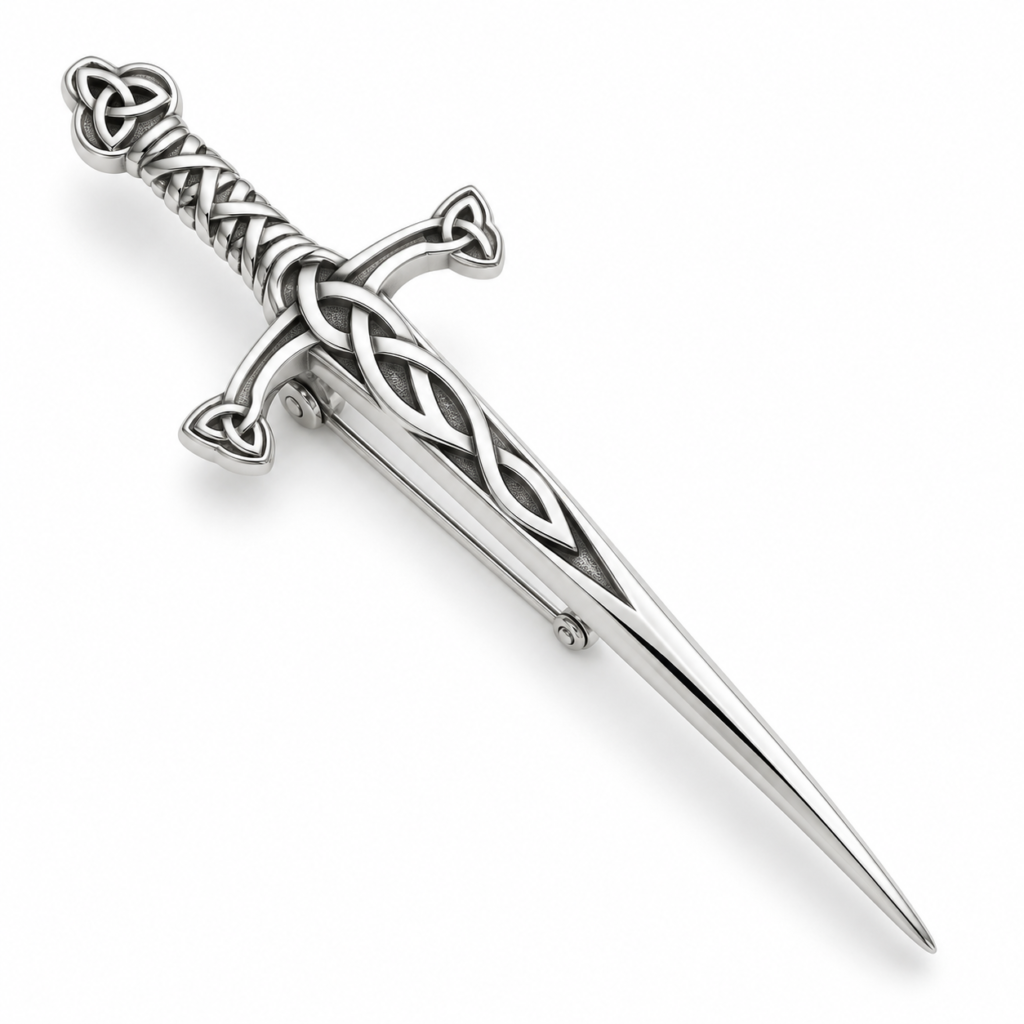
A kilt pin is small, but it sits in the most visible place on a Highland outfit and it goes through good cloth every time it is worn. When it is too heavy, too sharp, poorly hinged or pinned in the wrong place, the complaint does not come back as “the pin is wrong”. It comes back as a snagged apron, a lost pin after a ceilidh, or a set of band outfits where no two pins match. This guide covers the kilt pin problems that outfitters, retailers and band suppliers run into most often, and how to prevent each one before bulk production.
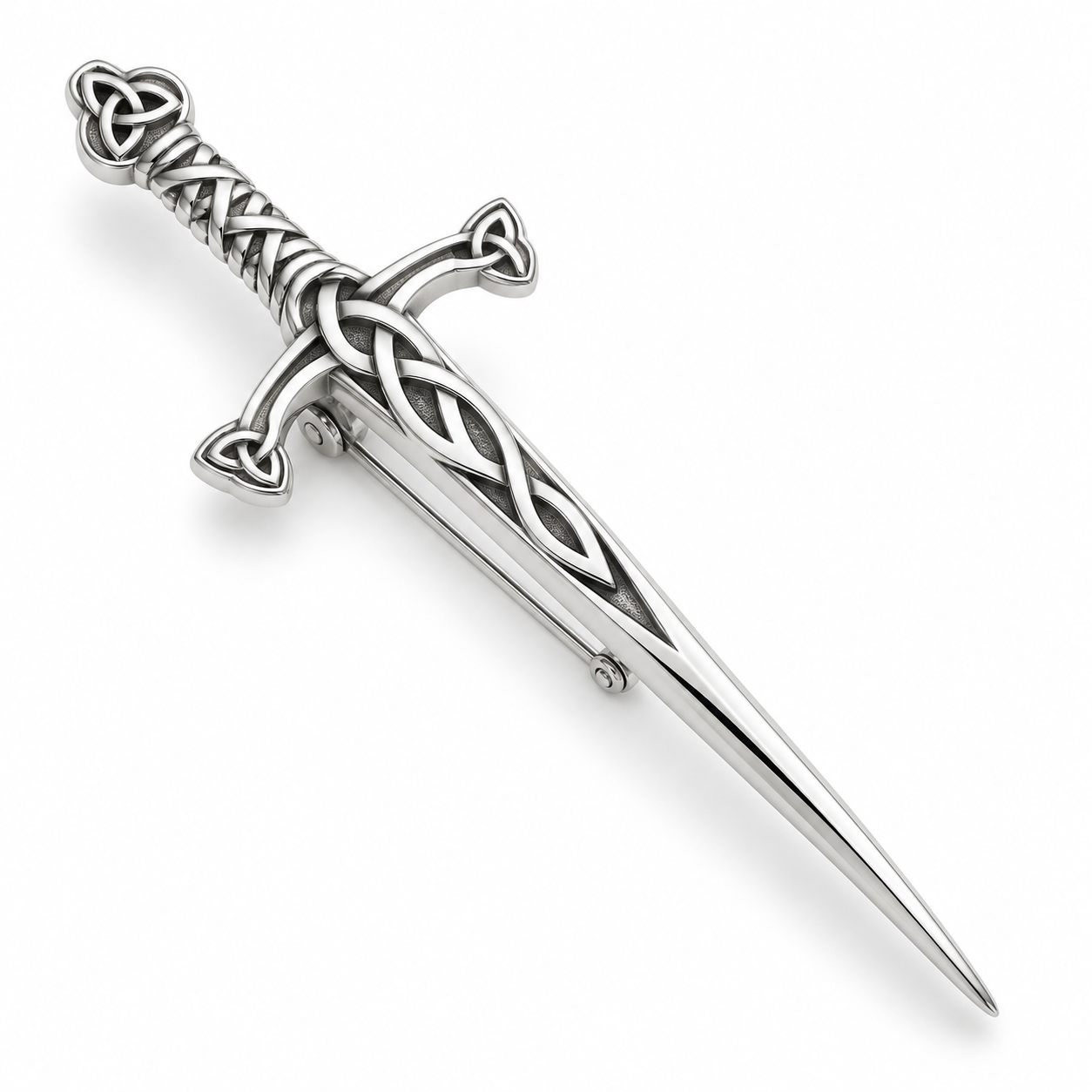
If you are still choosing outline, weight and finish, start with our kilt pin buyer’s guide. To see where each check happens during production, read how a kilt pin is made.
1. Customers expect the pin to hold the kilt closed
The most basic problem is a misunderstanding. A kilt pin is a decorative accessory for the outer apron. It is not a substitute for the kilt’s straps and buckles, and it should not be used to pull the aprons together. When a customer pins through both aprons to “secure” the kilt, the pin restricts movement, strains the cloth and can bend or open.
How to avoid it: say clearly on the product card, the backing card or your website that the kilt straps or specified closure secure the garment and the pin is decorative. Agree the intended placement on the outer apron with your outfitter and show it in your styling photos.
2. Holes, pulls and snags in the apron cloth
Tartan cloth is expensive and customers notice every pulled thread. Damage usually comes from a point that is too blunt or too rough, a pin that is too thick for the weave, a pin that is pushed through the same spot repeatedly, or a sharp edge on the back of the ornament that rubs the cloth while walking.
How to avoid it: specify pin length, point and diameter in the brief rather than accepting “standard”. Ask for a smooth cloth-contact surface on the backing with no rough casting marks or burrs. Test the sample on the actual cloth weight you sell, not on a scrap of thin fabric.
3. The pin is too heavy or too light for the cloth
A large, heavy pin on a lighter cloth drags the apron corner down and swings when the wearer moves. A very light pin on a heavy cloth can look lost. Weight is not just a matter of looks; it changes how the apron hangs.
How to avoid it: agree a weight reference on the approved sample and judge it on the cloth it will be worn with. If you sell kilts in more than one cloth weight, review the pin on each.
4. Weak clasps and lost pins
A clasp that opens too easily is the fastest way to lose a pin, and a lost pin becomes a complaint. The opposite problem also exists: a clasp so stiff that customers force it and bend the pin.
How to avoid it: describe the closing action you want (for example a secure safety-style catch) and check it on the sample. Open and close it many times, check that the point sits fully inside the catch, and confirm the hinge does not wobble.
5. Finish mismatch across the outfit
A bright polished pin next to an antique-finish sporran chain or kilt belt buckle looks like a mistake. In band orders, a slight colour difference between batches is visible on parade.
How to avoid it: name the finish (polished, satin or an agreed antique effect) and approve a physical reference. If the pin must match other metalwork, send that metalwork or a sample of it. For coordinated metal parts see also our guide to sporran chain hooks, length and finish.
6. Design and artwork rights
Many buyers ask for a clan crest, a regimental badge or a design copied from another brand. Do not assume these are free to reproduce. A supplier cannot fix a rights problem after the pins are made.
How to avoid it: use an original motif or artwork you are authorised to use, and keep that authorisation with the order file.
7. Damage in transit and on the shelf
Pins arrive with scratched faces, open points that have snagged the inner packing, or bent pins from loose bulk packing.
How to avoid it: specify packing that protects the point, hinge, clasp and decorative surface, closed pins, and presentation that resists scratching.
Kilt pin problem checklist
| Problem | Likely cause | Prevention in the brief |
|---|---|---|
| Cloth snags or holes | Rough point, thick pin, rough backing | Specify pin length and point; smooth cloth-contact backing; test on real cloth |
| Apron drags | Pin too heavy for cloth | Weight reference approved on the sample |
| Lost pins | Clasp opens too easily | Secure closing action checked on the sample |
| Finish mismatch | No physical finish reference | Named finish; match against other metalwork |
| Rights dispute | Unauthorised crest or copied design | Original or authorised artwork only |
| Transit damage | Loose packing, open points | Protected point and scratch-resistant presentation |
Kilt pins checked on real cloth
ZESTLET reviews kilt pin projects for Highland outfitters, retailers and band suppliers, with pin, clasp, backing and finish approved on a physical sample before production.
- Made by ZESTLET in Sialkot, Pakistan
- Small batches welcome, with a project-specific MOQ confirmed after review
- Sample first, then bulk production from the approved reference
- Private label: your own design, backing card, labels and packaging
Kilt pin problems: FAQ
Does a kilt pin hold the kilt closed?
No. The kilt’s straps or specified closure secure the garment. The pin is decorative and is normally associated with the outer apron, with final placement agreed with the outfitter.
Why does my kilt pin leave marks on the cloth?
Usually because the point, pin thickness or backing does not suit the cloth, or the pin goes through the same spot every time. Review these on the actual fabric.
How can I stop customers losing their kilt pins?
Specify a secure clasp, check the closing action on the sample and explain to customers how to close it fully.
Can you match the finish of my other Highland metalwork?
Send the metalwork or a reference sample and agree the finish on a physical sample rather than a photo or rendering.
Can I use a clan crest on a kilt pin?
Only if you have the right to use that artwork. Otherwise choose an original motif designed for your brand.