
ZESTLET · OEM / ODM · Private Label
How Much Does It Cost to Manufacture Clothing? Garment Costing Explained
Build Now, Pay Later · New brands welcome
Launch your brand from 20 pieces. Pay the balance after your stock arrives.
ZESTLET makes your tactical, hunting, uniform and Highland products under your own label. Your first sample and branding setup are free, and orders from $5,000 can pay 60% after delivery.
Budget under $5,000
Startup Launch
- Start from 20 pieces per product
- Your first sample is free
- Labels, screens and digitising are free
- Bulk starts only after you approve the sample
Orders from $5,000
Build Now, Pay Later
- Pay 40% to start production
- Pay the other 60% monthly after delivery
- No interest and no application fee
- Your limit grows with every on-time payment
Your full journey with ZESTLET, step by step
From your first idea to stock in your warehouse. Every step is visible in your free brand dashboard.
- 1Create your free brand accountSign up in about one minute. We email you a 6-digit code to confirm your account.
- 2Check your credit in 30 secondsAnswer 3 short questions in your dashboard and see your pre-qualified credit limit straight away.
- 3Start your projectUpload your design or tech pack, choose the product and quantity. You can start from 20 pieces per product.
- 4Get your quotation within 24 hoursPrice per piece, lead time and payment terms in writing, from real people in Sialkot.
- 5Free sample with your brandingWe make your sample with your logo in 7–10 working days. You only pay the sample shipping.
- 6Approve and pay 40%Bulk production starts only after you approve the sample and pay the 40% deposit.
- 7Production and quality checksCutting, stitching, inspection and packing, with progress updates in your dashboard.
- 8Delivery, then pay 60% monthlyDoor-to-door shipping. Credit orders pay the balance after delivery over 90 to 365 days, with no interest.
What you need to apply
- Your brand name and contact details
- Your product idea, design or tech pack
- An order value from $5,000 for Build Now, Pay Later
- For higher limits: sales history or business registration
Your credit limit grows with you
First credit order
After 2 orders paid on time
After 4 cycles and a review
- Deposit
- 40%
- Balance after delivery
- 60%, monthly
- Repayment
- 90 to 365 days
- Interest and fees
- None
Can I start a clothing brand with a small budget?
Yes. You can start from 20 pieces per product, and your first sample and branding setup are free, so your budget goes into product.
Who can use Build Now, Pay Later?
Brands with orders from $5,000, including new brands with no sales history, after a short review. You pay 40% upfront and 60% in monthly instalments after delivery.
Is the sample free?
Yes, the first sample is made free with your branding. Sample shipping is paid by the buyer.
Credit is subject to approval. Amounts shown in your local currency are approximate.

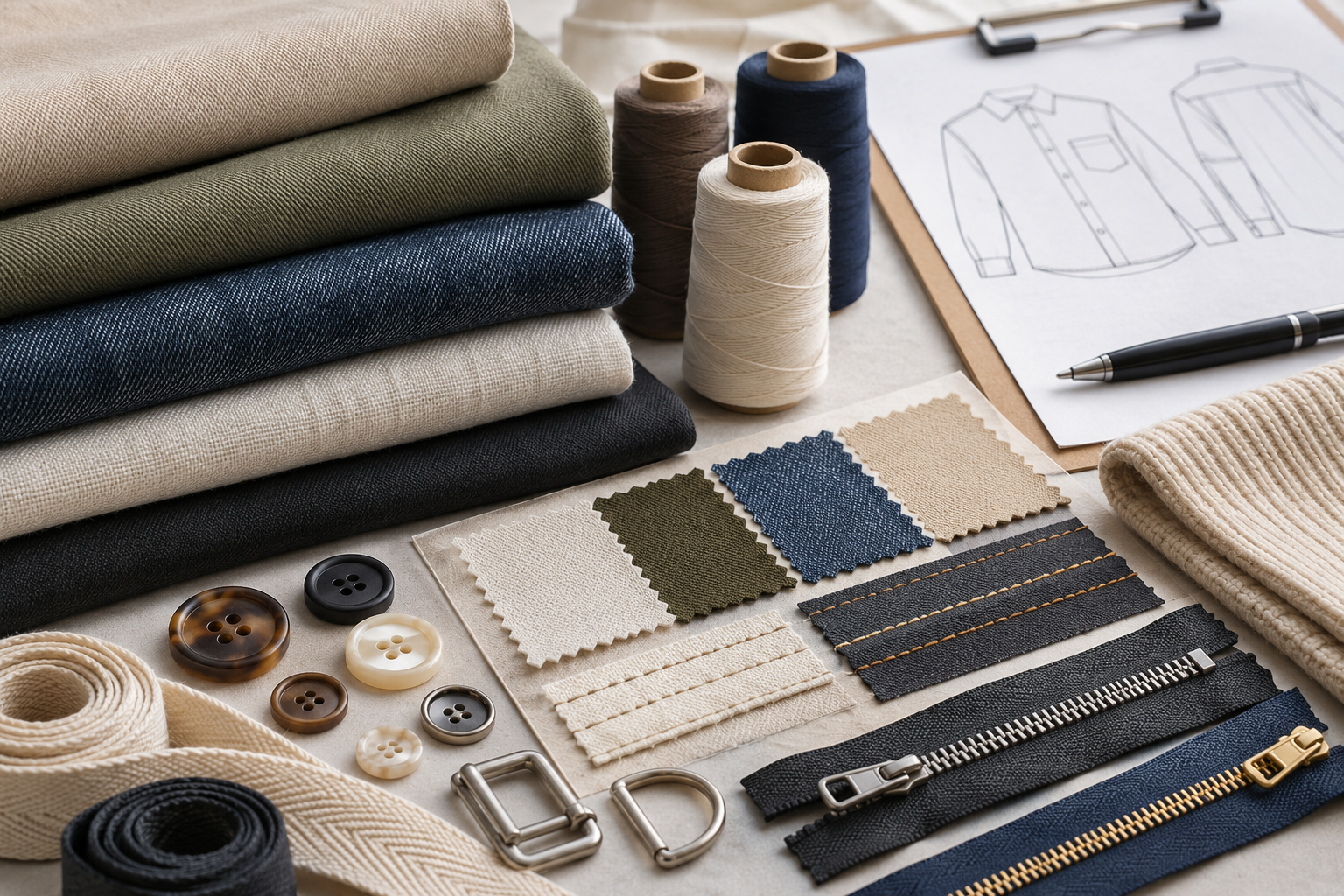
There is no single price for making clothing, because the cost is built line by line from the garment’s own specification. Fabric, trims, sewing time, decoration, packing and the factory’s overheads each add to the price, and the quantity you order changes several of them. Understanding how a garment cost sheet is put together lets you compare quotations fairly and see which design decisions move the price.
This guide explains how garment costing works, shows a worked example, covers the costs that come after the factory price, and lists what to send a manufacturer so the quotation is accurate.
The building blocks of a garment cost sheet
| Cost element | How it is calculated | What changes it |
|---|---|---|
| Fabric | Consumption per garment × price per metre, plus a wastage allowance | Fabric quality, width, pattern efficiency, size range, matching checks or stripes |
| Lining and interlining | Consumption × price, as for fabric | Lined or unlined construction, fusing areas |
| Trims | Sum of every component: thread, buttons, zips, elastic, labels, tapes | Branded or custom trims, number of components |
| Cut, make and trim (CMT) | Standard minutes to sew the garment × the factory’s cost per minute | Construction complexity, number of operations, order size |
| Decoration | Per-piece cost for printing, embroidery or patches, plus set-up | Number of colours, stitch count, placements |
| Washing or finishing | Per-piece cost for garment wash, dye or special finish | Wash type and number of washes |
| Packing | Polybags, swing tags, folding, cartons | Retail-ready packing, hangers, individual boxes |
| Testing | Lab test fees spread across the order | Market requirements and claims |
| Overhead and margin | Percentage applied to the subtotal | Factory overheads, risk, order size |
A worked example
The figures below are hypothetical, chosen only to show the method. They are not ZESTLET prices or market averages; real costs depend on your specification, materials and quantity.
| Line | Calculation | USD |
|---|---|---|
| Main fabric | 1.6 m × 3.00 | 4.80 |
| Fabric wastage allowance | 4% of fabric | 0.19 |
| Trims | buttons, thread, interlining, labels | 0.60 |
| Cut, make and trim | 20 minutes × 0.08 per minute | 1.60 |
| Embroidery | one chest logo | 0.40 |
| Packing | polybag, swing tag, carton share | 0.25 |
| Testing allocation | lab fees ÷ order quantity | 0.10 |
| Subtotal | 7.94 | |
| Overhead and margin | 15% of subtotal | 1.19 |
| Factory (FOB) price | 9.13 |
In this example fabric is more than half of the cost before margin. That is typical of many woven and knitted garments, which is why fabric choice and pattern efficiency usually have the biggest effect on price.
Why quantity changes the unit price
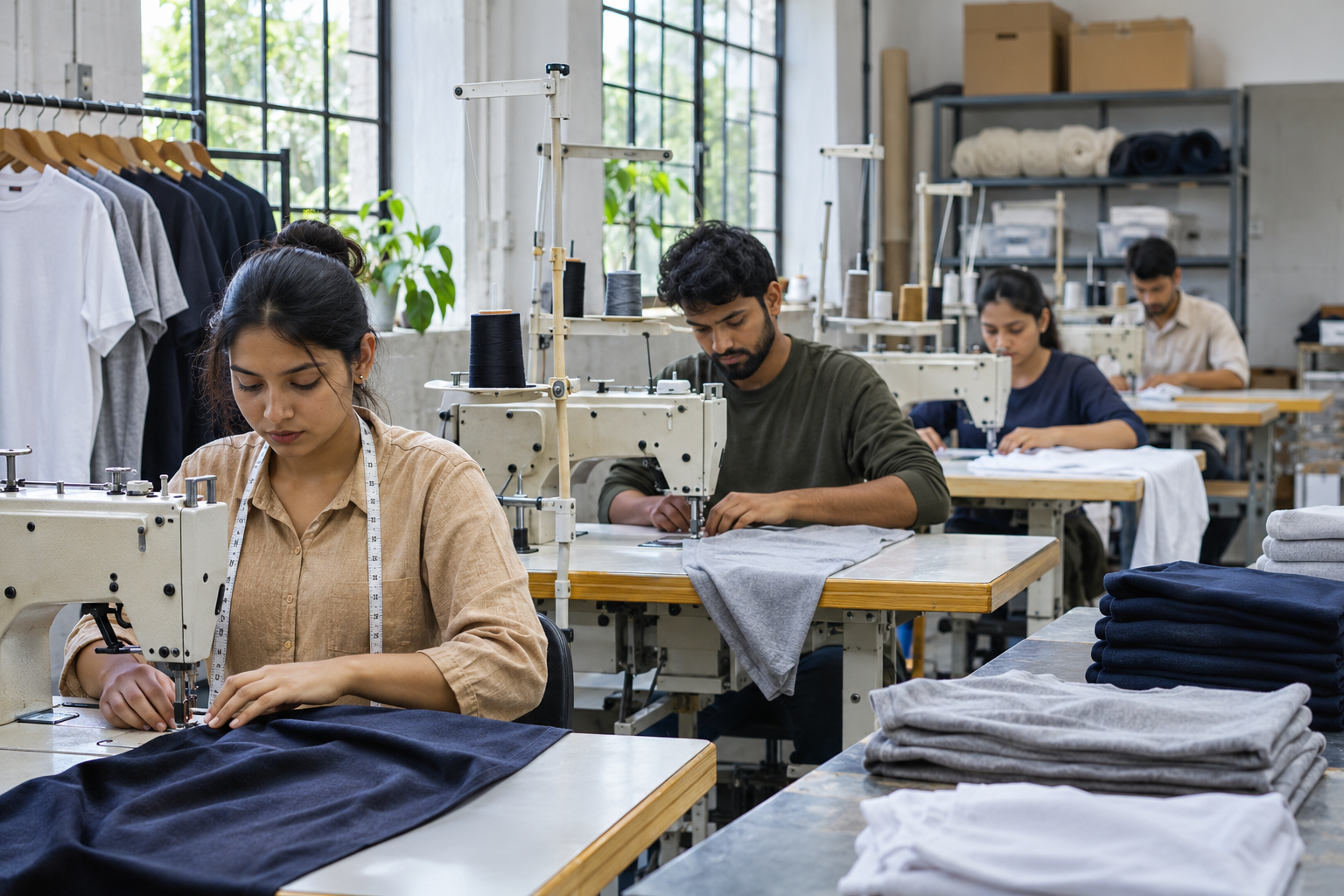
Some costs are fixed for an order, such as pattern work, marker making, screen or embroidery set-up and minimum fabric dye lots. Spread across 100 pieces they add much more per piece than across 2,000. Sewing also becomes more efficient once operators settle into a style. This is why quotations often show price breaks at different quantities. Read clothing MOQ explained for how minimums are set.
Costs after the factory price
The factory price is not the cost of the garment in your warehouse. Your landed cost also includes:
- international freight and insurance, depending on the agreed shipping terms;
- import duties and taxes in your country, based on the product classification and origin;
- customs brokerage and port or handling charges;
- inland delivery to your warehouse;
- samples and any pre-shipment inspection you commission.
Confirm which of these the quotation includes. Two quotes can look very different simply because one includes freight and the other does not. The shipping term decides who pays each item; see FOB vs CIF and other Incoterms explained.
From cost to wholesale and retail price
Brands then add their own costs and margin to reach a wholesale price for retailers, and retailers add theirs to reach the shelf price. Build your price from the landed cost upwards, not from a target retail price downwards, so that every layer of margin is realistic. If the numbers do not work, change the specification rather than hoping for a lower factory price on the same garment.
How design choices move the cost
- Fabric: a slightly lighter or more standard fabric can save more than any sewing change.
- Panels and seams: every extra panel adds cutting, sewing and fabric waste.
- Pockets and details: flaps, pleats and zips each add operations.
- Colours: fewer colourways allow larger fabric dye lots.
- Decoration: fewer print colours or a smaller embroidery saves set-up and per-piece cost.
- Packing: bulk packing costs less than individually boxed, retail-ready items.
What to send for an accurate quotation
- A tech pack or sample with measurements and construction
- Fabric and trim specifications, or references
- Decoration artwork with sizes and placements
- Size range and quantity per size and colour
- Labels, packing and testing requirements
- Destination and preferred shipping terms
Frequently asked questions
How much does it cost to manufacture clothing?
It depends on the garment’s fabric, construction, decoration, packing and quantity. A cost sheet built from your actual specification is the only reliable answer; generic price lists rarely match a custom design.
How much does it cost to manufacture a clothing line?
Add the per-piece cost of every style multiplied by quantity, then sampling, testing, freight, duties and your own launch costs. Starting with fewer styles and colours keeps the first investment manageable. See how to start a clothing line.
Is manufacturing in the US more expensive than overseas?
Labour costs are usually higher in the US, while overseas production adds freight, duties and longer lead times. Compare full landed costs, quality and lead time rather than factory price alone.
What is CMT in garment costing?
CMT stands for cut, make and trim: the factory’s charge for cutting, sewing and finishing a garment, usually based on the standard minutes needed to sew it.
Can ZESTLET quote my design?
Yes. Send your tech pack or sample, quantities and destination, and ZESTLET will prepare a quotation based on your specification. See private label manufacturing.
Related guidance
This guide is original ZESTLET editorial content based on apparel costing practice. Continue with clothing samples, costs and free sample policies, fabric sourcing and choosing a clothing manufacturer.