ZESTLET · OEM / ODM · Private Label
Balmoral Bonnet Buyer’s Guide: Parts, Cloth, Size Chart and How to Choose
Build Now, Pay Later · New brands welcome
Launch your brand from 20 pieces. Pay the balance after your stock arrives.
ZESTLET makes your tactical, hunting, uniform and Highland products under your own label. Your first sample and branding setup are free, and orders from $5,000 can pay 60% after delivery.
Budget under $5,000
Startup Launch
- Start from 20 pieces per product
- Your first sample is free
- Labels, screens and digitising are free
- Bulk starts only after you approve the sample
Orders from $5,000
Build Now, Pay Later
- Pay 40% to start production
- Pay the other 60% monthly after delivery
- No interest and no application fee
- Your limit grows with every on-time payment
Your full journey with ZESTLET, step by step
From your first idea to stock in your warehouse. Every step is visible in your free brand dashboard.
- 1Create your free brand accountSign up in about one minute. We email you a 6-digit code to confirm your account.
- 2Check your credit in 30 secondsAnswer 3 short questions in your dashboard and see your pre-qualified credit limit straight away.
- 3Start your projectUpload your design or tech pack, choose the product and quantity. You can start from 20 pieces per product.
- 4Get your quotation within 24 hoursPrice per piece, lead time and payment terms in writing, from real people in Sialkot.
- 5Free sample with your brandingWe make your sample with your logo in 7–10 working days. You only pay the sample shipping.
- 6Approve and pay 40%Bulk production starts only after you approve the sample and pay the 40% deposit.
- 7Production and quality checksCutting, stitching, inspection and packing, with progress updates in your dashboard.
- 8Delivery, then pay 60% monthlyDoor-to-door shipping. Credit orders pay the balance after delivery over 90 to 365 days, with no interest.
What you need to apply
- Your brand name and contact details
- Your product idea, design or tech pack
- An order value from $5,000 for Build Now, Pay Later
- For higher limits: sales history or business registration
Your credit limit grows with you
First credit order
After 2 orders paid on time
After 4 cycles and a review
- Deposit
- 40%
- Balance after delivery
- 60%, monthly
- Repayment
- 90 to 365 days
- Interest and fees
- None
Can I start a clothing brand with a small budget?
Yes. You can start from 20 pieces per product, and your first sample and branding setup are free, so your budget goes into product.
Who can use Build Now, Pay Later?
Brands with orders from $5,000, including new brands with no sales history, after a short review. You pay 40% upfront and 60% in monthly instalments after delivery.
Is the sample free?
Yes, the first sample is made free with your branding. Sample shipping is paid by the buyer.
Credit is subject to approval. Amounts shown in your local currency are approximate.
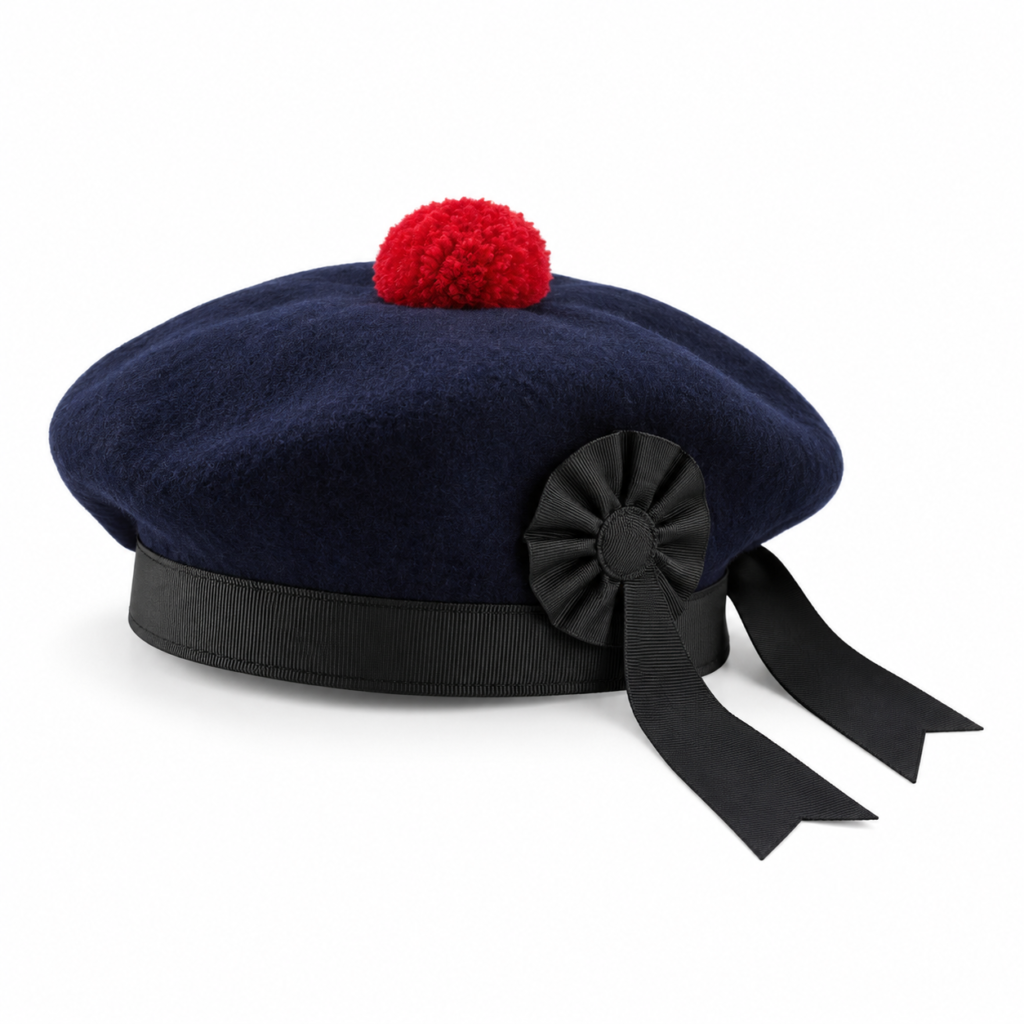
The balmoral bonnet is the round, soft Scottish bonnet with a broad crown, a headband and a central toorie. It is worn with kilts at weddings, ceilidhs, Highland games and by many pipe bands, often with a cockade at the side and ribbons at the back. For retailers and private-label brands it is a useful accessory to sell alongside full outfits.
This guide explains the parts of a balmoral, the cloth and trim choices, how to measure and what to send to a manufacturer.
Balmoral or glengarry?
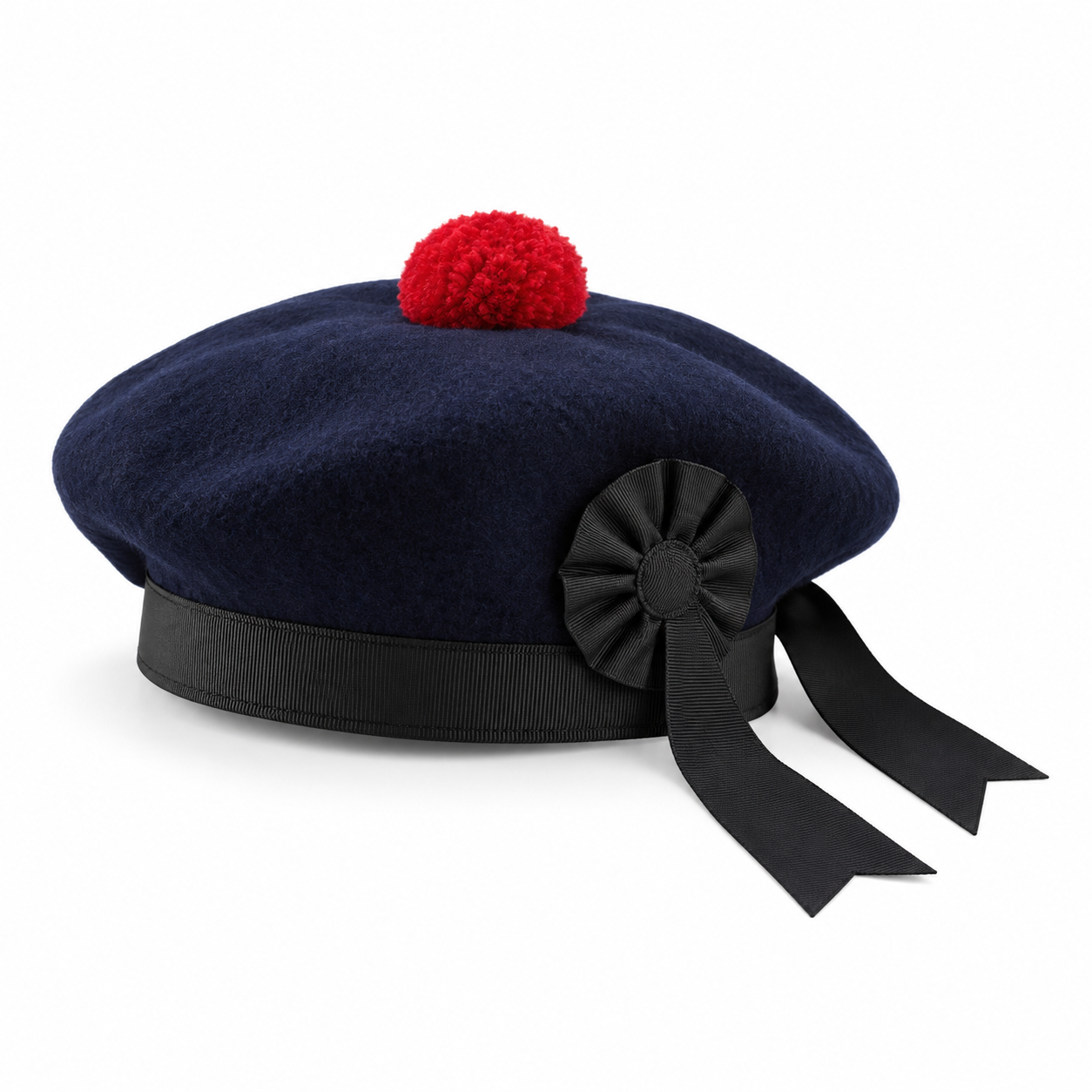
Both are traditional Highland bonnets, but they are different patterns. The balmoral has a round, fuller crown that drapes; the glengarry is boat-shaped and creased along the top. Both can carry ribbons and a badge, but they sit differently on the head and are cut differently. If you are building a range with both, see our glengarry bonnet buyer’s guide as well.
Parts of a balmoral bonnet
| Part | What it is | What to decide |
|---|---|---|
| Crown | The round soft top | Diameter, fullness, shape reference |
| Band | The headband around the base | Plain or approved decorative treatment |
| Toorie | Pompom at the centre of the crown | Position, yarn, size, colour |
| Cockade | Ribbon rosette at the side | Placement and ribbon finish |
| Ribbons | Tails at the back | Length and attachment |
| Badge | Optional crest or emblem | Authorised design and backing |
| Lining | Inside and sweatband | Comfort and contact material |
Cloth and trim
The usual choice is milled wool bonnet cloth, because it holds the soft crown shape. An agreed alternative cloth is possible if you need a different handle or budget, but it should be sampled so you can see how it drapes. The band and ribbons are commonly grosgrain. Choose colours to coordinate with the outfit: a bonnet sold with a tartan kilt and jacket should be checked next to those pieces, not only against a colour card.
Sizes and how to measure
A good balmoral size chart is based on the finished headband circumference, with a tolerance, and states how each labelled size relates to it. Crown diameter should be recorded separately and graded with size.
To measure a wearer:
- Use a flexible tape measure.
- Measure around the head where the band will sit: across the forehead, above the ears and around the back.
- Keep the tape level and snug, not tight.
- Write the result in centimetres and compare it with the chart’s finished circumference.
- If between sizes, check the brand’s advice on whether to go up.
For a range, ask your manufacturer to show finished measurements for every size on the sample, so your own website chart matches the product.
Features to choose
- Plain or decorated band: keep it plain for daywear and retail, or use an approved decorative treatment for bands and events.
- With or without cockade: decide whether the cockade is fitted, and on which side.
- Ribbon length: agree the tail length so all bonnets in a set match.
- Badge: sold separately or fitted; only authorised artwork.
- Branding: private label, size label and packing to your brief.
Who buys balmoral bonnets
Highland outfitters and kilt-hire shops add them to outfit packages. Retailers stock them as a stand-alone accessory. Pipe bands and event organisers order matching sets. Each group needs something slightly different: hire shops value durability and easy size labelling, bands value identical placement of cockades and ribbons, and retailers value packaging that keeps the crown in shape on the shelf.
What to send a manufacturer
- Style reference, ideally photographed on a head from front and side
- Circumference by size and the crown proportion you want
- Cloth, colour and trim preferences
- Toorie, cockade, ribbon and badge decisions
- Quantity by variant, destination and packing brief
Mark any missing decisions so the manufacturer can review development and sourcing before quoting. To understand the common mistakes, read balmoral bonnet problems and how to avoid them, and for the production route see how a balmoral bonnet is made.
Develop your balmoral bonnet with ZESTLET
ZESTLET in Sialkot, Pakistan makes Highland wear and accessories for outfitters, retailers, pipe bands and private-label brands.
- Milled wool or an agreed alternative bonnet cloth, with grosgrain band and lining
- Circumference, crown, toorie, cockade, ribbons and badge built to your approved brief
- Sample first, then small or larger batches under your own label
- Measured size chart and packing plan agreed before bulk
See the balmoral bonnet product page or request a quote with your measurements, cloth and styling reference.
Frequently asked questions
How does a balmoral differ from a glengarry?
The balmoral has a round, fuller crown, while the glengarry is boat-shaped. Their patterns and wearing profiles differ.
What does a balmoral bonnet size chart show?
The finished headband circumference and its tolerance, linked to each labelled size. Crown diameter is recorded separately.
Which cloth is used for a balmoral bonnet?
Usually milled wool bonnet cloth, with grosgrain band and ribbons and a lining. An agreed alternative cloth can be sampled.
Can the bonnet carry my own brand?
Yes. Private-label sizing labels and packing can be agreed in the brief for OEM or private-label development.
What should a quotation request include?
Style reference, circumference, crown, band, toorie, materials, quantity by variant, destination and packing brief, with any open decisions marked.