ZESTLET · OEM / ODM · Private Label
Clothing Samples Explained: Types of Garment Samples, Costs and Free Sample Policies
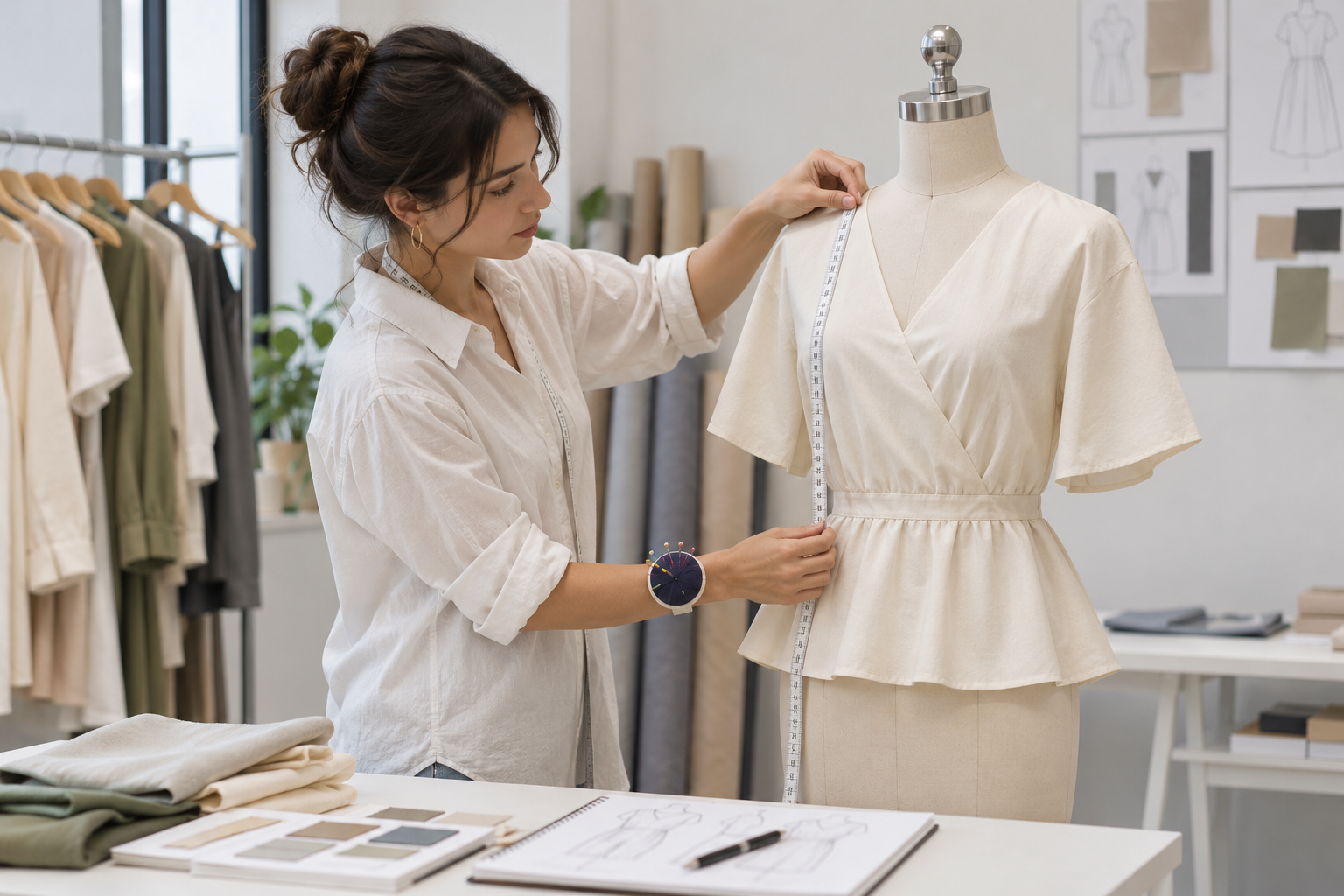
Clothing samples are the checkpoints between an idea and a bulk order. Each sample answers a different question: does the design work, does it fit, do all sizes grade correctly, is the bulk fabric right, and does production match what was approved? Knowing which sample you are looking at, what it should prove and who pays for it avoids most of the arguments that happen later in production.
This guide explains the main types of garment samples, how sample costs and sample prices work, what a free sample policy usually covers, and how to approve samples so that bulk production matches your expectations.
The main types of garment samples
| Sample | Made from | What it proves |
|---|---|---|
| Proto (prototype) sample | Similar or available fabric | The design, construction and overall look work as intended |
| Fit sample | Fabric close to bulk | Fit, proportions and measurements on a real body in the base size |
| Size set | Fabric close to bulk | Grading is correct across every size, not only the base size |
| Salesman or photo sample | Bulk or near-bulk fabric | The product looks right for selling, showrooms and photography |
| Pre-production (PP) sample | Approved bulk fabric, trims and labels | Everything is ready for bulk; this becomes the reference standard |
| Top of production (TOP) sample | Taken from the first bulk output | Bulk production matches the approved PP sample |
| Shipment sample | Taken from packed goods | Finished, packed goods match the order before or at dispatch |
Alongside garment samples, materials are approved separately: fabric swatches, lab dips for colour, strike-offs for prints, and trim cards for buttons, zips and labels. Our fabric sourcing guide explains that sequence.
Which samples does your order need?
Not every project needs every sample. A repeat order of an approved style may go straight to a PP sample, while a new design usually needs a proto and at least one fit round. Uniform programmes with many sizes benefit from a size set, because grading errors in extreme sizes are expensive to correct after bulk. Agree the sample plan at the start so both sides know how many rounds are expected.
What each sample should be checked for
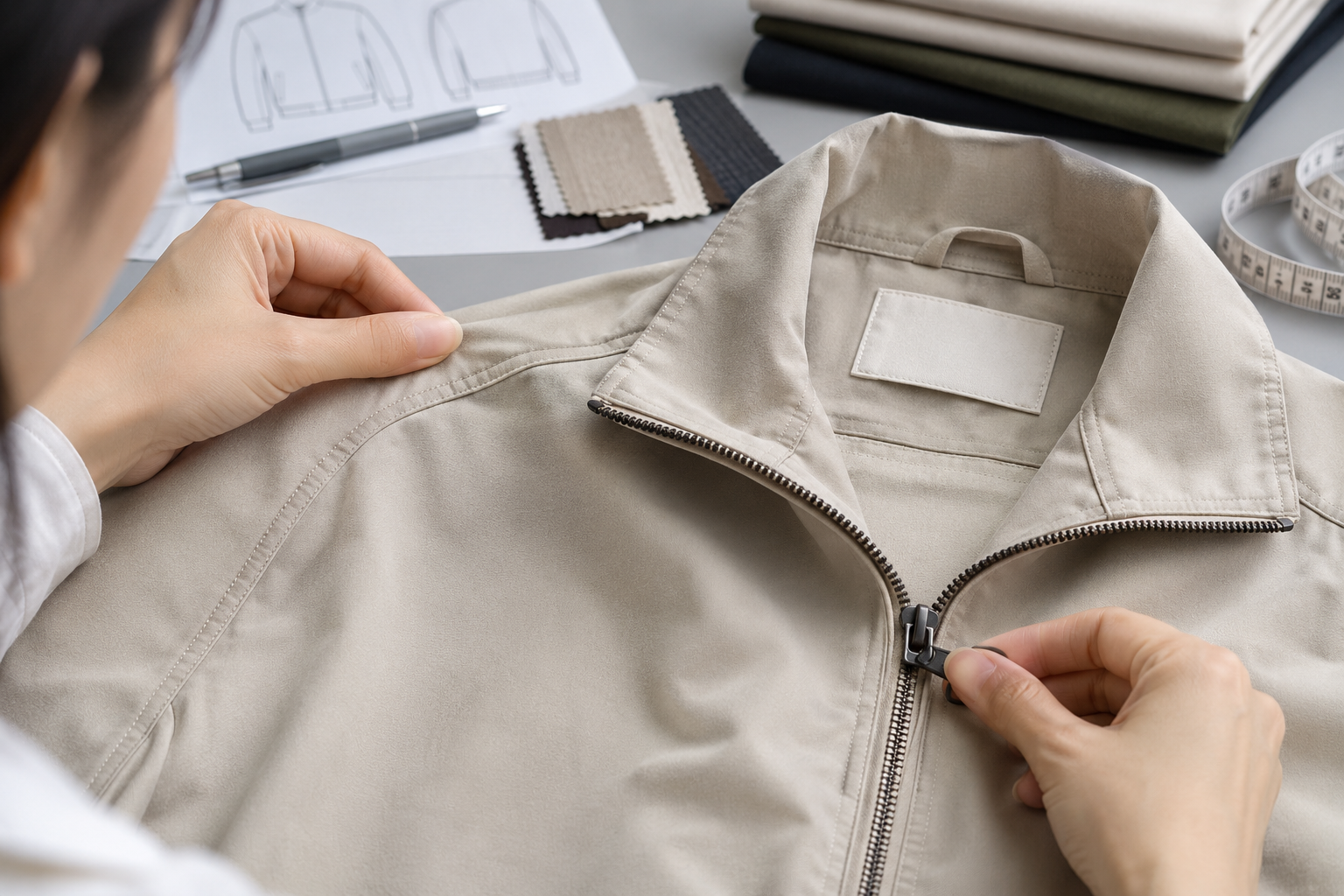
- Proto: design details, construction method, pocket and trim positions, overall proportions.
- Fit: measurements against the spec, ease of movement, length and balance on a person.
- Size set: measurements of every size against the graded spec, consistency of details.
- PP: bulk fabric, colour, trims, labels, printing or embroidery, packing, and a wash test.
- TOP and shipment: measurements, workmanship and packing against the PP standard.
Write comments on each sample in a single place, with photos and measurements, and confirm which changes must appear in the next round. Our pattern making and grading guide covers fit approval in more detail.
How much do clothing samples cost?
A sample usually costs more per piece than the same garment in bulk. One garment is cut and sewn by hand rather than in a production line, patterns are made or adjusted, materials are bought in small quantities and changes are made between rounds. Costs depend mainly on:
- whether a new pattern is needed or an existing one is adapted;
- fabric and trims, especially custom colours or developed materials;
- printing, embroidery or special finishes;
- the number of sample rounds and sizes requested;
- shipping by courier to your location.
Sample price vs unit price: what is the difference?
The sample price is what you pay for making the sample itself. The unit price is the agreed price per piece for the bulk order, based on the quantity, materials and specification in the quotation. A high sample price does not mean bulk will be expensive, and a free sample does not change the bulk unit price. Always confirm that the unit price in the quotation refers to the same specification as the approved sample, so that later changes are priced transparently. See clothing MOQ explained for how quantity affects unit price.
How free sample policies work for B2B clothing manufacturers
Many B2B clothing manufacturers offer free or refundable samples to serious buyers. Policies vary, so read the details:
| Question to ask | Why it matters |
|---|---|
| Is the sample free, charged, or charged and refunded against the first order? | Sets your development budget |
| Who pays courier shipping and import duties? | International courier costs can be significant |
| How many styles, sizes and rounds are included? | Extra rounds or sizes may be charged |
| Are custom fabrics, prints and embroidery included? | Developed materials often have their own costs |
| Who owns the pattern and sample? | Important if you later move production |
ZESTLET offers free sampling with shipping paid by the buyer. The sample scope, such as the number of styles, rounds and any special materials, is confirmed with your quotation so there are no surprises.
How to approve samples so bulk matches
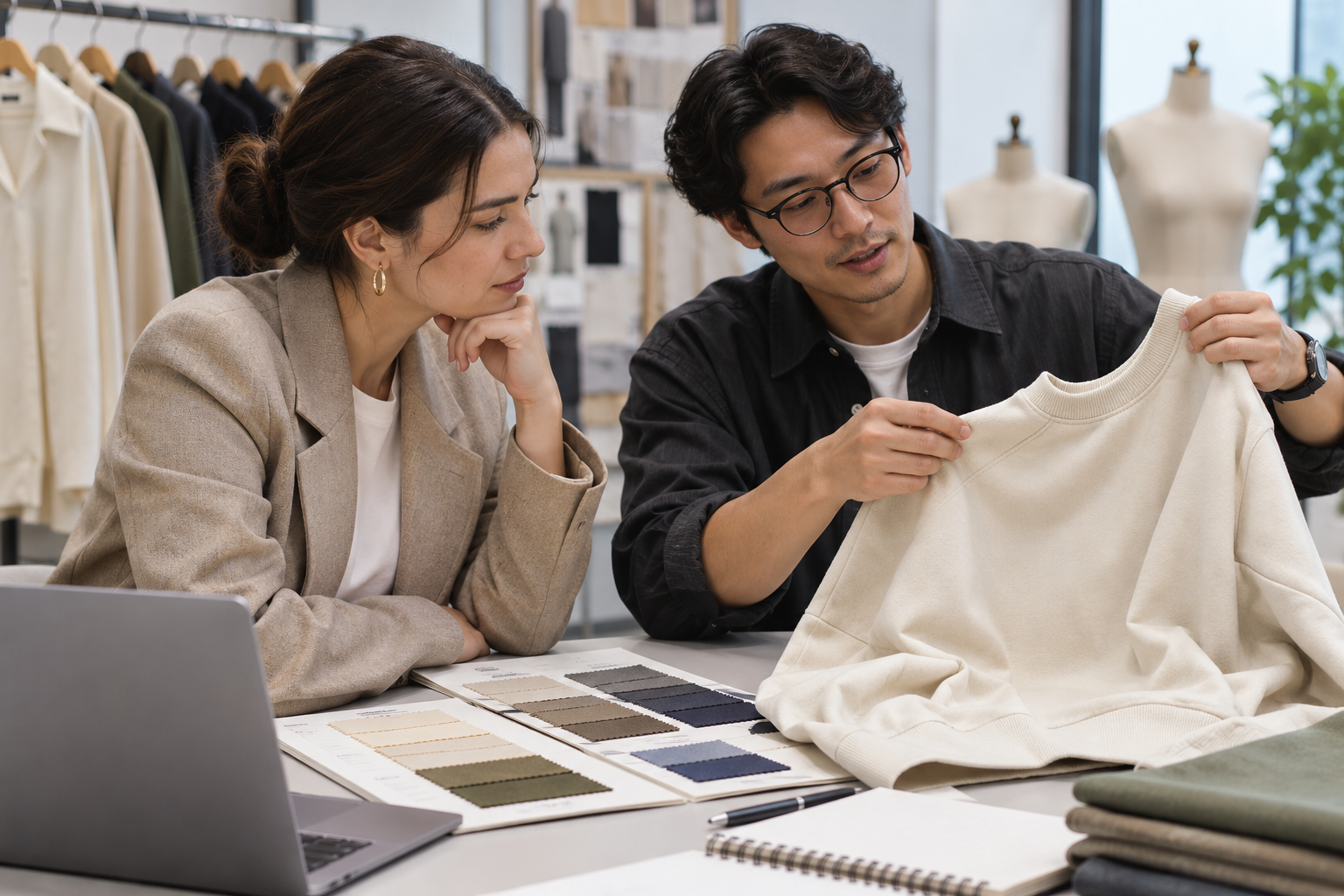
- Keep the approved PP sample sealed and labelled with the style code and date; the factory keeps a counter sample.
- Record approved measurements, colours and trims in the tech pack.
- Approve in writing, listing any remaining comments that must be corrected in bulk.
- Use the PP sample as the standard for inspection. See quality control and inspection.
Frequently asked questions
Why are clothing sample services important?
Samples let you check design, fit, materials and workmanship before committing to a full order. Fixing a problem at sample stage costs a fraction of fixing it after bulk production.
How many sample rounds are normal?
Simple styles may need one or two rounds; new or technical garments often need more. Clear, consolidated comments after each round reduce the number needed.
What is the difference between a PP sample and a TOP sample?
The PP sample is approved before bulk starts and becomes the standard. The TOP sample is taken from the first bulk output to confirm production matches that standard.
Can I get a sample before paying for bulk?
Yes. Sampling comes before the bulk order. Agree the sample scope and costs first, then place the bulk order once the PP sample is approved.
Does ZESTLET charge for samples?
ZESTLET offers free sampling; the buyer pays shipping. Read about our tech pack and sampling service or request a quote with your design.
Related guidance
This guide is original ZESTLET editorial content based on apparel development practice. Continue with choosing a clothing manufacturer, private label clothing and small batch manufacturing.