
ZESTLET · OEM / ODM · Private Label
Pattern Making for Clothing Brands: Fit, Grading and Sample Approval
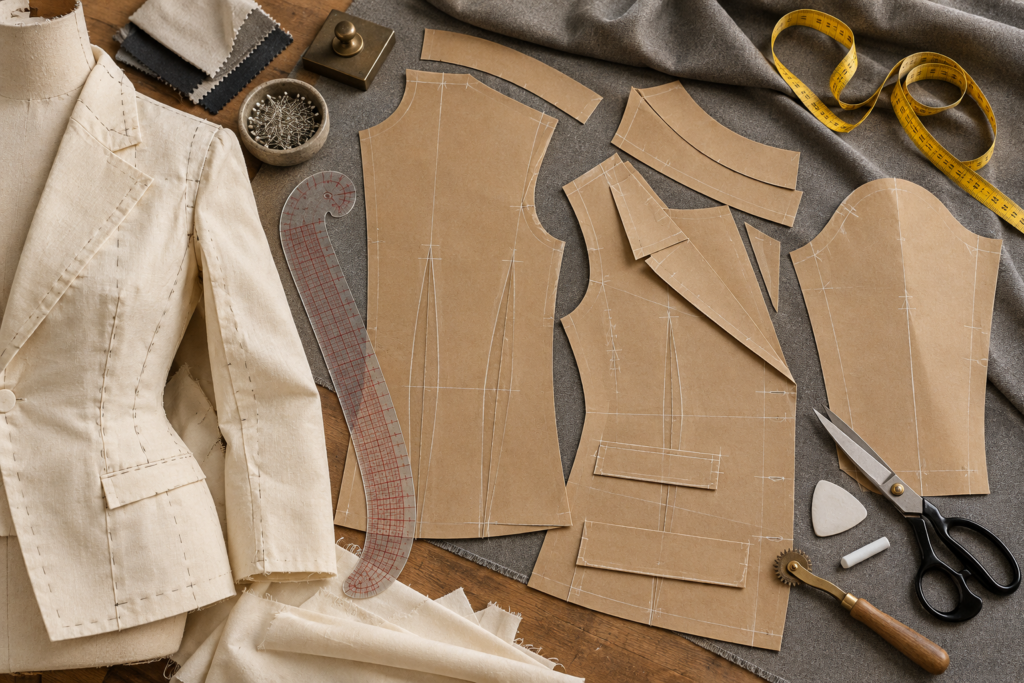
Pattern making turns a garment design into component shapes that can be assembled and evaluated on a wearer. For a clothing buyer, a successful pattern-development process needs a clear fit intention, a controlled measurement reference and physical sample review. A pattern that produces the desired appearance in one sample size still needs review across the intended range and in the actual materials.
This guide explains what to ask a pattern maker, how to review a first prototype and which decisions should be resolved before grading and bulk cutting. It is a buying and development checklist, not a universal drafting formula.
Start with the wearer and use, before discussing a silhouette
Define who the garment is for, how it will be worn and what it must accommodate. A shirt worn alone and a field jacket worn over a mid-layer need different discussions. Explain the desired silhouette, movement and layering conditions. Send a physical reference if you have one, but explain which features you want to retain and which need to change.
Separate body measurements from finished-garment measurements. The relationship between them includes the intended ease and depends on material and design. Do not copy a retailer’s body-size chart into a finished-garment specification without checking what each number represents.
What should a pattern-development brief include?
| Input | Buyer decision | Review point |
|---|---|---|
| Design views | Front, back, internal details and closures | Can the pattern team identify every component? |
| Fit reference | Base size, intended wearer and silhouette | Does the reference match the target customer? |
| Materials | Actual fabric or clearly marked development substitute | Will a material change require another fit review? |
| Measurements | Points of measure, method, values and tolerances | Can buyer and factory reproduce the same measurement? |
| Construction | Seams, reinforcement, lining and hardware relationships | Do the proposed pieces support the intended assembly? |
| Deliverables | Patterns, graded sizes, sample rounds and working files | What is included in the agreed development scope? |
Review the first prototype as a learning sample
Identify what the prototype is intended to prove. If it uses a substitute fabric, record that fact and avoid treating all aspects of drape or stretch as final. Compare the sample with the current drawings and measurements, then review it in the intended wearing conditions.
Observe the whole garment before adjusting individual dimensions. A pulling line near an armhole may involve more than sleeve width. Ask the pattern maker to investigate the relationship between pieces rather than prescribing an isolated change from a photograph. Record the observation, the proposed correction and the next check.
Use repeatable fit-review conditions
Keep a record of the sample size, wearer reference, under-layers, fastening condition and review activities. When comparing two sample rounds, use the same conditions where practical. Otherwise, an apparent improvement may come from a different fit model or a different garment underneath.
Check the intended movements and access points. Can the wearer fasten the collar, reach the pocket and sit comfortably? Record which activities were reviewed without turning a limited fitting session into an unsupported durability or protective-performance claim.
Connect fit comments to the pattern revision
Keep sample comments numbered. Distinguish a mismatch against the current instruction from a requested design change. When a correction is approved, update the affected pattern and specification together. Do not leave the sample room to reconcile an old pattern with a new measurement chart.
The practical test is whether another competent person could identify what changed and why. Record the sample identifier, comment number, affected piece or measurement, agreed action and approval. Archive the previous revision rather than reusing its file name for a different pattern.
Do not treat grading as uniform enlargement
The size range needs its own review. Discuss the base size, grade rules and whether feature dimensions or positions change across sizes. A pocket, closure or shaped panel may require a specific decision rather than automatically following a body dimension.
Review representative sizes and any sizes that are critical to your customer range. A well-fitting middle size does not establish that the extremes are correct. Agree what size-set samples or other evidence will be reviewed before the graded set is released.
A practical example: adding room without losing the intended shape
Imagine a buyer wants a jacket to accommodate a thicker under-layer. Increasing the chest measurement alone may not resolve sleeve, armhole, shoulder and closure relationships. It may also change how the hem sits. A better development request explains the intended layering and asks for a coordinated pattern review.
Review the revised sample over the intended layer. Check appearance, movement, cuff function and access to pockets. If the fabric changes later, confirm whether the previous fit approval still applies. This hypothetical example illustrates a review approach; it is not a pattern prescription.
Before bulk cutting, confirm the complete reference
- Accepted sample and pattern revision are linked.
- Current measurements and construction drawings agree.
- All intended sizes are identified and their approval route is complete.
- Main, lining and small components belong to the same release.
- Material substitutions and remaining open decisions are resolved.
- Labels, artwork and closure positions match the approved garment.
- Working-file ownership and repeat-order access are agreed.
For digital files, also verify the receiving application’s interpretation of units, marks and seam treatment. Our CAD handoff guide discusses that separate step.
Pattern making questions for clothing buyers
Can a manufacturer develop a pattern from a reference garment?
Ask for a review of the actual garment and development scope. Explain which details are authorized references and which changes you need. Confirm whether the quotation includes patterns, grading, sample corrections and editable files.
Does an approved prototype mean every size is approved?
No. Record exactly which size and conditions were reviewed, then agree the size-range approval process. Keep base-size fit and graded-range approval distinct.
Should I approve fit before choosing the fabric?
Early samples can help development, but material differences may affect the outcome. Record substitutes and confirm which approvals must be repeated in the intended fabric.
How do I start with ZESTLET?
Send your garment reference, target size range, intended use and available specifications through our sampling service. Pattern-development scope and production feasibility are confirmed for the actual design.
Sources and related reading
Background: Techpacker’s garment fitting and fit sign-off guide and the Pakistan TVET pattern drafting and grading curriculum. The buyer checklists above are original ZESTLET editorial guidance. Read our tech pack guide and inspection service overview.