ZESTLET · OEM / ODM · Private Label
How to Start a Small-Batch Clothing Brand With 25, 50, or 100 Pieces
Build Now, Pay Later · New brands welcome
Launch your brand from 20 pieces. Pay the balance after your stock arrives.
ZESTLET makes your tactical, hunting, uniform and Highland products under your own label. Your first sample and branding setup are free, and orders from $5,000 can pay 60% after delivery.
Budget under $5,000
Startup Launch
- Start from 20 pieces per product
- Your first sample is free
- Labels, screens and digitising are free
- Bulk starts only after you approve the sample
Orders from $5,000
Build Now, Pay Later
- Pay 40% to start production
- Pay the other 60% monthly after delivery
- No interest and no application fee
- Your limit grows with every on-time payment
Your full journey with ZESTLET, step by step
From your first idea to stock in your warehouse. Every step is visible in your free brand dashboard.
- 1Create your free brand accountSign up in about one minute. We email you a 6-digit code to confirm your account.
- 2Check your credit in 30 secondsAnswer 3 short questions in your dashboard and see your pre-qualified credit limit straight away.
- 3Start your projectUpload your design or tech pack, choose the product and quantity. You can start from 20 pieces per product.
- 4Get your quotation within 24 hoursPrice per piece, lead time and payment terms in writing, from real people in Sialkot.
- 5Free sample with your brandingWe make your sample with your logo in 7–10 working days. You only pay the sample shipping.
- 6Approve and pay 40%Bulk production starts only after you approve the sample and pay the 40% deposit.
- 7Production and quality checksCutting, stitching, inspection and packing, with progress updates in your dashboard.
- 8Delivery, then pay 60% monthlyDoor-to-door shipping. Credit orders pay the balance after delivery over 90 to 365 days, with no interest.
What you need to apply
- Your brand name and contact details
- Your product idea, design or tech pack
- An order value from $5,000 for Build Now, Pay Later
- For higher limits: sales history or business registration
Your credit limit grows with you
First credit order
After 2 orders paid on time
After 4 cycles and a review
- Deposit
- 40%
- Balance after delivery
- 60%, monthly
- Repayment
- 90 to 365 days
- Interest and fees
- None
Can I start a clothing brand with a small budget?
Yes. You can start from 20 pieces per product, and your first sample and branding setup are free, so your budget goes into product.
Who can use Build Now, Pay Later?
Brands with orders from $5,000, including new brands with no sales history, after a short review. You pay 40% upfront and 60% in monthly instalments after delivery.
Is the sample free?
Yes, the first sample is made free with your branding. Sample shipping is paid by the buyer.
Credit is subject to approval. Amounts shown in your local currency are approximate.
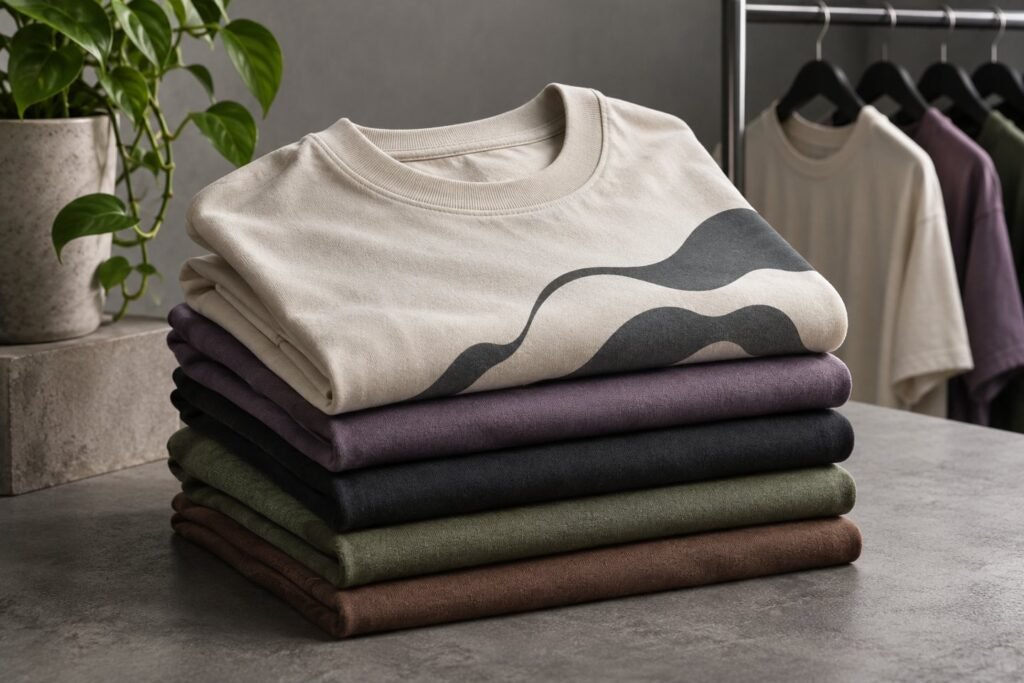
A 25-piece launch, a 50-piece launch and a 100-piece launch are different learning experiments. The larger order may reduce some costs per unit, but it also asks you to predict more demand before you have sales evidence. Start a small-batch clothing brand by deciding what the first order needs to teach you, then choose the smallest feasible run that can answer that question.
Use 25 pieces to test one clear product
A very small run works best with one style and a limited color choice. Five sizes across one color create five stock-keeping combinations. Spread 25 pieces evenly and each size has only five units before samples, gifts or exchanges. That may be too little for a broad campaign, but enough for a focused test with a small community whose size preferences you already understand.
Confirm that the particular style can be made at this quantity. A custom fabric, wash or hardware requirement can create a minimum above the sewing quantity. Ask whether an available material and simpler trim package can achieve the intended look. Do not remove a feature essential to the product merely to reach an attractive headline number.
Use 50 pieces to test the selling process
A 50-piece order can provide more information about size demand and fulfillment while remaining compact. For illustration, one style might use 5 small, 15 medium, 15 large, 10 extra large and 5 double extra large pieces. This is a hypothetical split, not a recommended universal ratio. Your audience research and fit measurements should determine the actual distribution.
Keep promotional and operational stock visible. If four units are for photography or collaborators and three are held for exchanges, only 43 units remain available for immediate sale. Product pages and launch planning should reflect what can actually be fulfilled. A batch total is not the same as sellable stock.
Use 100 pieces when there is a reason for depth

A hundred pieces may suit an audience with demonstrated purchasing intent, an existing customer list or a repeat product. It should not be an automatic step because the unit price appears lower. Compare the total cash committed, expected sales pace and remaining reserve. A cheaper garment that stays unsold uses more cash than a smaller, slightly higher-cost run that sells at a healthy margin.
At this scale, resist adding styles simply because the quantity sounds large. Two styles, two colors and five sizes create twenty combinations, averaging just five units each. That is not necessarily enough depth for reliable availability. Adding a second product is a merchandising decision that deserves its own demand evidence.
Calculate what a sell-through target means
Consider a fictional run of 50 tees at $18 delivered product cost each, sold at $40. Product outlay is $900. Selling 30 produces $1,200 in gross revenue, but that is not $300 of profit once payment costs, packaging, outbound shipping contributions, development and returns are included. The 20 remaining tees also represent money still tied up in inventory.
Build a sheet with ordered, received, damaged, promotional, reserved and sold quantities by size. Reconcile it after every event or fulfillment session. This simple habit prevents overselling and shows whether a style is successful overall or merely popular in one size. Use units and net receipts together when evaluating the result.
Establish a reorder rule before the launch
Choose a review point based on sales and available cash, not excitement. For example, examine the order when a meaningful share of sellable stock has sold and enough receipts have cleared to cover a second commitment. Check the supplier's current material availability before promising an identical restock. A fabric or dye change may require renewed approval.
ZESTLET can review small-batch OEM/ODM or private label requests with starting MOQ 20 pieces, subject to style, color and material feasibility. Its manufacturing is in Pakistan for brands including US buyers. Send the quantity matrix together with the design brief. The useful question is whether your exact order is feasible, not whether an advertised minimum can be applied to every garment.
Decision checklist
| Focus | Plan | Action |
|---|---|---|
| 25 pieces | One product hypothesis | Limit colors and document every buyer response |
| 50 pieces | Fit and fulfillment test | Reserve exchange and promotional units |
| 100 pieces | Evidence-backed inventory depth | Avoid multiplying unsupported variants |
Is 100 pieces always cheaper to launch?
It may reduce a quoted unit cost, but usually increases total inventory spending. Compare the entire order and a conservative sales forecast before deciding.
Discuss your first production brief with ZESTLET
Send your drawings, garment measurements, target fabric, decoration files, quantities by size and delivery destination. ZESTLET can review private label manufacturing and tech pack and sampling support, with printing, embroidery, labels and packaging scoped to the project. Starting MOQ is 20 pieces where the style, color and materials permit. Request the current free first branded sample eligibility and included work; sample shipping is paid by the buyer.
Ask for a written quote showing development, production and delivery responsibilities separately. Manufacturing credit is conditional, requires business and order review and is not guaranteed. It should not be treated as a grant or an assurance of sales. Confirm sample scope, revisions, bulk lead time and any payment agreement before committing. Send a project brief to ZESTLET for a feasibility discussion.
Related planning guides
- How to Launch a Streetwear Brand With $1,000, $2,000, or $5,000 Using Flexible Production
- How to Launch a Limited Streetwear Drop Without Running Out of Cash
- How to Find a Low MOQ Streetwear Manufacturer for Your First Chicago Drop
Official resource: SBA business planning resources. Resource links were reviewed for this guide; they do not imply endorsement of ZESTLET.
