
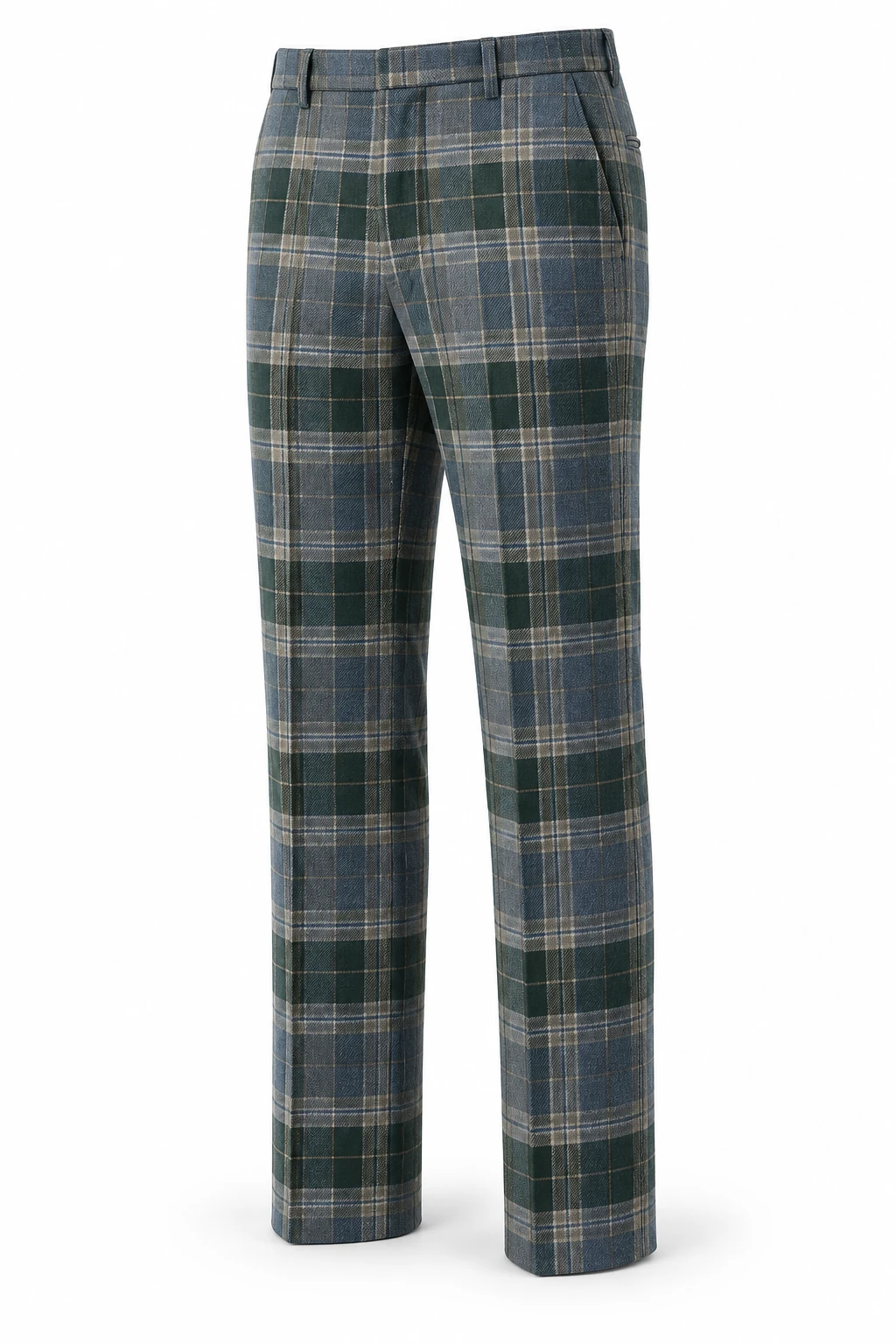
Avoid the common lightweight tartan classic trousers ordering mistakes
Trouser size conversions across countries do not replace actual garment measurements.
OEM / ODM · Sialkot, Pakistan
A lightweight classic trouser brief with a tailored waistband, belt loops, straight legs, side pockets and an optional rear welt pocket. Define rise, lining and check matching for a regular-waist alternative to a high-rise trews configuration.
Develop a tailored tartan trouser collection with ZESTLET. Send a size chart, quantity assortment and fabric reference for a project quotation. Review fit, private labels, packing and the approved sample before production.
At a glance
Design and construction options are finalized against your approved tech pack and sample.
| Specification | Standard / design option | Customizable |
|---|---|---|
| Waist | Wearing level and finished circumference | To approved brief |
| Rise | Front/back rise and seated allowance | To approved brief |
| Leg | Inseam, outseam, thigh, knee and hem | To approved brief |
| Waistband | Straight or fishtail-back design as specified | To approved brief |
| Support | Belt loops, side adjusters or brace buttons | To approved brief |
| Front | Flat or pleated construction and closure | To approved brief |
| Pockets | Front and rear arrangement | To approved brief |
| Tartan | Sett size, orientation and matching priorities | To approved brief |
| Lining | Coverage and contact comfort | To approved brief |
| Hem | Finished length or agreed alteration allowance | To approved brief |
| Quantity and timing | MOQ, component minimums and schedule confirmed after specification review | Project-specific |
| Destination and labeling | Buyer-defined destination, accurate material identity and approved labels | Project-specific |
A lightweight classic trouser brief with a tailored waistband, belt loops, straight legs, side pockets and an optional rear welt pocket. Define rise, lining and check matching for a regular-waist alternative to a high-rise trews configuration.
Trouser size conversions across countries do not replace actual garment measurements.
A short Highland jacket can expose the waistband; confirm rise and jacket length together.
Approve tartan matching at the fly, pockets and seams, with realistic tolerances for shaped areas. Retain the final drawing, material reference, finish and sample revision under one item code.
Material names on this page describe development choices, not a fixed stocked specification. Confirm the actual composition, supplier reference and availability before quotation. No Scottish manufacture, specific mill, precious metal or animal species is implied.
| Property | Option / specification |
|---|---|
| Composition | Approved woven tartan with declared fibre composition and matching lining options |
| Application | Primary lightweight tartan classic trousers components |
| Development considerations | Compare an actual material reference, supplier declaration and finished sample. Appearance alone does not establish fibre, leather, alloy or country of origin. |
| Property | Option / specification |
|---|---|
| Composition | Lining, backing, fastenings and trim selected for the approved design |
| Application | Connections, contact areas and presentation |
| Development considerations | Review each component in the finished assembly. Match finish, comfort, compatibility and maintenance requirements; record alternatives separately rather than mixing them into the approved bill of materials. |
Inseam, outseam, thigh, knee and hem. Define the measurement or appearance reference, agreed tolerance and inspection method in the specification. Check the finished sample rather than approving this feature from a digital rendering alone.
Straight or fishtail-back design as specified. Define the measurement or appearance reference, agreed tolerance and inspection method in the specification. Check the finished sample rather than approving this feature from a digital rendering alone.
Belt loops, side adjusters or brace buttons. Define the measurement or appearance reference, agreed tolerance and inspection method in the specification. Check the finished sample rather than approving this feature from a digital rendering alone.
Flat or pleated construction and closure. Define the measurement or appearance reference, agreed tolerance and inspection method in the specification. Check the finished sample rather than approving this feature from a digital rendering alone.
Front and rear arrangement. Define the measurement or appearance reference, agreed tolerance and inspection method in the specification. Check the finished sample rather than approving this feature from a digital rendering alone.
Sett size, orientation and matching priorities. Define the measurement or appearance reference, agreed tolerance and inspection method in the specification. Check the finished sample rather than approving this feature from a digital rendering alone.
Set the wearing level and front/back rise on the actual body before translating the brief into finished dimensions. A classic trouser waistband worn near the usual trouser level requires a different balance from high-rise or fishtail-back trews. Review the seat, crotch curve, thigh and hem with the nominated shoes and jacket. Keep body measurements distinct from garment dimensions, and record the fit condition so a later size chart is not based on an unrelated trouser label.
Identify the visual priorities on front legs, side seams, seat and any rear pocket. Review the repeat scale, grain direction and usable cloth width before estimating consumption. Perfect continuity across every shaped seam cannot be assumed; the pattern is cut and joined around a three-dimensional body. Approve matching tolerances and priority points using an actual sample, and retain the annotated layout for repeat orders.
If a half-lined configuration is requested, mark the lining length and width, its attachment points and the bottom-edge treatment. Check movement while sitting, stepping up and bending the knee. Review the lining and shell together for cling, strain and care compatibility. Do not treat half-lined as a complete material specification: fibre identity, hand, stretch, seam treatment and finished edge all affect the result.
Set side-pocket angle and usable bag depth so the openings remain stable when the wearer sits or reaches. Inspect the fly area and pocket-bag attachment for pulling. For a rear welt, define pocket location, opening size, facing and reinforcement. Review tartan placement around the welt and ensure that reinforcement does not create a visible hard edge through a lighter shell.
A weight quoted per linear metre is not the same as grams per square metre. Record the supplier reference, usable width and measurement basis before comparing lightweight options. Ask for a physical swatch and review drape in a finished leg, including crease retention and recovery after the nominated care process. A light-weight description alone does not establish wool content, fabric origin or the finished garment mass.
For a wedding or outfitter program, compare the trouser cloth with the intended waistcoat, tie or kilt. Agree whether the pieces should match or coordinate, and retain one physical standard under specified lighting. Screen colours and shared tartan names cannot establish a common dye lot. Keep the size and colour assortment tied to the approved sample and label revision before packing release.
Supply authorized logo artwork, item code, size or dimension identifier and the exact material information approved for this lightweight tartan classic trousers. Agree placement and legibility without concealing required information.
If the lightweight tartan classic trousers is part of an outfit, keep each included piece and its quantity on a single packing schedule. Show clearly which accessories are optional or sold separately.
Keep one current artwork revision, label proof and presentation sample. Approve substitutions in writing before they enter a repeat order; similar color or product names are not a substitute for the agreed reference.
Send your artwork (AI, PDF, PSD, PNG) and we return a digital mock-up before production.
Watch our hand-embroidery production reelApproved woven tartan with declared fibre composition and matching lining options. For lightweight tartan classic trousers, confirm the bill of materials, exact supplier/component references and specialist production route where relevant. A coordinated Highland range can combine textile development with sourced components; confirm responsibility and availability for the actual model before committing quantities or delivery dates.
Define the destination and intended use for this lightweight tartan classic trousers before finalizing labels, materials and dispatch documents. Event, band, retailer and importer requirements can differ. This specification guide does not establish blanket acceptance in any country.
Use only authorized tartans, crests, logos and decorative artwork. Declare actual material and origin accurately. No official affiliation, licensed design, Scottish origin or certification is claimed without supporting evidence.
Agree checks appropriate to the actual lightweight tartan classic trousers: dimensional consistency, material identity, finish, connection/closure function and behavior under the proposed care or handling conditions. Set acceptance criteria before ordering. Laboratory or specialist evidence is needed for any specific performance claim; no certification is inferred from the product name.
For UK, US, Canadian, Australian, New Zealand or other destination inquiries, state the market, intended use and buyer requirements. Confirm the actual material declaration, labeling, origin, artwork permission and any specialized import or event documentation before approving dispatch. A market name is not a certification or a promise of unrestricted availability.
Review your destination and documentation briefSend the intended outfit or use, destination, quantity by variant and the approved style reference. Identify what is fixed and which decisions are still open, including waist and rise.
Compare approved woven tartan with declared fibre composition and matching lining options. Record the accepted material, component and finish references, and confirm specialist supply feasibility before treating the design as ready for production.
Turn the design into a drawing and measurement/feature schedule covering leg, waistband, support, front. Keep units, tolerances, artwork revision and set contents explicit.
Sample review point: Trouser size conversions across countries do not replace actual garment measurements. Review the finished item in its intended outfit or component connection, then send a numbered change list against the current specification.
Confirm the final sample, material list, dimensions, inspection criteria, labels and packing. Obtain a project-specific MOQ and schedule; changes after approval can affect both component availability and timing.
Compare finished goods with the approved lightweight tartan classic trousers reference. Confirm counts by variant, included accessories, labels and protected packing, then agree shipment documents and delivery terms for the actual destination.
For lightweight tartan classic trousers, specify individual, pair or set quantities clearly. Protect shaped areas, decorative faces and attachment components from pressure, snagging and contact damage. Keep material, color, size/dimension and artwork revisions matched to the purchase order. Agree carton assortments and receiving labels before production; packaging is part of sample approval, not an afterthought.
The key decision is the intended waistband level and rise, followed by the waistband shape and support. Specify those dimensions and approve the garment with its coordinated jacket; terminology alone does not define the pattern.
The term covers tailored tartan trousers, but Highland outfits may require a particular rise, waistband and support arrangement. Define those features explicitly rather than assuming one universal trews cut.
Yes, discuss a shared tartan and styling brief with individual measurements or approved stock sizes. Record each wearer’s waist, rise preference and hem requirement.
That depends on the intended waistband and outfit. Specify the support method before sampling so buttons, loops, side tabs and lining do not conflict.
Provide seat and rise measurements in addition to waist and inseam, then review a sample while sitting. A longer inseam will not correct insufficient rise or seat ease.
Send the exact style reference, waist, rise, leg, waistband, material preferences, quantity by variant, destination and packing brief. Mark missing decisions so the team can review development and sourcing before quoting.
Request a project-specific quotation after the material, model and customization scope are clear. The website’s general starting MOQ does not automatically apply to every specialist component, tooling order or variant. Confirm sampling and bulk timing in writing.
Yes, discuss a sample for the actual design and materials. ZESTLET’s published policy describes free sampling with buyer-paid shipping; confirm the applicable scope for specialist or sourced components before proceeding. Record any changes and approve the final reference before bulk production.
Discuss authorized artwork, accurate material information, labels or suitable component marking and retail presentation. Confirm the available branding method and placement on the actual sample; do not assume every material accepts the same process.
The image is a product design visualization. Request an actual development sample and fabric swatches to review the selected material, workmanship and fit before production.
Start your development
Request a quotation, free sample or fabric swatches. Sample shipping is paid by the buyer.
Contact: ZESTLET Sales Team · Sialkot, Pakistan · sales@zestlet.com · +92 329 4213122
Last updated:
ZESTLET office and contact details