
ZESTLET · OEM / ODM · Private Label
How to Choose a Clothing Manufacturer: Evidence, Samples and Scope
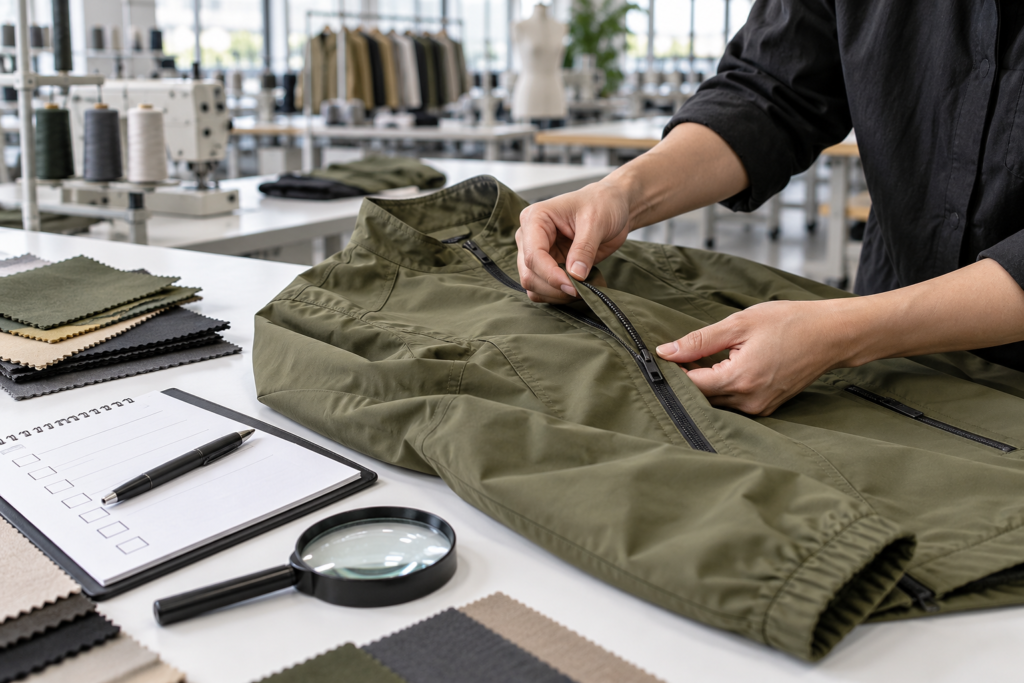
Choose a clothing manufacturer by matching evidence to your actual product requirements. Start with construction, material and development needs, then evaluate samples, communication, quality controls and commercial scope. A polished website, a directory listing or a low unit price is a starting point for investigation rather than proof that a supplier fits your project.
This guide gives buyers a practical evaluation sequence. It does not rank countries or promise that one type of supplier is best for every brand. The correct choice depends on the garment, order and responsibilities you need covered.
Write selection criteria before collecting quotations
Identify the product category, materials, expected construction, size range and intended use. Add the destination, proposed quantities and development stage. Separate requirements that must be met from preferences you can discuss.
Ask your product, purchasing and quality colleagues to review the criteria where those roles exist. ASQ recommends cross-functional involvement in defining supplier-selection criteria. For a founder handling several roles, the same principle means checking the product and inspection implications instead of deciding from price alone.
Understand which supplier you are speaking with
Ask whether the business manufactures, sources, coordinates subcontractors or combines these roles. None of those descriptions answers every suitability question. What matters is a clear account of who performs each operation, who is responsible for approval and how quality information travels between parties.
For a product requiring specialist components, ask how those components are sourced and reviewed. Do not assume that a broad catalog establishes in-house production of every listed item. Request a project-specific route and relevant sample evidence.
| Area | Evidence to request | Decision it supports |
|---|---|---|
| Product suitability | Relevant construction examples and development discussion | Can the supplier address your garment’s actual needs? |
| Materials | Named references and proposed approval process | Can purchasing remain consistent with the specification? |
| Sampling | Defined sample scope and review stages | How will uncertainties be resolved? |
| Quality | Inspection approach and item-specific evidence | How will acceptance be evaluated? |
| Commercial terms | Comparable scope, quantity basis and delivery assumptions | What commitment does the quotation represent? |
Use directories for discovery, then verify the project
Directories can help identify businesses and service categories. For example, the U.S. Department of Commerce’s textile and apparel directory includes supply-chain businesses such as cut-and-sew contractors, printers and finishers. Its stated listing conditions relate to that directory; they are not a universal certification of product quality.
After discovery, contact the relevant company directly and verify what it can supply for your brief. Check that the business identity, quotation and payment instructions are consistent. If something changes, resolve it through a verified contact before committing an order.
Evaluate the response, not only the response speed
A useful supplier response identifies missing information, explains assumptions and answers the actual questions. Notice whether the business distinguishes a confirmed capability from a proposal that needs development. An immediate “yes” to every requirement may leave important decisions unresolved.
Send a controlled question list and evaluate whether the answers can be connected to the current brief. If a supplier proposes an alternative material or construction, ask why and what needs reapproval. This gives you a more useful comparison than a general statement about premium quality.
Compare quotations on a common basis
Reconcile materials, garment quantities, development work, decoration, labels, packing and delivery assumptions. Confirm what each minimum applies to. Ask which charges are separate and which values remain provisional until sampling or sourcing is complete.
Do not compare a stock garment with basic branding against a newly developed style as though the scope were identical. Record any differences and decide whether they are acceptable. A clear comparison also makes later changes easier to price and approve.
Use samples to test the working relationship
Define what the sample is intended to demonstrate. Review it against current instructions, record observations and send numbered comments. Evaluate both the physical result and how the supplier responds to a specific issue.
If the sample differs from the specification, ask for the cause and corrective action. If you change the design, mark that as a new instruction. Keeping those cases separate helps you judge whether the supplier can follow a controlled development process.
Check claims against evidence that matches the item
When a project involves a performance, certification or compliance requirement, ask what document applies to the actual product and material. Review its scope, issuer, model identity and relevant dates with appropriate expertise. A logo strip or certificate for another item does not answer that question.
Also distinguish a factory management-system statement from a product-specific result. Agree the evidence you need before ordering. This guide does not establish acceptance in any destination or substitute for professional review of applicable requirements.
Make the final decision traceable
Keep a short comparison record showing the criteria, evidence, open questions and reasons for selection. Resolve the critical open questions before releasing production. Record the accepted sample, current specification, commercial terms and approval contacts together.
Continue evaluation after the first order. Review whether goods matched the approved reference, whether communication remained clear and whether any change was handled properly. Supplier suitability is an ongoing project relationship, not a conclusion drawn permanently from one quotation.
Clothing factory selection questions
Should I choose a factory or a sourcing company?
Compare responsibilities and evidence for your actual project. Ask who performs production, who controls suppliers and who is accountable for approvals and inspection.
Does a low MOQ prove a supplier is suitable for a startup?
No. Review the complete cost, sample result, specification match and communication. A small order still needs the right materials and construction.
How can I assess ZESTLET?
Send your brief through our manufacturing inquiry and ask for the development and sourcing route relevant to the actual item. Review sampling and inspection scope before agreeing an order.
Sources
ASQ supplier quality management and the U.S. Department of Commerce textile and apparel sourcing directory. The evaluation checklist is original ZESTLET editorial guidance, without endorsement of a particular supplier or country ranking.