
ZESTLET · OEM / ODM · Private Label
Small-Batch Clothing Manufacturing: A Practical Launch Plan
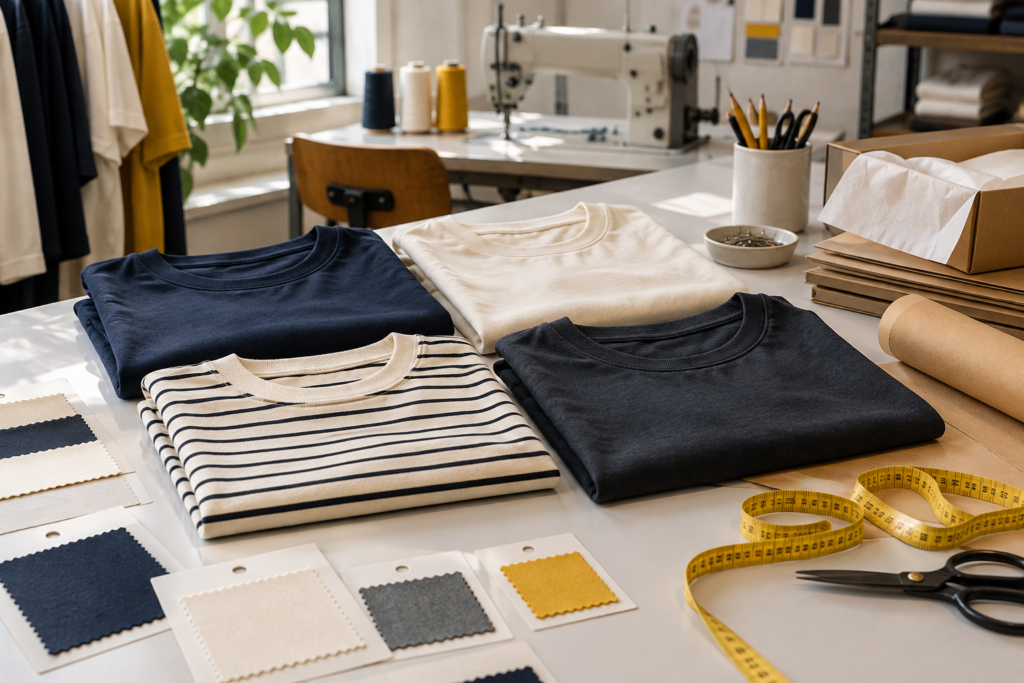
Small-batch clothing manufacturing works best when the product range, material choices and approval process are designed around a manageable first run. A low quantity is only one part of the decision. You also need a repeatable specification, acceptable samples and a clear view of the complete order commitment.
This guide focuses on planning a small production run. For the meaning of per-style and per-color minimums, use our separate clothing MOQ guide. The examples here are hypothetical planning tools, not supplier quotes or forecasts of demand.
Define what the first run is meant to prove
Choose a clear purpose: validating fit with a target customer, testing a sales channel, serving a defined group or introducing a limited range. That purpose should guide the number of designs and variants. If the goal is to test one silhouette, launching many unrelated styles can make the result harder to interpret.
Write down what you will learn and what evidence will support the next order. A sell-through figure without size and color detail may hide an allocation problem. Customer comments about fit are more useful when connected to the specific item and size supplied.
Reduce complexity before negotiating quantity
List every design, color, size, fabric and decoration variation. Ask which differences create separate sourcing or production work. Two garments that look similar on a mood board may use different components and require separate development.
| Decision | Small-run question | Possible simplification |
|---|---|---|
| Styles | Does each design serve a distinct launch need? | Start with the essential silhouette |
| Colors | Is every color supported by expected demand? | Use fewer approved colorways |
| Materials | Do custom components create larger purchases? | Review available approved alternatives |
| Branding | Which labels or packing components can be shared? | Share identity while retaining correct product information |
| Sizes | Does the allocation reflect the actual customer? | Plan quantities explicitly rather than removing needed sizes |
Simplification should preserve the product’s essential value. If a specific material or construction is central to the design, changing it solely for a lower minimum may produce a different product. Review the tradeoff openly and approve the revised specification.
Use a sample gate before committing to stock
Ask what the sample represents and whether it uses the intended materials. Review fit, construction, decoration and the product’s relevant functions. Keep numbered comments and update the specification when changes are agreed.
Do not interpret a small run as a reason to skip development. A problem repeated across a modest order can still absorb the entire launch budget. Resolve the important questions while changes are easier to make, then release the order against an accepted reference.
Build a complete cost comparison
Separate development and setup from garment production. Add approved branding, packaging and the agreed delivery basis. Ask which costs remain estimates and which depend on the final sample or material choice.
Compare more than one quantity scenario using the same specification. Then review the additional cash and inventory required for each scenario. A lower unit price is not automatically a lower-risk launch if it requires a substantially larger purchase of uncertain variants.
Record unused component balances
Small garment quantities can leave material or label balances. Ask who pays for them, who owns them and how they will be stored or handled. If you plan to use them later, record the reference and quantity rather than relying on a general promise that material is available.
A two-stage launch example
Imagine a brand testing a new utility shirt. Instead of developing three different shirts immediately, it first reviews one construction in a limited approved color range. It collects item-level fit comments and sales information before considering another style.
The next order can then respond to evidence: revise a measurement, adjust the size allocation or add a color if there is support for it. This does not guarantee commercial success. It simply makes the development decision more traceable than committing to a broad range before learning how the first product performs.
Choose a supplier willing to explain the actual route
Ask which operations it performs, which components are sourced and how your order will be reviewed. Request sample evidence relevant to your construction rather than assuming a low-MOQ headline proves technical suitability.
Supplier evaluation should include the people responsible for purchasing, quality and product development where your business has those roles. ASQ’s guidance supports defining selection criteria across relevant functions. For a small brand, that can be a simple written checklist covering specification match, sample result, communication and commercial clarity.
Prepare the repeat-order record from the beginning
Keep the accepted sample identifier, current tech pack, material references, artwork and packing schedule. Record what changed during the first run and what should remain fixed next time. A successful sample with no documented reference is harder to reproduce.
Ask whether the same components remain available when you reorder. If a substitute is proposed, review it before release. Small-batch production should still have a controlled route for changes rather than treating each order as an unrelated experiment.
Small-batch clothing questions
Can several products share one small order?
Ask the supplier which styles and materials can be combined under its conditions. A mixed total may not resolve separate component or production minimums.
Should I launch every color customers mention?
Use the evidence you have and distinguish casual interest from a committed order. Keep the first allocation connected to your actual launch objective and capacity to hold inventory.
Can ZESTLET review a small-run project?
Send your design, materials, size and color allocation, destination and development stage through our private label inquiry. Feasibility, component requirements, minimums and timing are confirmed for the specific product.
Sources and next steps
Background: ASQ supplier quality management. The launch scenarios and planning checklist are original ZESTLET editorial guidance. Review our sampling service and manufacturer communication guide before sending the brief.