
ZESTLET · OEM / ODM · Private Label
How to Communicate Clothing Designs to a Manufacturer
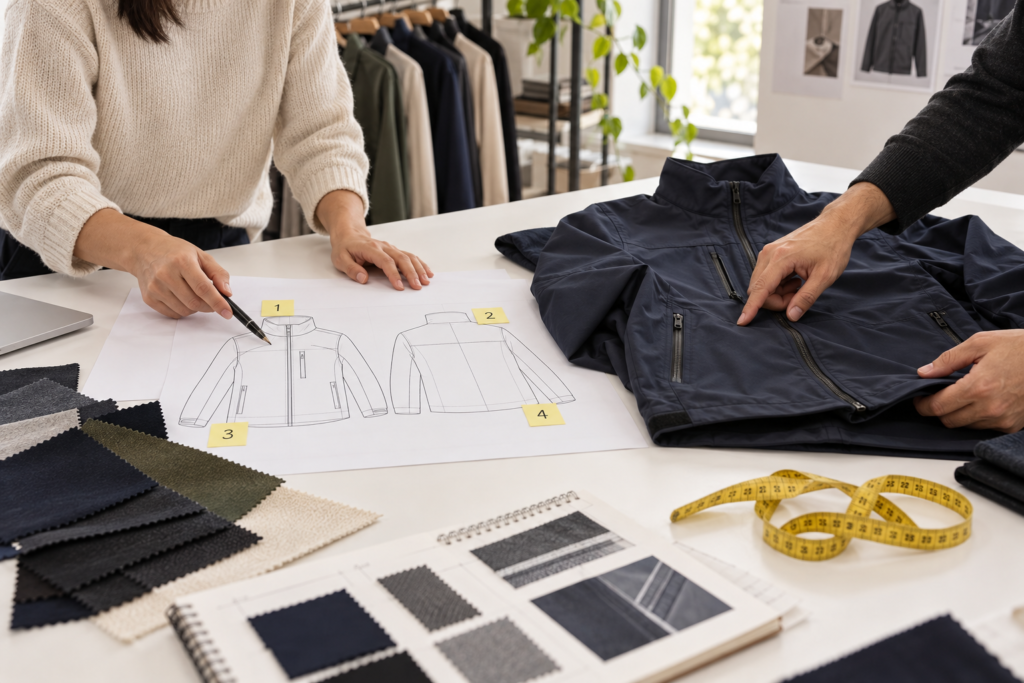
To communicate a clothing design to a manufacturer, connect each visual reference to a written instruction, a measurable feature and an approval decision. Tell the factory what the garment must do, which details are fixed and which choices need development. Keep the latest drawing, material list and sample comments together. Sending more photographs does not necessarily make a brief clearer if those photographs contradict one another.
This guide covers the conversation around the technical documents: the first inquiry, questions before quotation, feedback on a physical sample and the point at which a design becomes an approved production reference. For document contents, use our separate fashion tech pack guide.
What should your first message to a clothing manufacturer contain?
Make the first message easy to assess. Introduce your company, product category and intended customer. Then give the proposed quantity by style and color, destination, size range and stage of development. A factory should be able to tell whether you are asking for an existing product with branding, a modified pattern or development from a new concept.
Identify your current evidence. You might have a reference garment, a sketch, an existing pattern or a complete tech pack. These are different starting points. Describe what you have rather than calling every image a technical specification. Ask the manufacturer to state which development services its quotation includes.
| Brief field | Useful instruction | Ambiguity to avoid |
|---|---|---|
| Product identity | One item code for each distinct design | Using the same name for two different revisions |
| Design stage | State whether a pattern or physical reference exists | Expecting a rendering to contain cutting instructions |
| Quantity | Break down styles, colors and sizes | Giving a total with no variant allocation |
| Materials | Separate specified components from choices needing advice | Writing “premium fabric” without a reference |
| Destination | State the market and intended use | Assuming one label or report suits every country |
| Required outcome | Ask for feasibility, quotation or sample development explicitly | Leaving the next action unstated |
Annotate reference images instead of asking for an unexplained combination
If one photograph shows the desired collar and another shows a pocket, label the relevant features. State which image controls each detail. Otherwise, the factory may reasonably assume that the entire first garment is the reference. A short reference key can prevent that misunderstanding: image A for collar shape, drawing B for pocket position, swatch C for fabric handle.
Also write down what should not be taken from the image. A reference might show a fabric finish, logo or accessory that is not part of your order. Distinguish visual inspiration from permission to reproduce someone else’s artwork. Supply only logos, prints and patterns you are authorized to use.
Describe appearance and function separately
“A slimmer sleeve” describes an intention. A revised sleeve measurement and a fit review explain how to evaluate it. “A secure pocket” also needs a practical discussion: what is carried, how it is accessed and which closure is intended? Avoid claiming a design has achieved a protective or technical performance simply because it looks suitable in a photograph.
When you need advice, ask an open question with boundaries. For example: “We want less bulk at the wrist while retaining room for the intended under-layer. Which pattern and cuff options should we sample?” This invites a development response without pretending that the right dimensions are already known.
Create a question log before the quotation is finalized
Collect unresolved questions in one numbered list. Give each question an owner and record the answer beside it. Useful questions include whether a named component is available, whether a construction detail changes the sewing route and whether an artwork file needs preparation. Mark an answer as proposed or approved so a suggestion does not silently become an instruction.
Ask the factory to identify its assumptions. If the price assumes a stock color, existing pattern or particular packing method, record that basis. Compare quotations only after the underlying scope is comparable. A lower price for a different material or a smaller development scope is not automatically a better offer.
ASQ’s supplier-quality guidance treats specifications and testing requirements as part of a formal quotation request. For apparel buyers, the practical implication is to put important requirements in the shared brief before comparing offers, rather than introducing them after sample work starts.
How to write sample comments a factory can act on
Identify the sample before describing the issue: item code, size, color, sample round and document revision. Then describe the observation, reference the relevant feature and request a specific next action. Include a photograph when it explains the location, but keep the written instruction understandable without relying on the photograph alone.
Separate a defect from a new design decision
A sample may fail to match the current instruction, or it may match that instruction and still need redesign. These are different conversations. If the supplied sleeve differs from the agreed chart, record the measured result and method. If it matches the chart but restricts movement, ask for a fit or pattern review and issue an approved revision once the solution is agreed.
| Vague feedback | Stronger feedback structure |
|---|---|
| Make it better quality | Name the seam, edge, trim or appearance issue; attach a close-up and define the acceptance reference |
| The pocket is wrong | Identify the pocket and drawing revision; state whether location, usable opening, depth or closure differs |
| The color is not right | Compare against the agreed physical color reference under the agreed viewing conditions |
| Fit approved | State the tested size, wearer or fit reference, reviewed conditions and any remaining changes |
Keep feedback numbered and consolidated. If several people review the sample, resolve contradictory comments before sending them. A designer requesting a longer body and a buyer requesting a shorter body should not leave the sample room to choose between them.
Use a short written recap after calls
A call is useful for discussing a complicated problem. Afterwards, send a recap listing decisions, open questions and the next deliverable. Ask the other party to flag anything misunderstood. Include the controlling revision and any agreed effect on cost or timing. A recording or chat history can provide context, but it is not a practical substitute for a current production instruction.
For teams working across languages, use short sentences, consistent feature names and diagrams. Avoid changing the name of the same component between messages. Confirm units explicitly. When a translation is uncertain, explain the feature with a marked drawing instead of relying on a regional garment term.
Make approval scope explicit
Approve only the elements you actually reviewed. A fabric approval does not necessarily approve fit. A digital artwork proof does not establish the result on a textured garment. A photograph can show appearance but cannot confirm every internal construction detail. Ask what the sample represents and identify any substitute materials used during development.
A useful approval record states the item, sample identifier, document revision, approved elements, exceptions and next action. Before bulk production, reconcile the accepted sample with the current measurements, materials, labels, quantity breakdown and packing instructions. Agree how changes will be authorized after that point.
Clothing manufacturer communication questions
Can I start with sketches rather than a tech pack?
Yes. Explain that you need development support and ask for a clearly defined scope. The quotation should distinguish drawing preparation, patterns, material sourcing, samples and corrections where applicable.
Should I send all my reference images at once?
Send the useful references together, organized by feature. A large unlabelled folder makes the factory spend time guessing which details matter. Keep outdated references in an archive rather than mixing them into the current brief.
Is WhatsApp suitable for sample discussions?
It can be useful for quick questions and images. Transfer important decisions into the controlled specification and approval record so a message does not become the only instruction for production.
What should I ask ZESTLET first?
Share your garment category, intended use, destination, quantities and available design files through our sampling inquiry. Ask for the actual development route, material options and approval steps for your project. Exact minimums, costs and schedules require that review.
Sources and related guidance
Background references: ASQ supplier quality management and Techpacker’s fit review and sign-off guide. The communication examples above are original ZESTLET editorial recommendations. Explore our private label service, inspection guidance and product catalog.